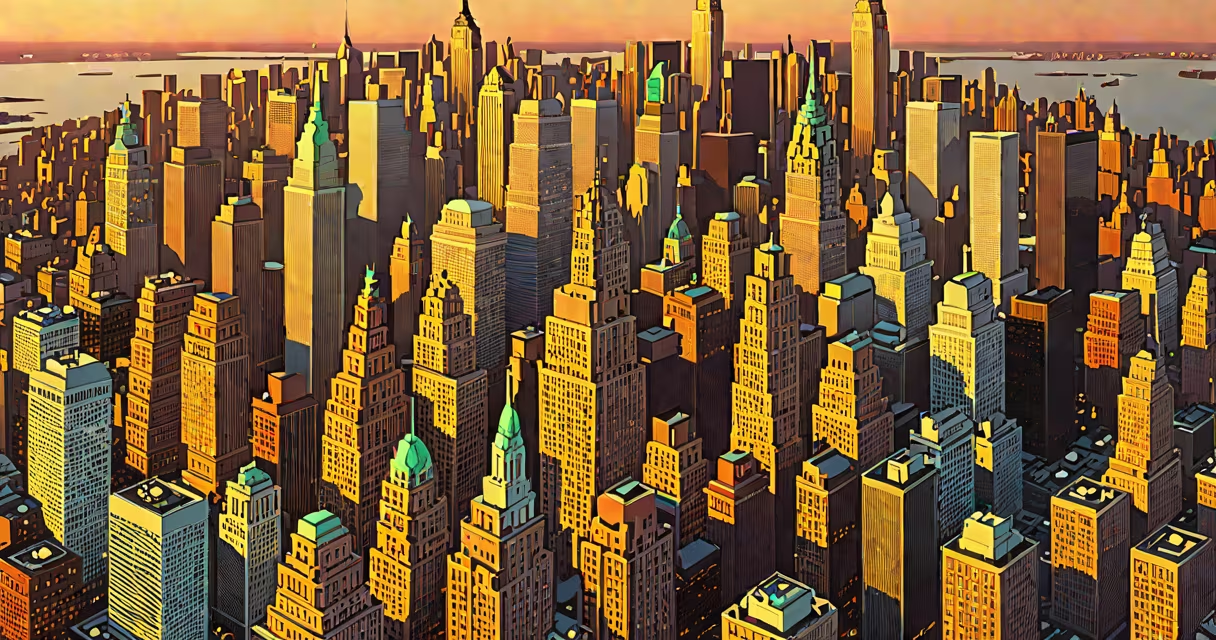
City center nyc refers to the central business district of Manhattan, the most densely developed and economically active part of New York City. It spans from the Financial District in Lower Manhattan through Midtown to parts of Midtown South and the Upper West Side. This zone houses Wall Street, Times Square, Grand Central Terminal, and the headquarters of global corporations.
Manhattan's city center is defined by high-rise office towers, mass transit hubs, and pedestrian-heavy corridors. It operates 24/7, with peak activity between 7 a.m. and 9 p.m., driven by finance, media, fashion, and tech industries. The area covers roughly 12 square miles, centered around 42nd Street and Fifth Avenue, and is accessible via 14 subway lines and multiple bus routes.
According to the U.S. Census Bureau, Manhattan's central business district had 1.3 million workers in 2022, with 62% employed in professional services, finance, and real estate. The region contributes 37% of New York City's total economic output, despite making up only 13% of the city's land area.
City center nyc operates through a mix of public infrastructure, private development, and regulatory oversight. The Metropolitan Transportation Authority (MTA) manages 47 subway stations within the central zone, serving over 2.5 million daily riders. Major intersections like Times Square see 30,000 pedestrians per hour during weekday rush hours.
Public spaces such as Bryant Park, Rockefeller Plaza, and the High Line connect commercial zones with recreational areas. These spaces are maintained by the New York City Department of Parks and Recreation and host events ranging from free concerts to holiday markets. During winter, the city installs heated sidewalks in high-traffic zones to reduce ice-related injuries.
Businesses in the area rely on zoning laws that permit mixed-use development. For example, the Zoning Resolution of New York City allows residential units above retail and office space in designated districts like Midtown East. This model increases density while preserving access to services.
The following table outlines major sub-areas within city center nyc, their defining features, and notable institutions:
| Neighborhood | Boundaries | Primary Functions | Notable Sites |
|---|---|---|---|
| Financial District | From Battery Park to Broadway, north to Canal Street | Finance, banking, legal services | Wall Street, New York Stock Exchange, Federal Reserve Bank of New York |
| Midtown Manhattan | From 34th to 59th Streets, between 5th and 8th Avenues | Entertainment, media, retail, corporate offices | Times Square, Rockefeller Center, Lincoln Center, Empire State Building |
| Garment District | Between 34th and 40th Streets, from 7th to 9th Avenues | Fashion design, wholesale trade | Textile Center, Fashion Week venues |
| Chelsea | From 14th to 34th Streets, between 6th and 10th Avenues | Art galleries, tech startups, residential | High Line, MoMA PS1, Google's NYC office |
Each neighborhood evolved from distinct historical patterns. The Financial District grew around the 17th-century Dutch settlement of New Amsterdam. Midtown expanded after the 1890s due to elevated rail lines and the construction of Grand Central Terminal. Chelsea's transformation began in the 1980s when artists moved into abandoned warehouses, leading to a surge in creative industries.
Many assume city center nyc includes all of Manhattan or extends into Brooklyn. This is incorrect. While Manhattan is the geographic heart of the city, the official central business district excludes outer boroughs. Brooklyn's Downtown and Queens' Long Island City are secondary commercial hubs but not part of city center nyc.
A frequent error is equating "downtown" with "city center." In New York, "downtown" specifically refers to Lower Manhattan, particularly the Financial District. "Midtown" is a separate zone located between 34th and 59th Streets. Confusing the two leads to misjudging commute times and service availability.
Another misconception is that city center nyc is exclusively commercial. Residential buildings make up 28% of the central zone's floor area, according to the NYC Department of City Planning. Areas like the Upper West Side and parts of Midtown have long-standing residential populations, with over 150,000 people living within the central business district.
Consider a visitor arriving at Penn Station at 8:15 a.m. They want to reach the New York Public Library's Stephen A. Schwarzman Building in Midtown by 9:00 a.m. The fastest route uses the 1, 2, 3, 7, A, C, E, and L trains. From Penn Station, they take the 1 train westbound to 59th Street-Columbus Circle, then transfer to the B or D train eastbound to 53rd Street-5th Avenue.
After exiting the station, they walk 10 blocks east along 5th Avenue. The library is visible at the corner of 5th Avenue and 42nd Street. Total travel time: 37 minutes. This process illustrates how transit integration enables rapid movement across city center nyc.
During peak hours, delays occur on the 1 train due to signal failures near 42nd Street. In such cases, switching to the N or Q train at 42nd Street-Port Authority offers a faster alternative, though it requires a longer walk to the library.
I once spent a week in a Midtown hotel during a conference. I discovered that walking from 42nd Street to 59th Street along 5th Avenue takes 23 minutes at a steady pace. But traffic lights, crowds, and street performers extend that to 35 minutes. Using the subway saved 12 minutes and reduced fatigue. This experience confirmed that even short distances in city center nyc require planning based on mode of transport.
For visitors, relying solely on walking or taxis is inefficient. The MTA's real-time app shows delays and crowding levels. Checking these before departure prevents missed appointments and reduces stress.
City center nyc is not a single building or landmark. It is a changing, multi-layered urban zone defined by function, density, and connectivity. It includes financial centers, cultural institutions, transportation nodes, and residential enclaves. Understanding its structure helps go through, work, and live effectively within one of the world's most complex urban environments.