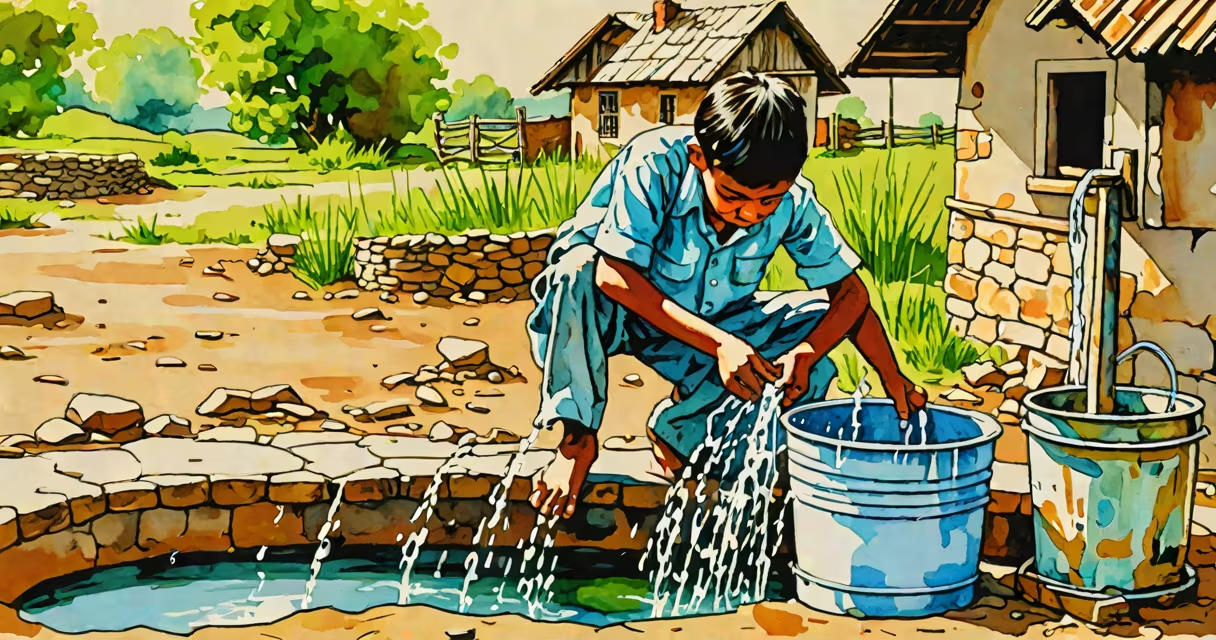
The clean drinking water problem refers to the widespread failure to provide safe, accessible drinking water to populations due to pollution, aging infrastructure, and inadequate regulation. Over 2 billion people globally lack access to safely managed drinking water services, according to the World Health Organization and UNICEF.
This issue arises when water sources-rivers, wells, reservoirs-are tainted by pathogens, heavy metals, industrial waste, or agricultural runoff. Contamination doesn't require visible signs; bacteria like *E. coli* or chemicals such as lead can be undetectable without testing. Without treatment or proper distribution systems, consuming such water causes disease, stunts development, and shortens lifespans.
Access is not evenly distributed. In low-income nations, 40% of the population relies on untreated surface water. In high-income countries, problems persist in marginalized communities. Flint, Michigan, experienced a crisis when switching water sources led to lead leaching into pipes, exposing thousands to toxic levels. The U.S. Environmental Protection Agency (EPA) sets maximum contaminant levels, but enforcement varies by region.
Water becomes unsafe through biological, chemical, and physical contamination. Pathogens like *Cryptosporidium* or *Vibrio cholerae* enter water via sewage overflow or animal waste. Chemical pollutants include pesticides, pharmaceuticals, and industrial byproducts such as PFAS-"forever chemicals" that resist degradation and accumulate in human tissue.
Physical changes also matter. Sediment from erosion clouds water, reducing light penetration and harming aquatic ecosystems. Turbidity increases the risk of microbial survival and interferes with disinfection processes like chlorination. Even if treated, water can re-contaminate during transport through cracked or poorly maintained pipelines.
Water treatment plants use filtration, sedimentation, and disinfection to remove threats. But not all facilities meet standards. A 2021 EPA report found that 16% of community water systems in the U.S. violated federal safety rules. In developing regions, treatment may be absent entirely, relying on boiling or solar disinfection-methods that are inconsistent and time-consuming.
Contamination sources fall into three categories: point-source, non-point-source, and emerging contaminants.
| Type | Examples | Impact |
|---|---|---|
| Point-source | Industrial discharge pipes, sewage outfalls | High concentration of pollutants in localized areas; easier to trace and regulate |
| Non-point-source | Agricultural runoff, urban stormwater | Diffuse pollution from rain washing over fields or roads; harder to control |
| Emerging contaminants | PFAS, microplastics, antibiotics | Not yet fully regulated; long-term health effects still being studied |
PFAS, for instance, have been detected in tap water supplies across 49 U.S. states. These chemicals are used in non-stick cookware, firefighting foam, and food packaging. They do not break down naturally and have been linked to cancer, liver damage, and developmental delays in children.
Even household plumbing contributes. Lead pipes installed before 1986 remain in many older homes. When water sits stagnant overnight, lead leaches into it. The CDC reports that 1 in 14 children in the U.S. has blood lead levels above 5 µg/dL-the threshold for intervention.
Many assume bottled water is safer than tap. This is false. Bottled water is not regulated under the same standards as municipal water. The FDA oversees it, but testing frequency is lower, and disclosure of source and treatment methods is inconsistent. A 2022 study found that 25% of bottled water samples contained microplastics, including polyethylene terephthalate (PET).
Another myth: boiling water removes all toxins. Boiling kills microbes but concentrates dissolved solids like arsenic or fluoride. In India, groundwater in parts of Bihar and West Bengal contains naturally occurring arsenic. Boiling increases arsenic levels by reducing volume-making the water more toxic, not less.
Some believe rainwater harvesting solves the problem. While it provides a renewable source, untreated rainwater can carry bird droppings, dust, and airborne pollutants. A 2019 study in Nairobi found that 60% of harvested rainwater samples exceeded WHO limits for coliform bacteria. Proper storage and filtration are essential.
The Ganges River in India serves over 400 million people. It is sacred in Hinduism, but also a dumping ground for industrial effluent, untreated sewage, and cremated remains. A 2020 study by the Indian Institute of Technology found fecal coliform counts 100 times higher than WHO safety thresholds.
Despite government efforts like the Namami Gange Project-$3.5 billion invested since 2014-river quality remains poor. Monitoring stations show fluctuating results. In Varanasi, a city with 1.5 million residents, only 30% of wastewater receives treatment. People continue to bathe, drink, and cook with river water.
Yet solutions exist. In nearby Kanpur, a decentralized wastewater treatment plant using constructed wetlands reduced biochemical oxygen demand (BOD) by 78%. The system uses native plants like *Typha latifolia* to filter pollutants. It cost $1.2 million-far less than centralized systems-and required minimal maintenance.
The clean drinking water problem is not just environmental-it's a public health emergency. Diarrheal diseases caused by unsafe water kill 485,000 people annually, according to WHO. Children under five account for 50% of those deaths. In sub-Saharan Africa, girls spend an average of 20 minutes daily fetching water-time lost from school and play.
Policy frameworks exist. The WHO's Guidelines for Drinking-Water Quality set science-based standards for over 100 contaminants. Countries can adopt these as national benchmarks. But implementation lags. Only 57% of nations report regular monitoring of their water supplies.
Simple actions help. Boiling water for one minute kills most bacteria. Using a UV purifier adds protection against viruses. And staying informed prevents exposure. In 2023, a water advisory was issued in New York City after elevated copper levels were detected in 12,000 homes. Residents were told to avoid hot tap water-because heating increases metal leaching.
While boiling water offers temporary relief, long-term change requires investment in infrastructure and enforcement. The clean drinking water problem persists not because solutions don't exist-but because political will and funding often fail to match the scale of need.