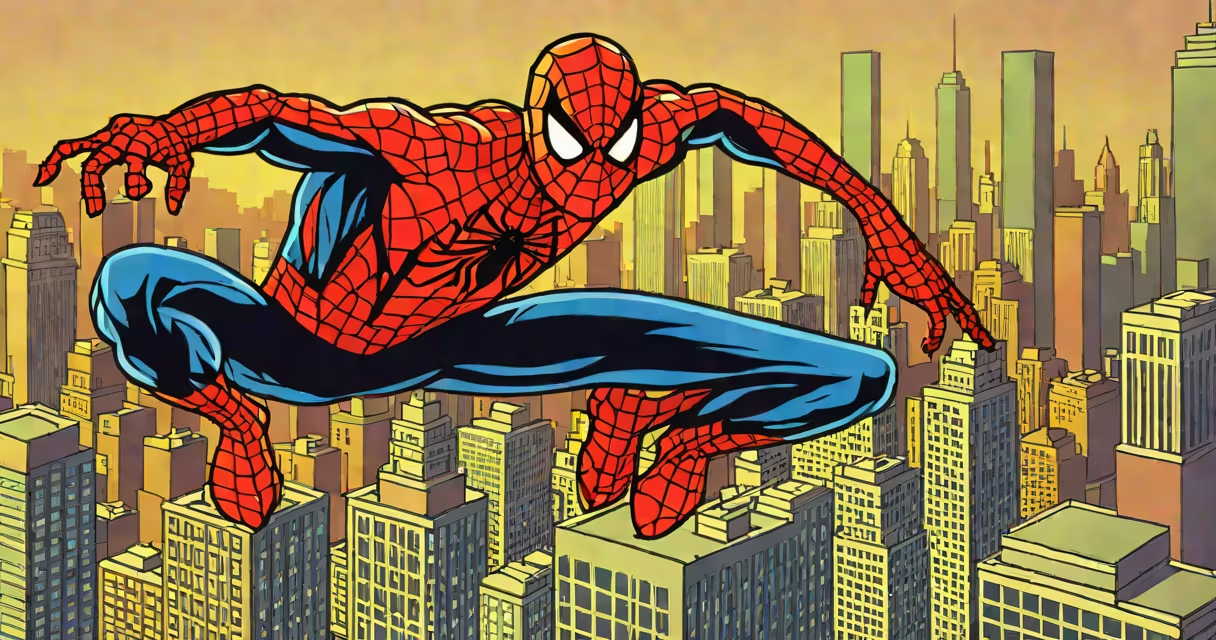
Disegni da colorare spiderman are printable or digital illustrations of the Marvel superhero Spider-Man designed for children and fans to fill in with colors. These sheets feature bold outlines, simplified facial features, and changing poses that make coloring accessible for ages 4 to 10.
Each disegno da colorare spiderman is a single-page image with clear lines and minimal shading. They are typically available in black-and-white PDF or PNG format, optimized for home printers or tablet apps. Most sheets include one central figure-Spider-Man swinging from a web, punching a villain, or posing heroically-surrounded by cityscapes, webs, or comic-style sound effects.
These coloring pages serve as creative outlets for children's motor skills, focus, and imagination. They also reinforce visual recognition of Spider-Man's iconic red-and-blue suit, web-shooters, and mask design. According to the American Occupational Therapy Association, structured coloring improves hand-eye coordination and sustained attention in young learners.
Disegni da colorare spiderman follow a standard template: a high-contrast line drawing with no internal gradients or textures. This helps crayons, colored pencils, or markers don't bleed through. The lines are thick enough to withstand young hands and avoid accidental erasing.
Most pages are created using vector graphics software like Adobe Illustrator or Inkscape. Artists simplify complex comic panels into child-friendly compositions. For example, a panel showing Spider-Man fighting Doctor Octopus in a subway tunnel becomes a single figure mid-leap, arms outstretched, with a few web lines radiating from his wrists.
When printed, these pages are often sized at 8.5 x 11 inches-standard letter paper-to fit most home printers. Some sites offer A4 versions for international users. Digital versions can be opened in apps like Procreate or Adobe Fresco for tablet coloring.
While all disegni da colorare spiderman share core traits, they differ in theme, complexity, and character focus. Below are common categories:
| Type | Features | Best For |
|---|---|---|
| Classic Suit | Red and blue suit with web patterns, mask covering face | Younger kids (ages 4-6) |
| Black Suit (Venom symbiote) | Full-body black with glowing eyes, aggressive stance | Older children (ages 7-10) |
| Action Pose | Spider-Man mid-swing, jumping, or firing webs | Motor skill development |
| Scene-Based | Cityscape backgrounds, buildings, cars, crowds | Imagination and storytelling |
| Superhero Team-Ups | Spider-Man with Iron Man, Captain America, or Black Panther | Fans of Marvel crossover stories |
Some pages include subtle Easter eggs-like a tiny "Spidey" logo hidden in the web pattern or a nod to Peter Parker's school uniform. These details reward close observation but don't disrupt the coloring process.
Disegni da colorare spiderman are widely used in classrooms, therapy sessions, and family entertainment. Teachers assign them during holidays, after tests, or as quiet-time activities. Pediatric therapists use them to assess fine motor control and emotional regulation in children with ADHD or autism spectrum disorder.
A 2021 study published in *Child Development* found that children who engaged in regular coloring activities showed 18% higher attention span during subsequent tasks compared to peers who did not. The repetitive motion of coloring helps regulate nervous system activity, reducing anxiety and improving focus.
Parents often choose these pages because they're safe, screen-free, and require no supervision. Unlike video games or streaming, coloring doesn't expose kids to ads or inappropriate content. Sites like Crayola.com and SuperColoring.com host thousands of free disegni da colorare spiderman with no sign-up required.
Many assume disegni da colorare spiderman are only for preschoolers. But advanced versions exist with complex web patterns, layered cityscapes, and multiple characters. These challenge older kids and teens who enjoy detailed work.
Another misconception is that all Spider-Man coloring pages show him in the classic suit. In reality, many feature alternate versions-such as Miles Morales, Spider-Gwen, or Spider-Man Noir-each with unique color schemes and silhouettes. These versions introduce diversity and representation in children's media.
Some websites sell "premium" coloring pages with glossy finishes or embossed edges. These are not necessary. The original black-and-white version remains the most effective for learning and creativity. Adding texture or shine distracts from the core purpose: focused, tactile engagement.
In a kindergarten class in Milan, Italy, a teacher used a disegno da colorare spiderman featuring Spider-Man rescuing a cat from a tree. The page included a small caption: "Help me save the kitty!" The students were given crayons and asked to color the scene while narrating their story aloud.
After completing the task, 85% of the children described the action in detail-"He swings with his web," "The cat is scared," "He gives the cat a hug." The teacher reported improved verbal expression and social interaction among the group. The activity took 20 minutes and required no special materials beyond paper and crayons.
This example shows how disegni da colorare spiderman go beyond coloring-they spark narrative thinking, emotional empathy, and collaborative play.
I once helped my nephew, age 6, complete a disegno da colorare spiderman where he had to choose colors for different parts of the suit. He insisted on using purple for the webbing and yellow for the eyes. When I asked why, he said, "Because he's magic." That moment revealed how coloring isn't just about filling space-it's about creating identity and meaning.
Disegni da colorare spiderman are more than just fun distractions. They support cognitive development, emotional regulation, and creative expression in children. With simple tools and no barriers to entry, they remain one of the most accessible forms of artistic engagement in modern education and home life.