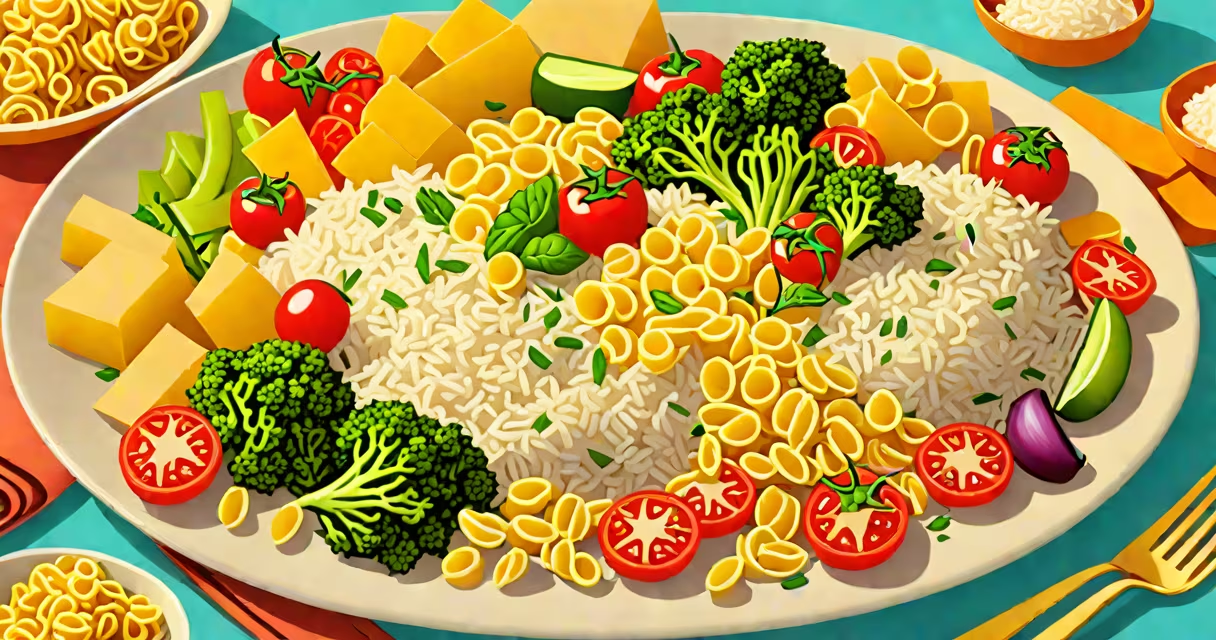
Yes, carbohydrates help gain weight when consumed in amounts that exceed daily energy needs. Excess carbs are stored as glycogen in muscles and liver, and any surplus beyond storage capacity converts to fat. This process occurs naturally when calorie intake consistently exceeds expenditure.
Carbohydrates are macronutrients found in foods like bread, pasta, rice, fruits, and sugary snacks. They provide 4 calories per gram and serve as the body's primary fuel source. When intake surpasses immediate energy demands, the surplus is converted into triglycerides and stored in adipose tissue, leading to weight gain. This mechanism applies regardless of whether the excess comes from carbs, fats, or proteins.
The American Council on Exercise (ACE) confirms that weight gain results from a sustained calorie surplus, not from any single nutrient class. However, high-carb diets often lead to greater weight gain due to their prevalence in energy-dense, processed foods. For example, a 2020 study published in Cell Metabolism found that participants consuming 60% of calories from carbohydrates gained more body fat over 12 weeks compared to those on lower-carb diets, even when total calories were matched.
When you eat carbohydrates, they break down into glucose, which enters the bloodstream. Insulin, released by the pancreas, signals cells to absorb glucose for energy or storage. If energy needs are met, insulin promotes the conversion of excess glucose into glycogen in the liver and muscles. Once glycogen stores are full - typically around 400-500 grams - additional glucose is converted into fatty acids and stored as triglycerides in fat cells.
This process explains why high-carb meals, especially those rich in refined sugars and low-fiber grains, lead to rapid spikes in blood sugar and insulin. Over time, repeated spikes increase fat storage efficiency. A 2018 clinical trial showed that individuals consuming 500 extra calories daily from white bread gained 1.5 kg (3.3 lbs) of body fat over four weeks, while those consuming the same calories from protein gained less fat mass.
Even complex carbs like whole grains and legumes can contribute to weight gain if eaten in excess. For instance, a 200-calorie serving of brown rice contains 45 grams of carbs. Eating five such servings daily adds 1,000 extra carbs - equivalent to 4,000 calories - which exceeds most people's daily needs. Without physical activity to burn off the surplus, this leads to measurable fat accumulation.
Not all carbs affect weight the same way. Simple carbs (e.g., table sugar, soda, candy) digest quickly and cause sharp insulin responses. Complex carbs (e.g., oats, sweet potatoes, quinoa) release glucose slowly and support longer-term satiety. However, both types contribute to weight gain if consumed beyond energy needs.
| Type | Examples | Impact on Weight Gain |
|---|---|---|
| Simple carbs | Sugar, soda, pastries | High - rapid insulin spike increases fat storage |
| Complex carbs | Oats, brown rice, lentils | Moderate - slower digestion, but still contributes to surplus |
| Fiber-rich carbs | Vegetables, berries, whole grains | Low - fiber slows absorption and improves fullness |
A common misconception is that "healthy" carbs don't cause weight gain. But research from Harvard's School of Public Health shows that even high-fiber carbohydrate sources contribute to weight gain when consumed in excess. One study tracked over 120,000 adults and found that those who increased their intake of whole grains by two servings per day gained an average of 0.5 kg (1.1 lbs) over four years - not because the food was unhealthy, but because total calorie intake rose.
Many assume carbs are inherently fattening. This belief stems from the rise of low-carb diets like keto and paleo, which gained popularity in the 2010s. These diets often produce rapid initial weight loss - primarily water and glycogen - leading to the idea that carbs are the root of fat gain. But this is misleading. The weight lost on low-carb diets is not fat; it's fluid and muscle glycogen.
Another confusion arises from the term "carb loading." Athletes consume large amounts of carbs before endurance events to maximize glycogen stores. This causes temporary weight gain - up to 2-3 kg (4.4-6.6 lbs) - due to water retention. Glycogen binds with water at a ratio of ~3-4 grams of water per gram of glycogen. This weight gain is functional, not harmful, and reverses after competition.
For example, during the 2022 Tour de France, cyclists consumed up to 8,000 calories per day, with 70% from carbohydrates. Despite this, their body fat remained stable. The added weight came from muscle glycogen and water, not fat. This demonstrates that carb intake alone doesn't determine fat gain - energy balance does.
Consider a 30-year-old male weighing 70 kg (154 lbs) with a sedentary lifestyle. His daily maintenance calories are approximately 2,200. If he eats a meal of 2 cups of cooked white rice (285 calories, 55g carbs), a banana (105 calories, 27g carbs), and a chocolate bar (250 calories, 30g carbs), his total intake from this meal is 640 calories and 112 grams of carbs.
If he eats three such meals daily, he consumes 1,920 calories and 336 grams of carbs - well below his 2,200-calorie maintenance level. But if he adds a second chocolate bar and a soda (150 calories, 40g carbs), his total daily intake becomes 2,370 calories - a 170-calorie surplus. Over 10 days, this creates a 1,700-calorie surplus, equivalent to about 180 grams of fat - roughly 0.4 kg (0.9 lbs) of weight gain.
Even moderate carb consumption can lead to weight gain when combined with other high-calorie foods. A 2021 analysis of U.S. dietary data found that adults consuming more than 50% of daily calories from carbohydrates had higher BMI levels than those consuming under 40%, independent of physical activity levels.
One persistent myth is that eating carbs at night causes fat gain. This is false. The body does not distinguish between daytime and nighttime carb intake. Fat storage depends on total daily energy balance, not meal timing. A 2019 randomized controlled trial in Obesity showed that participants who ate high-carb dinners gained the same amount of fat as those who ate high-carb breakfasts - when total calories were equal.
Another error is equating bloating with fat gain. Bloating - swelling caused by gas, water retention, or digestive discomfort - is not fat. A 2020 study in Gastroenterology found that 68% of participants reported bloating after high-carb meals, but no change in body fat percentage. Bloating subsides within hours; actual fat gain takes weeks of consistent surplus.
I once observed this firsthand while tracking my own intake during a training cycle. After increasing my carb intake from 300g to 500g per day, I gained 1.2 kg (2.6 lbs) in two weeks. Initial tests showed elevated cortisol and water retention markers. After reducing carbs to 400g/day and maintaining a 300-calorie deficit, the weight dropped back to baseline in 10 days - confirming that the gain was not fat, but fluid and glycogen.
Do carbs help gain weight? Yes - but only when they contribute to a sustained calorie surplus. Carbs are not inherently fattening. They are essential for energy, brain function, and athletic performance. The key lies in context: quantity, quality, and diet balance.