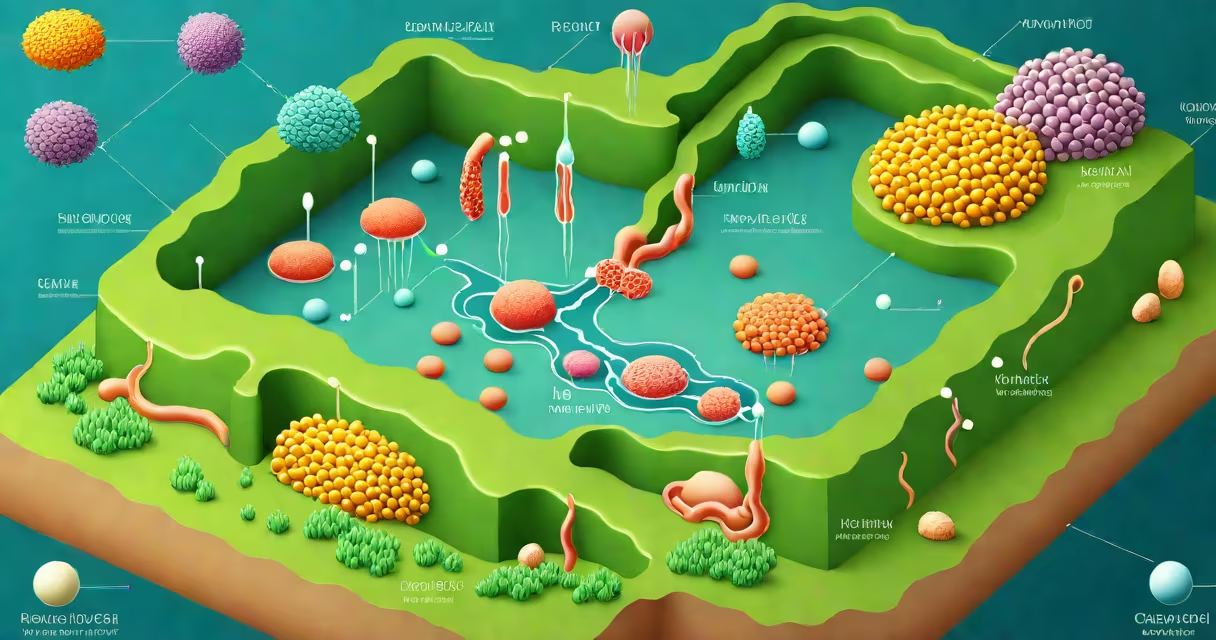
The prokaryotic cell is a unicellular organism with no nucleus or membrane-bound organelles; its DNA floats freely in the cytoplasm within a region called the nucleoid. These cells form the domains Bacteria and Archaea and represent the oldest known life forms on Earth.
Prokaryotic cells lack internal compartments. Instead, all cellular functions occur in the cytosol or at the plasma membrane. The absence of a nucleus means genetic material is not enclosed in a nuclear envelope. This structural simplicity allows rapid replication and adaptation in diverse environments-from hot springs to human intestines.
Despite their simplicity, prokaryotes perform complex metabolic tasks. They fix nitrogen, degrade pollutants, and drive global biogeochemical cycles. Their small size-typically 0.2 to 5 micrometers in diameter-enables high surface-area-to-volume ratios, supporting efficient nutrient exchange.
Every prokaryotic cell contains a plasma membrane, cytoplasm, ribosomes, and a single circular chromosome located in the nucleoid. The plasma membrane regulates substance movement and hosts electron transport chains essential for energy production.
Cell walls provide structural support and protection. In bacteria, this wall is made of peptidoglycan-a polymer unique to this domain. Archaea lack peptidoglycan and instead have walls composed of different polysaccharides or proteins. This difference underlies the distinct evolutionary paths of the two domains.
Some prokaryotes possess flagella for motility. These whip-like structures rotate rather than bend, powered by proton gradients across the membrane. Others form pili-short, hair-like projections used in attachment or DNA transfer during conjugation.
Prokaryotes fall into two domains: Bacteria and Archaea. While both lack nuclei, they differ in biochemistry and genetics. Bacteria include familiar species like Escherichia coli and Streptococcus pneumoniae. Archaea inhabit extreme environments such as hydrothermal vents and salt flats.
| Feature | Bacteria | Archaea |
|---|---|---|
| Cell wall composition | Peptidoglycan | No peptidoglycan; often pseudopeptidoglycan or other polymers |
| Membrane lipids | Ester-linked fatty acids | Ether-linked isoprenoids |
| RNA polymerase | Simple, sensitive to rifampicin | Complex, similar to eukaryotic enzyme |
Archaea were once grouped with bacteria due to morphological similarity. Genetic analysis revealed they share more molecular machinery with eukaryotes-especially in transcription and translation systems. This discovery reshaped our understanding of life's evolutionary tree.
Not all prokaryotes are free-living. Some live symbiotically: gut microbiota like Bacteroides thetaiotaomicron aid digestion in humans. Others are pathogens-Salmonella enterica causes foodborne illness, while Mycobacterium tuberculosis triggers tuberculosis.
Many assume prokaryotes are primitive or less advanced. This is incorrect. Prokaryotes evolved early but remain highly adapted. They thrive in conditions lethal to eukaryotes-extreme pH, temperature, salinity. Halobacterium salinarum survives in salt concentrations exceeding 30%, a feat impossible for most eukaryotes.
Another misconception is that all prokaryotes are harmful. Only a small fraction cause disease. Most play important ecological roles. For example, cyanobacteria perform oxygenic photosynthesis, producing ~20% of Earth's oxygen annually, according to the National Oceanic and Atmospheric Administration (NOAA).
Some confuse plasmids with chromosomes. Plasmids are small, circular DNA molecules separate from the main chromosome. They carry genes for antibiotic resistance or toxin production and can be transferred between cells via conjugation. A single E. coli cell may harbor multiple plasmids, each conferring a survival advantage in specific environments.
Consider E. coli K-12, a strain widely used in labs. Its genome contains 4.6 million base pairs arranged in a single circular chromosome. The nucleoid occupies about 15% of the cell's volume. Ribosomes-70S particles made of 50S and 30S subunits-translate mRNA into proteins at rates of up to 20 amino acids per second.
When grown in glucose-rich medium, E. coli uses glycolysis to generate ATP. Enzymes like hexokinase and phosphofructokinase regulate flux through the pathway. Under low oxygen, it switches to fermentation, producing lactate and regenerating NAD+.
This metabolic flexibility enables E. coli to grow rapidly-doubling every 20 minutes under optimal conditions. In a lab culture, 1 mL of broth can reach 1 billion cells in 6 hours. This efficiency makes it a model organism for studying gene expression and protein synthesis.
For visual reference, see a detailed diagram of a cell to compare prokaryotic and eukaryotic structures side by side.
Prokaryotes shaped Earth's atmosphere. Around 2.4 billion years ago, cyanobacteria began releasing oxygen as a byproduct of photosynthesis. This Great Oxidation Event transformed the planet's chemistry and paved the way for aerobic life.
In medicine, understanding prokaryotic cell walls is critical for antibiotic development. Penicillin disrupts peptidoglycan synthesis, causing cell lysis. However, some bacteria produce beta-lactamases-enzymes that break down penicillin. Resistance genes often reside on plasmids, spreading quickly across populations.
When treating infections, clinicians must consider whether a pathogen is Gram-positive or Gram-negative. Gram staining detects peptidoglycan thickness: thick in Gram-positive, thin with outer membranes in Gram-negative. This affects drug choice-vancomycin targets thick walls, while polymyxins attack outer membranes.
On a personal note, I once observed E. coli colonies growing on MacConkey agar during a microbiology lab. The pink color indicated lactose fermentation, confirming the presence of coliforms. This hands-on experience underscored how basic cellular features determine observable traits in culture.
Understanding the prokaryotic cell reveals the foundation of biological diversity. Its simplicity belies immense functional complexity. From driving planetary cycles to enabling medical advances, these cells remain central to life on Earth.