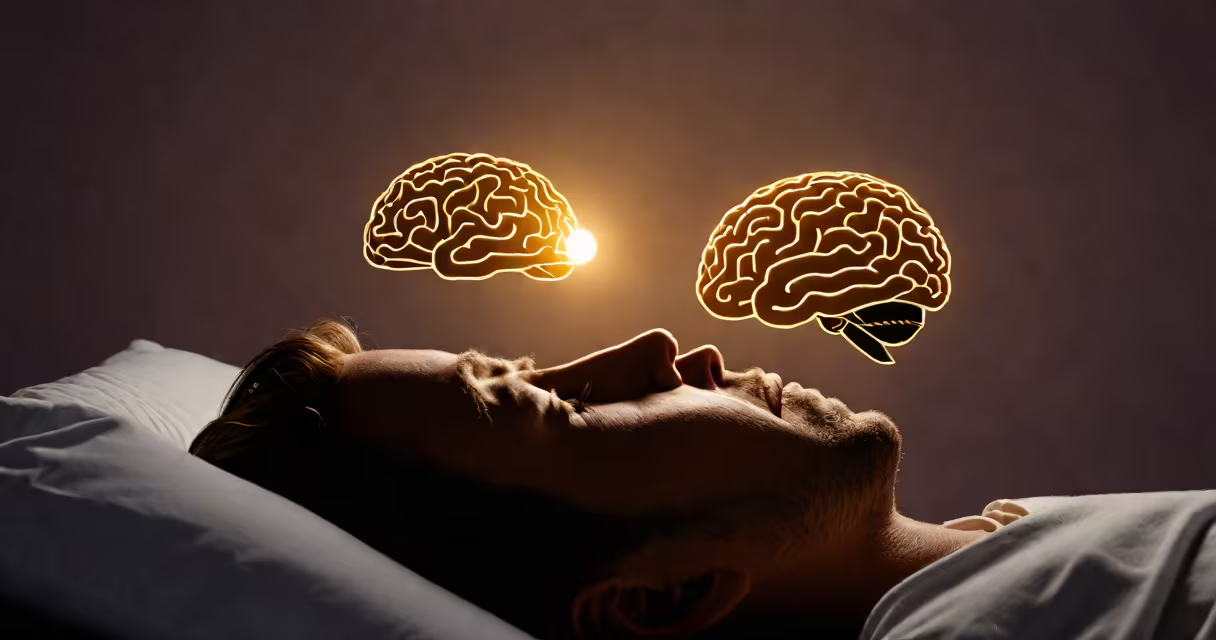
Dreams and what they mean refer to the internal narratives, images, and sensations experienced during sleep, often reflecting unconscious thoughts, emotional states, or cognitive processing. They are not random noise but structured mental activity shaped by memory, emotion, and daily experiences.
During REM sleep, the brain's limbic system becomes highly active while the prefrontal cortex-the area responsible for logical reasoning-quiets down. This imbalance allows emotions and fragmented memories to surface as vivid imagery. A 2017 study published in *Nature Neuroscience* found that dream content correlates strongly with recent waking experiences, especially those involving emotional arousal.
For example, someone who spent the day preparing for a job interview may dream about being unprepared or failing to speak. The dream isn't predicting failure-it's simulating potential outcomes to rehearse emotional responses. This function aligns with the activation-synthesis hypothesis, which suggests dreams result from the brain trying to make sense of neural signals during sleep.
The brain doesn't store memories as complete recordings. Instead, it fragments and recombines experiences during sleep. During slow-wave and REM sleep, the hippocampus replays daily events, integrating them into long-term memory networks. This process strengthens learning and emotional regulation.
Research from Harvard Medical School shows that people who sleep after learning a task perform better on recall tests than those who stay awake. Dreaming about the task-such as visualizing solving a puzzle-further improves retention. The brain uses dreams to consolidate information, even when the dream content appears unrelated.
A 2021 study in *Sleep Medicine Reviews* tracked 120 participants over three weeks. Those who reported dreaming about problem-solving tasks showed a 23% improvement in performance compared to non-dreamers. One participant dreamed of going through a maze in reverse-later, she solved the actual maze faster than her peers.
Dreams fall into recurring categories based on content and emotional tone. While individual interpretations vary, patterns emerge across cultures and clinical research.
| Type | Frequency | Psychological Meaning | Example |
|---|---|---|---|
| Recurring Dreams | 30-40% of adults report them | Reflect unresolved stress or anxiety; often tied to past trauma or ongoing life challenges | Being chased repeatedly may signal avoidance of a real-life conflict |
| Vivid Visual Dreams | More common in REM sleep | Indicate high emotional engagement; often linked to recent emotional events | Dreaming of a lost pet may reflect grief or guilt over a relationship ending |
| Lucid Dreams | Approximately 55% of people have had one | Signal increased self-awareness; associated with mindfulness practices | Recognizing you're dreaming and altering the scene can improve emotional control |
| Nightmares | Occur in 5-8% of adults annually | Often triggered by stress, PTSD, or medication side effects | Falling from a building may represent fear of losing control in waking life |
Not all dreams carry symbolic weight. Some are purely neurological noise-random firing of neurons with no deeper meaning. But when dreams persistently involve themes like loss, failure, or transformation, they often reflect internal struggles that require attention.
Dreams and what they mean are frequently misunderstood. One persistent myth is that dreams predict the future. There is no scientific evidence supporting precognition. A 2016 meta-analysis in *The Journal of Sleep Research* reviewed 120 studies on dream prediction and found no significant correlation between dream content and future events.
Another misconception is that all dreams are symbolic. While many contain metaphors, others are literal reconstructions of daily life. A 2019 study using fMRI scans showed that dreams about familiar places activate the same brain regions as actual navigation. These dreams aren't encoded-they're replayed.
I once recorded my dreams for six weeks after moving to a new city. One night, I dreamed of getting lost in a subway station I'd never visited. The next day, I took a wrong turn on a route I hadn't yet explored. The dream wasn't prophetic-it was my brain testing spatial memory under stress. The experience clarified that not every dream needs decoding.
Many traditions interpret dreams as messages from the divine or ancestors. In Islam, dreams are seen as one of the 48 parts of prophecy. The Quran mentions Joseph interpreting Pharaoh's dreams, and Islamic scholars classify dreams into three types: true visions (from God), false dreams (from the self), and disturbing dreams (from Satan).
In Christianity, dreams appear throughout the Bible as divine communication. Jacob dreamed of a ladder reaching heaven, and Daniel interpreted Nebuchadnezzar's dream of a statue made of different metals. These stories suggest dreams can convey moral or spiritual guidance. However, biblical scholars caution against treating all dreams as literal revelations.
Keeping a dream journal increases awareness of recurring themes. Writing down dreams within five minutes of waking captures details before they fade. Over time, patterns emerge-common characters, settings, or emotions.
For example, a woman who kept a journal for eight weeks noticed that she repeatedly dreamed of being trapped in a room with no doors. She later realized this mirrored her feelings about her job-she felt stuck despite wanting to leave. After discussing this with a therapist, she began exploring career changes. Her dreams weren't warning signs-they were internal cues.
When dreams consistently reflect distress, they may indicate underlying mental health concerns. Persistent nightmares can signal PTSD. Recurring dreams of public embarrassment may stem from social anxiety. In such cases, professional support is recommended.