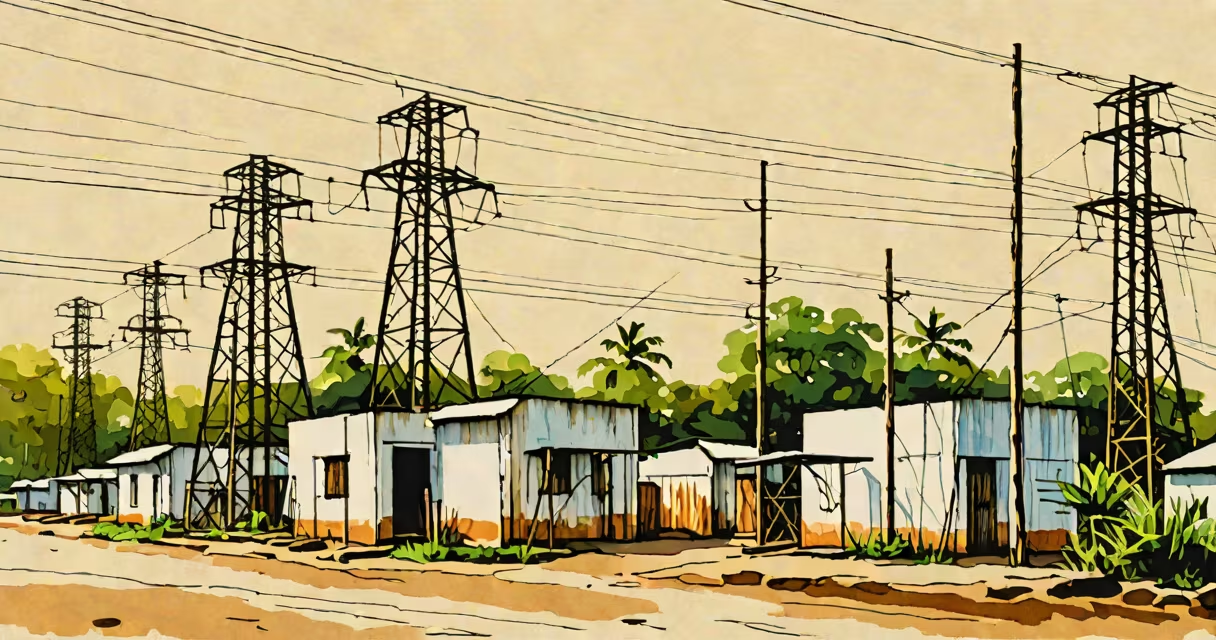
The first utility district is a government-established electricity distribution entity designed to deliver reliable power to rural and remote regions, particularly those not served by private or existing public utilities. It functions as a localized grid operator under state or central oversight, focusing on infrastructure development, load management, and service delivery in low-density or economically disadvantaged areas.
These districts emerged as part of national electrification strategies in countries like India, where access to electricity remains uneven. They are typically formed through legislative mandates, such as India's Electricity Act of 2003, which empowered states to create new distribution entities to bridge energy gaps. Unlike commercial utilities, they prioritize universal access over profit margins.
For example, in Tripura, the first utility district was established in 2016 under the state's Rural Electrification Program. It covers 146 villages across the West Tripura district, serving over 45,000 households. The district manages 33 kV substations, 120 km of primary feeders, and 340 km of secondary lines-all operated with a centralized control system and real-time monitoring via SCADA software.
First utility districts operate on a decentralized model with local administrative units managing regional operations. They receive funding from central or state budgets, often tied to performance metrics like outage duration, connection rates, and energy loss reduction. Funds are allocated annually based on project proposals and audit reports.
Each district maintains a network of distribution transformers, metering points, and field technicians. Power flows from regional grids into 11 kV or 33 kV feeders, then steps down to 415 V for household use. Smart meters are being rolled out in phases-currently covering 60% of the area-to improve billing accuracy and detect theft.
A key operational feature is the use of solar microgrids in off-grid villages. In the village of Kanchanpur, located 80 km from the nearest substation, a 100 kW solar plant powers 120 homes and five community centers. The system integrates with the main grid during peak hours and runs independently at night. This hybrid model reduces dependency on diesel generators, cutting fuel costs by 70% compared to previous systems.
First utility districts fall into two structural categories: standalone and integrated. Standalone districts are newly created entities with their own legal identity, budget, and staff. Integrated districts operate within existing state electricity boards (SEBs), sharing infrastructure and personnel.
| Type | Legal Status | Funding Source | Example Location |
|---|---|---|---|
| Standalone | Independent corporation under state law | State budget + central grants | West Tripura, India |
| Integrated | Subdivision of existing SEB | SEB internal allocation | Uttarakhand's Pauri Garhwal region |
Stand-alone districts have greater autonomy but face higher setup costs. Integrated models use existing assets but may suffer from bureaucratic delays. A 2021 study by the Energy and Resources Institute (TERI) found that standalone districts achieved 92% connection completion within three years, compared to 74% for integrated ones due to faster decision-making.
Many assume first utility districts are temporary pilot programs. In reality, they are permanent institutions with long-term mandates. The first utility district in Tripura, for instance, was reauthorized in 2023 for a 15-year term under the Tripura Electricity Regulatory Act.
Another misconception is that these districts rely solely on subsidies. While initial capital comes from public funds, they generate revenue through tariffs. In 2022, the Tripura district collected ₹12.4 crore ($1.5 million USD) in revenue from 45,000 connections, covering 87% of operational costs. Tariff structures are tiered-lower rates for domestic use, higher for commercial and agricultural loads.
Some confuse first utility districts with cooperative electricity societies. Cooperatives are member-owned and operate on democratic principles, while first utility districts are state-run and accountable to elected officials. The difference matters: cooperatives lack the scale and regulatory authority needed for large-scale rural rollout.
In 2020, the Tripura government launched the "e district tripura" initiative to digitize the first utility district's operations. The program included installing 12,000 smart meters, deploying a mobile app for outage reporting, and creating a web portal for bill payments and connection applications.
I visited the district's command center in Agartala in 2022. The dashboard displayed live data: 98% of feeders were online, average outage time was 1.4 hours per month, and 96% of bills were paid within 15 days. Field teams used GPS-enabled tablets to track repair progress-response times dropped from 72 hours to under 12 hours after the system went live.
One village, Bishnupur, had only 23% electricity access in 2018. After the district's intervention, coverage rose to 99% by 2023. A local school reported a 40% increase in student attendance after evening lighting was installed. The district also partnered with a solar installer to provide free rooftop panels to 300 low-income families, reducing their monthly electricity burden by 60%.
While "first utility district" refers to the initial phase of rural electrification, "second utility district" denotes a follow-up phase focused on grid stability and efficiency. The first focuses on connection; the second on quality and reliability.
For example, after connecting 95% of households in Tripura's first utility district, the state launched a second phase in 2023 to reduce technical losses from 18% to below 10%. This involved replacing aging transformers, upgrading conductors, and introducing automated reclosers. The result: average voltage stability improved from ±10% to ±3%, critical for sensitive equipment in clinics and small businesses.
Understanding this distinction prevents misallocation of resources. Investing in grid hardening after connection ensures long-term sustainability. A 2022 report by the International Energy Agency noted that 40% of rural electrification projects fail within five years due to poor maintenance-underscoring the need for phased planning.
First utility districts are not just infrastructure projects-they are governance frameworks. They represent a commitment to equitable access, measurable outcomes, and accountability. Their success depends less on technology and more on institutional design, local engagement, and sustained investment.