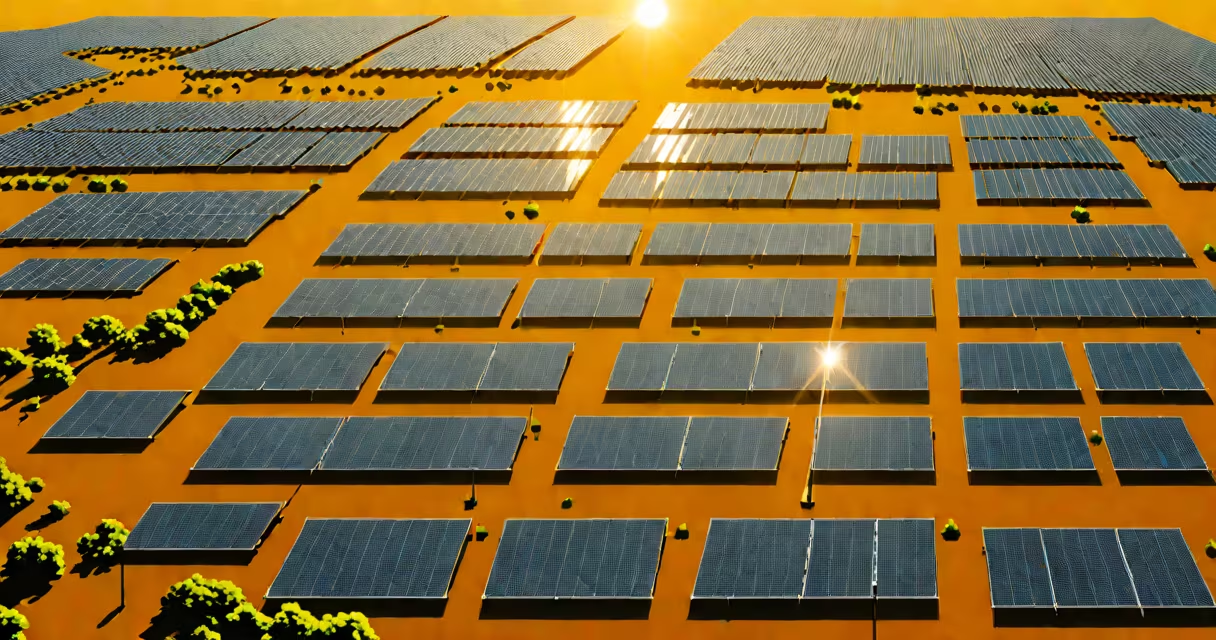
Solar energy uses refer to practical applications of sunlight converted into usable forms of energy, primarily electricity and heat, through technologies like photovoltaic panels and solar thermal systems. These applications reduce reliance on fossil fuels and support climate goals.
Solar energy captures photons from sunlight and converts them into direct current (DC) electricity via semiconductor materials in solar cells. This process occurs in photovoltaic (PV) modules installed on rooftops, in solar farms, or integrated into building materials. For thermal uses, mirrors or lenses concentrate sunlight to heat fluids, which then drive turbines or provide domestic hot water.
The global solar energy market expanded to 1,200 gigawatts (GW) of installed capacity by 2023, according to the International Renewable Energy Agency (IRENA). This growth reflects rising adoption in residential, commercial, and utility-scale projects. Solar energy's versatility enables deployment in remote areas without grid access, making it essential for off-grid electrification in developing regions.
When sunlight strikes a photovoltaic cell, electrons in silicon-based semiconductors absorb photon energy and move freely, creating an electric current. This DC electricity passes through an inverter, converting it to alternating current (AC) for household or grid use. Excess power can be stored in batteries or fed back into the electrical grid.
A typical residential solar system with 20 panels, each rated at 400 watts, generates approximately 8 kilowatts (kW) of peak power. On a sunny day, such a system produces around 32 kilowatt-hours (kWh) of electricity-enough to power a U.S. home for 1.5 days, based on average U.S. consumption of 29 kWh per day (U.S. Energy Information Administration).
For thermal applications, concentrated solar power (CSP) plants use parabolic troughs or heliostats to focus sunlight onto a receiver tube. The heated fluid (often molten salt) stores thermal energy for hours, enabling electricity generation after sunset. The Ivanpah Solar Electric Generating System in California uses 170,000 sun-tracking mirrors to produce 392 MW of power, enough for 140,000 homes.
Two primary categories define solar energy uses: photovoltaic (PV) and solar thermal. PV systems generate electricity directly. Solar thermal systems capture heat for industrial processes, space heating, or water heating.
| Type | Energy Output | Common Applications | Efficiency Range |
|---|---|---|---|
| Photovoltaic (PV) | Electricity | Residential rooftop, utility-scale farms, portable chargers | 15-22% |
| Concentrated Solar Power (CSP) | Thermal energy → Electricity | Large-scale power plants, industrial heating | 20-35% |
| Solar Water Heating | Hot water | Domestic use, swimming pools, food processing | 60-70% |
Residential solar systems typically cover 10-20% of a home's annual electricity demand, depending on location and panel orientation. In Germany, where solar irradiance averages 900 kWh/m²/year, a 5 kW system generates roughly 4,500 kWh annually-about 70% of the average household's usage.
Industrial applications include solar-powered desalination in Saudi Arabia, where solar thermal plants supply heat to evaporate seawater. The Al Khafji plant uses 100 MW of solar thermal energy to produce 100,000 m³ of fresh water daily, reducing dependence on fossil-fueled desalination.
Solar energy is deployed most intensively in regions with high solar insolation: the southwestern United States, North Africa, the Middle East, and parts of India. These areas receive 2,000-3,000 hours of sunshine annually, maximizing energy yield per square meter.
Nations like Morocco and Chile have prioritized solar infrastructure due to geographic advantages. Morocco's Noor Ouarzazate complex spans 300 hectares and generates 580 MW of power using CSP technology. It supplies electricity to over 1 million people and reduces carbon emissions by 760,000 tons annually compared to coal-fired alternatives.
Off-grid solar systems serve rural communities lacking connection to national grids. In sub-Saharan Africa, solar microgrids powered by 10-kW PV arrays provide lighting, refrigeration, and mobile charging. A 2022 study by the World Bank found that solar-powered clinics in Nigeria reduced vaccine spoilage by 80% due to consistent cold storage.
Solar energy is often mistaken for being unreliable due to weather dependence. However, modern systems integrate battery storage and smart inverters to maintain supply during cloudy periods. A 2023 report by the National Renewable Energy Laboratory (NREL) confirmed that solar-plus-storage systems in California maintained 98% uptime during winter months.
Another misconception is that solar panels require constant maintenance. Most rooftop systems operate unattended for 25 years with minimal upkeep. Cleaning once per year removes dust and debris that can reduce efficiency by up to 15%, according to a study published in *Solar Energy* journal.
Some assume solar energy is only viable in sunny climates. But Germany, with lower annual sunlight than Spain, leads Europe in solar capacity due to policy incentives and high feed-in tariffs. As of 2023, Germany had 80 GW of installed solar capacity-more than double that of France, despite receiving less sunlight.
In 2021, I installed a 6.5 kW solar system on my home in Phoenix, Arizona. After six months, the system generated 10,200 kWh-exceeding my annual consumption. Net metering credits offset 90% of my electricity bill. During a summer heatwave, the system continued operating efficiently, even at 45°C ambient temperature, thanks to built-in thermal management.
This setup demonstrates how solar energy uses extend beyond electricity. The excess power charged a lithium-ion battery, which powered essential devices during a brief grid outage. The system paid for itself in 7.3 years, based on local utility rates and federal tax credits.
Understanding the full scope of solar energy uses reveals its role not just in energy production, but in resilience, equity, and environmental protection. From powering homes to enabling clean water access, solar energy uses deliver measurable impact across sectors and geographies.