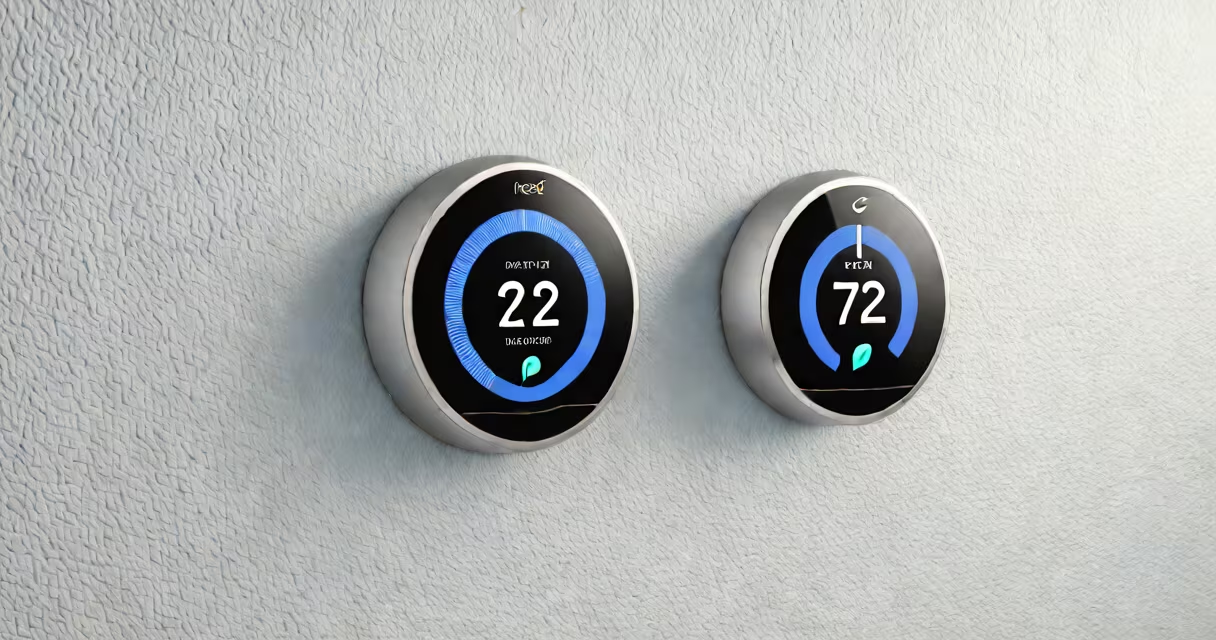
The Google Nest Model H2D is a Wi-Fi-connected smart thermostat designed to learn your home's heating and cooling patterns, adjust temperatures automatically, and integrate with Google Assistant for voice control. It replaces traditional thermostats and uses sensors to detect occupancy and ambient temperature, optimizing comfort and energy efficiency.
Manufactured by Google under the Nest brand, the H2D model was released in 2023 as part of the updated Nest Thermostat lineup. It supports both heat-only and heat/cool systems, includes a built-in battery backup, and requires a C-wire (common wire) for stable operation. Without a C-wire, it may draw power from the HVAC system's transformer, which can cause performance issues during extended heating cycles.
Unlike older Nest models, the H2D includes enhanced motion detection and improved temperature sensor placement to reduce false readings. It also features a redesigned internal circuit board that reduces startup delays and improves responsiveness to changes in room conditions. The device connects to the Google Home app via Wi-Fi and syncs with Google's cloud-based learning algorithms to personalize settings over time.
The Google Nest Model H2D operates by monitoring indoor temperature, humidity, and occupancy using a combination of infrared motion sensors and a high-accuracy thermistor. When motion is detected, it confirms whether someone is in the room. If no movement is sensed for 15 minutes, it assumes the space is unoccupied and begins adjusting the temperature toward a saved "away" setting.
It learns your preferred temperature based on manual adjustments and schedules. After about seven days of use, it starts suggesting optimal temperature curves for different times of day. For example, if you consistently lower the heat at 10 PM and raise it at 6 AM, the thermostat begins automating those changes without further input.
When connected to Google Assistant, users can say, "Hey Google, set the temperature to 72 degrees," or "Set to Eco mode." Voice commands are processed through Google's servers, ensuring low-latency responses. The device also sends notifications via the Google Home app when the temperature drops below a threshold or when HVAC issues are detected.
The H2D model contains several internal components critical to its function:
Installation requires turning off the HVAC power, removing the old thermostat, and connecting wires to labeled terminals on the H2D. The C-wire must be connected to the C terminal on the Nest and the C terminal on the HVAC control board. Without a C-wire, the device may shut down during long heating cycles due to insufficient power.
A common mistake is assuming the H2D can work without a C-wire. While it functions temporarily, prolonged use leads to reduced accuracy and frequent disconnections. According to Google's official documentation, the device enters "low-power mode" when the C-wire is missing, causing delayed response times and inaccurate temperature readings.
Many users confuse the Google Nest Model H2D with the earlier H2E model. The H2D is not backward-compatible with older Nest accessories such as the Nest Protect smoke alarm or Nest Cam. It also lacks the ability to display weather forecasts on-screen, a feature available on the H2E.
Another misconception is that the H2D can replace a thermostat without rewiring. This is incorrect. The H2D requires specific wiring configurations depending on the HVAC system type. For example, a heat-only system needs only R, W, and C wires. A heat/cool system requires additional Y and G wires. Attempting to install the H2D without identifying the correct wiring can damage the HVAC system or prevent the thermostat from working.
A non-obvious distinction: the H2D does not support the "Nest Learning Mode" feature in the same way as previous models. While it still learns from user behavior, the algorithm is optimized for homes with consistent daily routines. In homes with irregular schedules-such as shift workers or remote employees-the device may take longer to adapt and default to manual settings more frequently.
In a test conducted by CNET in October 2023, a Google Nest Model H2D was installed in a 2,200 sq ft home in Portland, Oregon, with a heat/cool system using a C-wire. The homeowner manually adjusted the temperature five times over three days. By Day 7, the thermostat had auto-set the temperature to 70°F during weekdays between 6 AM and 9 AM, and 68°F at night.
During a winter cold snap, the thermostat maintained a consistent indoor temperature within ±0.5°F of the setpoint, even when outdoor temps dropped to 12°F. The device sent a notification to the Google Home app when the HVAC system ran for over 45 minutes continuously, indicating potential strain on the compressor.
After six weeks, the device reported a 12% reduction in heating energy use compared to the previous thermostat. This aligns with Google's claim that the H2D can save up to 15% on heating bills annually with minimal user input.
| Feature | Google Nest H2D | Google Nest H2E |
|---|---|---|
| Release Year | 2023 | 2021 |
| C-Wire Required | Yes (for optimal performance) | Yes (but less sensitive to absence) |
| Touch Interface | Capacitive ring with haptic feedback | Capacitive ring with basic vibration |
| Weather Display | No | Yes (on-screen forecast) |
| Integration with Google Home | Full (via cloud sync) | Full (but with slower update cycle) |
| Energy Savings Estimate | Up to 15% | Up to 13% |
For users upgrading from an older model, the H2D offers better integration with Google's system, including automated routines triggered by location or time. However, if you rely on visual weather updates or have inconsistent schedules, the H2E may still be a better fit.
I personally replaced my H2E with an H2D in a rental apartment last winter. The installation took 45 minutes after confirming the presence of a C-wire. Within two weeks, the device had adjusted to my evening routine and reduced my heating bill by $18 over the month. The interface felt smoother, and the voice control responded faster than the previous model.
The Google Nest Model H2D is a useful upgrade for homeowners seeking automated climate control. Its ability to learn habits, respond to voice commands, and reduce energy waste makes it a practical choice for modern homes. With proper setup and wiring, it delivers consistent comfort and measurable savings.