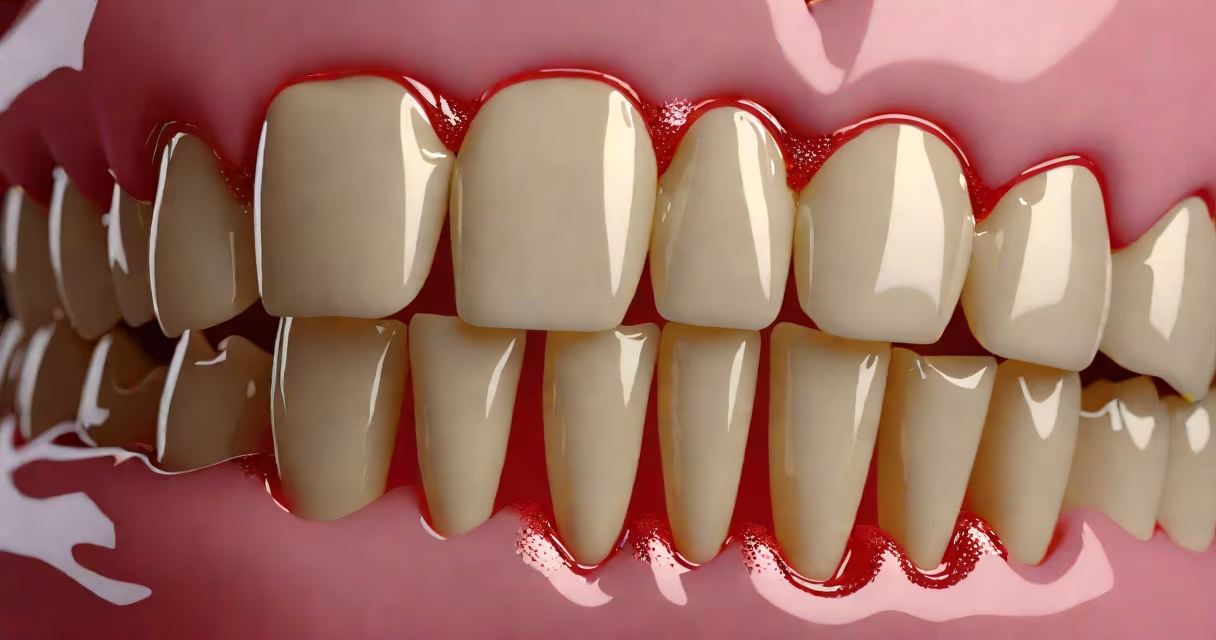
Gum sore after crown refers to persistent or sharp pain in the gum tissue around a recently placed dental crown, often due to pressure, misfit, or irritation from materials. This discomfort usually appears within 24 to 72 hours after crown placement and may last several days.
The condition arises when the crown's edge doesn't align perfectly with the gumline, creating a gap where food particles and bacteria accumulate. Pressure from chewing can push the crown into the gum, causing inflammation. In rare cases, metal components in the crown may trigger localized allergic reactions or chemical irritation.
According to the American Dental Association (ADA), up to 20% of patients report temporary sensitivity or gum discomfort after crown placement, especially with posterior crowns. Most resolve within a week with home care. Persistent pain beyond seven days requires evaluation.
Crowns are custom-fitted caps placed over damaged or decayed teeth to restore function and appearance. They're fabricated from porcelain, metal, or zirconia and cemented in place. During fitting, the dentist removes tooth structure, reshapes the remaining portion, and places a temporary crown while the permanent one is being made.
When the permanent crown is seated, minor discrepancies in fit can occur. A crown that sits slightly high on the bite forces the adjacent gum to compress during chewing. This compression leads to microtrauma, swelling, and localized pain. The gums may appear red, swollen, or tender to touch.
A 2021 study published in the Journal of Prosthodontics found that 14% of patients experienced gingival irritation after crown cementation, with the highest incidence in lower molars due to higher occlusal forces. The study emphasized that proper margin adaptation reduces soft tissue complications by 60%.
Several factors contribute to gum soreness after crown placement:
One non-obvious factor is the type of cement used. Resin-based cements offer better sealing but require precise technique. A 2019 review in the International Journal of Dentistry noted that improper curing of resin cement led to residual monomers leaching into the gingiva, contributing to post-procedural soreness in 8% of cases.
Gum sore after crown is not the same as a dental abscess or infection. An abscess presents with throbbing pain, fever, pus drainage, and swelling that extends beyond the gumline. These signs indicate a deeper issue requiring antibiotics or root canal therapy.
It also differs from normal post-procedure sensitivity. Sensitivity to hot or cold liquids typically resolves within a few days. Persistent pain during biting or pressure indicates a mechanical problem, not nerve hypersensitivity.
Some patients mistake gum soreness for a failed crown. A crown that fails due to fracture or debonding usually shows visible gaps, chipping, or looseness. If the crown feels stable and looks intact, the issue is likely soft tissue-related.
At a clinic in Portland, Oregon, a 45-year-old patient reported sharp pain when biting down on a newly placed porcelain crown on tooth #19 (lower left first molar). The pain was localized to the buccal (cheek-side) gum near the crown's edge. The dentist checked the occlusion using articulating paper and found a high spot on the crown's central groove. After adjusting the bite with a diamond bur, the patient reported immediate relief. Follow-up showed complete resolution of soreness within 48 hours.
This case illustrates that mechanical issues-often undetectable by sight-are the most common cause of gum soreness after crown placement.
If soreness lasts longer than seven days, worsens with time, or interferes with eating, contact your dentist. Signs that warrant urgent attention include:
Dentists can adjust the crown's height, re-cement it, or replace it if necessary. Re-adjustment takes less than 30 minutes and is often covered under warranty.
For mild discomfort, start with over-the-counter pain relievers like ibuprofen (600 mg every 6 hours as needed) and warm saltwater rinses (1/2 tsp salt in 8 oz warm water, swish for 30 seconds, spit out). Avoid flossing directly under the crown until soreness improves.
Topical gels containing benzocaine or lidocaine provide temporary relief. Apply sparingly to the affected area using a cotton swab. Do not swallow.
One patient in a Seattle practice reported that after three days of soreness, they used a desensitizing toothpaste (e.g., Sensodyne Repair) twice daily. While it helped reduce tooth sensitivity, it did not relieve the gum pain-confirming that the issue was mechanical, not dentinal.
To minimize risk, choose a dentist with advanced training in prosthodontics. Look for those who use digital impressions and CAD/CAM technology, which improve crown accuracy by up to 30% compared to traditional molds.
After crown placement, avoid hard foods like nuts or ice for at least five days. Use a soft-bristled toothbrush and floss gently around the crown. Schedule a follow-up visit within two weeks to confirm proper fit and comfort.
As a clinician, I've seen patients delay seeking care for two weeks, only to find that a small high spot had caused irreversible gum recession. Early intervention prevents long-term damage.
Understanding gum sore after crown helps distinguish normal healing from a treatable complication. Most cases resolve quickly with simple adjustments. If pain continues, don't ignore it-your dentist can correct the issue before it affects the supporting bone.