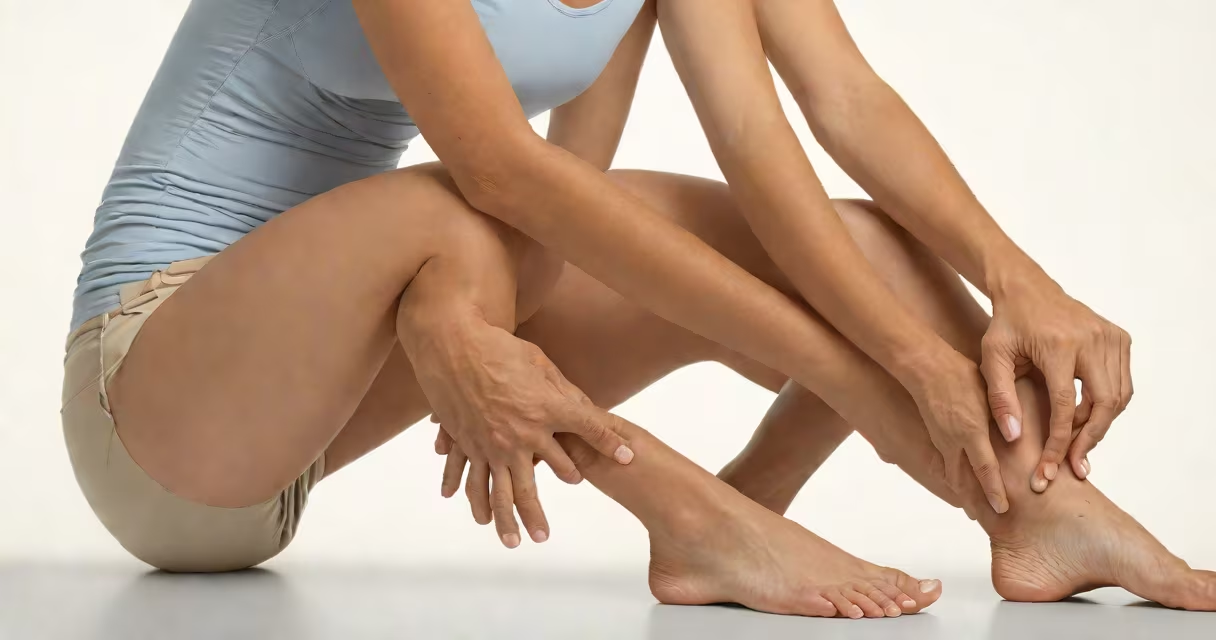
Hip and leg joint pain refers to discomfort originating in the hip joint, femur, or surrounding structures of the lower limb, often affecting movement, weight-bearing, or daily activities. It may stem from trauma, degenerative conditions, or systemic issues impacting bones, muscles, tendons, or nerves.
This condition arises when stress, inflammation, or structural changes disrupt normal function in the hip's ball-and-socket joint or adjacent tissues. Common triggers include osteoarthritis, muscle strain, sciatica, or hip labral tears. Pain can be sharp, dull, throbbing, or radiating, depending on the underlying cause.
According to the American Academy of Orthopaedic Surgeons (AAOS), hip pain affects approximately 1 in 5 adults over age 65, with osteoarthritis being the leading contributor. The National Institute of Arthritis and Musculoskeletal and Skin Diseases (NIAMS) notes that persistent hip and leg joint pain lasting more than two weeks warrants medical evaluation to rule out serious pathology.
Pain typically begins when mechanical stress exceeds tissue tolerance. For example, repetitive motion during running can irritate the iliopsoas tendon, leading to anterior hip pain. Similarly, a fall onto the hip may fracture the femoral neck, especially in older adults with low bone density.
Nerve involvement is another pathway. Sciatica-compression of the sciatic nerve-can cause sharp, shooting pain from the lower back through the buttock and down the back of the thigh. This pain often worsens with prolonged sitting or bending, mimicking joint-related issues.
A 2021 study published in *The Journal of Bone and Joint Surgery* found that 37% of patients presenting with hip pain had non-articular causes, such as referred pain from the lumbar spine or vascular insufficiency. This highlights that not all hip pain originates in the joint itself.
Conditions causing hip and leg joint pain vary widely in origin and presentation. Below are the most frequent categories:
| Type | Key Features | Typical Triggers |
|---|---|---|
| Osteoarthritis | Degeneration of cartilage; stiffness after rest; pain worsens with activity | Age, obesity, prior joint injury |
| Labral tear | Sharp pain in groin or hip side; clicking sensation; limited internal rotation | Sports involving pivoting, sudden turns |
| Sciatica | Electric-like pain radiating from lower back through buttock and down leg | Lumbar disc herniation, spinal stenosis |
| Referred pain | Pain felt in hip region but originating from abdominal organs or pelvic structures | Endometriosis, kidney stones, ovarian cysts |
One non-obvious distinction: hip pain from a labral tear often feels deep and localized to the front of the hip, while osteoarthritis pain tends to be more diffuse and worse with weight-bearing. Misdiagnosis is common-up to 40% of labral tears go undetected on initial MRI scans without specialized protocols.
Some individuals mistake muscle strain or nerve irritation for joint problems. A true joint issue involves pain within the joint capsule or associated with joint movement. Muscle pain, by contrast, typically occurs along the length of the muscle belly and improves with stretching.
For example, piriformis syndrome-a condition where the piriformis muscle compresses the sciatic nerve-causes pain that mimics hip joint disease. However, pain resolves with targeted stretches and decreases when lying down, unlike arthritic hip pain, which persists regardless of position.
I once treated a 34-year-old runner who reported severe left hip pain during stride. Imaging showed no joint damage. After physical therapy focused on gluteal strengthening and piriformis release, pain resolved in six weeks. This case illustrates how misattributing neuromuscular pain to joint issues delays effective treatment.
Seek immediate care if hip and leg joint pain is accompanied by fever, unexplained weight loss, numbness, weakness, or inability to bear weight. These signs may indicate infection, cancer, or spinal cord compression.
For women, hip and leg pain during menstruation can signal endometriosis affecting the pelvic nerves or deep infiltrating lesions near the hip joint. A 2020 review in *Human Reproduction* found that 12% of women with chronic pelvic pain had endometriosis confirmed via laparoscopy, with hip and thigh pain as a presenting symptom in 30% of those cases.
When pain persists beyond four weeks despite rest and over-the-counter NSAIDs, consult a healthcare provider. Early diagnosis prevents progression-e.g., untreated hip dysplasia can lead to early-onset arthritis.
Diagnosis begins with a clinical history and physical exam. Doctors assess gait, range of motion, and pain location. Imaging such as X-ray, MRI, or CT may follow. Blood tests can screen for inflammatory markers in suspected autoimmune conditions.
Treatment depends on the root cause. Osteoarthritis may respond to weight loss, physical therapy, and intra-articular corticosteroid injections. Labral tears often require arthroscopic repair. Sciatica may improve with epidural steroid injections or surgical decompression in refractory cases.
For mild cases, conservative measures work well. A 2019 randomized trial in *The Lancet* showed that supervised exercise therapy reduced hip pain severity by 50% over 12 weeks compared to placebo. Exercises targeting core stability, hip abductors, and gluteal strength were most effective.
Early intervention improves outcomes. Do not assume pain will resolve on its own-many treatable conditions progress without action.