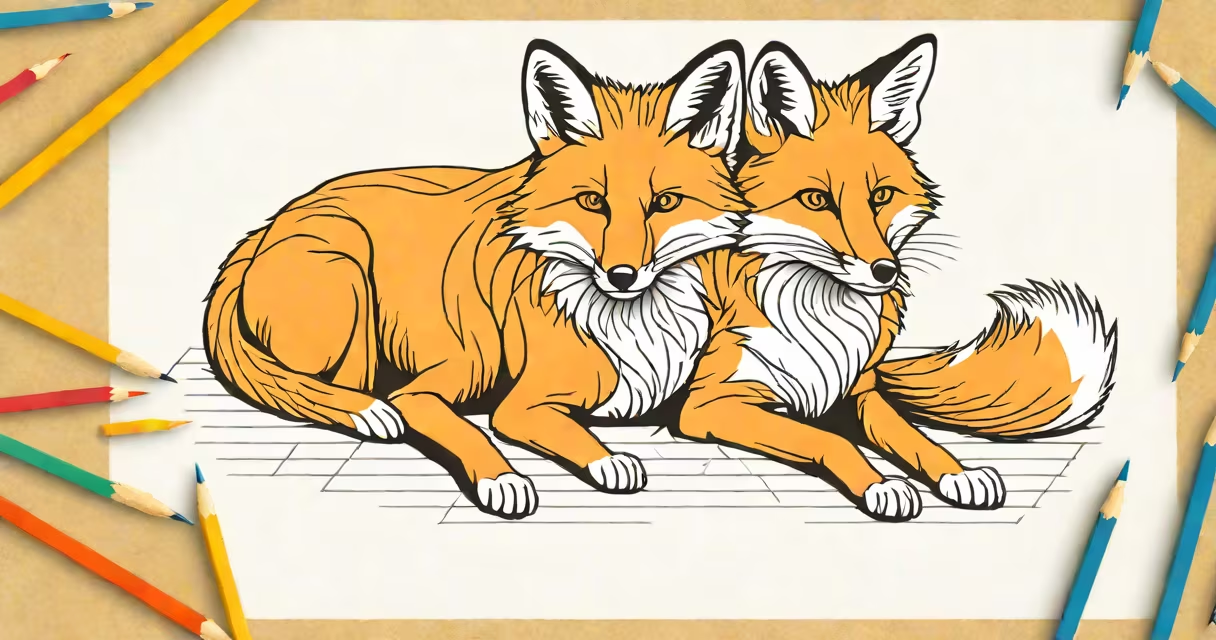
how 2 draw animals involves breaking down complex creatures into basic shapes-circles, ovals, and rectangles-then refining them with lines and details. This method reduces visual complexity and makes drawing accessible to beginners.
Start with a circle for the head, a long oval for the body, and four straight lines for legs. Add a small triangle for the ear and a curved line for the mouth. These foundational elements form the skeleton of the animal's structure. Once the base is in place, refine the outline by smoothing edges and adding texture like fur or scales.
Practice with common animals such as dogs, cats, or birds. Begin with a single pose-like a sitting dog or a bird in flight-to build muscle memory. Use reference images from reputable sources like the National Geographic Kids website or the Audubon Society's field guides to ensure anatomical accuracy.
Every animal drawing relies on three core elements: proportion, gesture, and detail. Proportion ensures limbs and features align correctly. Gesture captures movement and posture. Detail adds realism through texture and expression.
Use the "egg method" for heads: draw a slightly flattened oval, then mark eye and nose placement. For mammals, position eyes on the sides of the head; for prey animals like deer, eyes are farther apart. Birds have eyes near the front of the head, which affects their perceived focus.
A non-obvious rule: the center of mass in most quadrupeds lies just behind the front legs. This affects how the body bends during motion. A running dog leans forward; a resting cat curls around its center. Observing this helps avoid stiff, robotic poses.
Animals fall into distinct categories based on body plan. Recognizing these types speeds up the drawing process.
| Type | Basic Shapes | Example Animals | Key Features |
|---|---|---|---|
| Mammal (four-legged) | Circle (head), oval (body), rectangle (legs) | Dog, horse, bear | Arms and legs extend from the body's sides; spine curves gently |
| Bird | Oval (body), triangle (wings), cone (beak) | Robin, eagle, duck | Head and neck form a continuous curve; wings fold at the shoulder |
| Reptile | Long oval (body), small circles (eyes), thick lines (limbs) | Lizard, crocodile, snake | Low-to-the-ground stance; limbs splay out sideways |
| Fish | Teardrop (body), triangle (tail), circle (eye) | Salmon, shark, goldfish | Streamlined shape; fins positioned along the back and tail |
When drawing a cat, start with a large circle for the head and a smaller oval for the body. Place the eyes high on the head and draw a small triangle for the nose. Use curved lines to suggest fur texture. A single line for the whisker extends from each side of the face.
For a bird in flight, begin with a horizontal oval for the body and a vertical oval for the wings. Draw the tail as a split triangle at the back. Add a thin, pointed beak and a small eye. The wing's leading edge should curve upward to show lift.
Animal drawing serves both artistic and educational purposes. Children use it to learn anatomy and spatial reasoning. Adults practice it to reduce stress and improve hand-eye coordination.
The American Psychological Association notes that structured drawing tasks lower cortisol levels in adults after 20 minutes of focused work. Drawing animals specifically improves attention span and pattern recognition, especially in learners aged 6 to 12.
Artists often use animal sketches as preliminary studies for larger projects. A wildlife illustrator may spend hours observing a raccoon's posture before rendering it in watercolor. Even digital artists use animal drawings as reference for animation rigs and game assets.
Many assume that drawing animals requires advanced skill. This is false. The ability to draw a realistic lion does not require years of training. Instead, it begins with recognizing the underlying geometry.
A frequent error is placing eyes too far forward on a predator's face. Wolves and lions have eyes set slightly higher and toward the front of the skull. Placing them too low creates a flat, cartoonish look. Check reference photos from the Smithsonian's National Museum of Natural History to verify correct eye placement.
Another mistake is over-detailing early. Beginners often add fur, feathers, or patterns before establishing proportions. This leads to distorted shapes. Always complete the basic form first-before adding texture or color.
I once spent 45 minutes trying to draw a giraffe with perfect spots. After switching to a simple oval-based method, I completed a recognizable version in under 10 minutes. The lesson: form precedes detail.
Begin with 10-minute daily sessions. Choose one animal per day and draw it five times using only basic shapes. Focus on consistency, not perfection.
After mastering the basics, try drawing animals from memory. Start with a single shape and build outward. This strengthens visual recall and builds confidence.
Remember: how 2 draw animals isn't about replicating reality-it's about understanding structure. With consistent practice, anyone can create expressive, recognizable animal sketches.