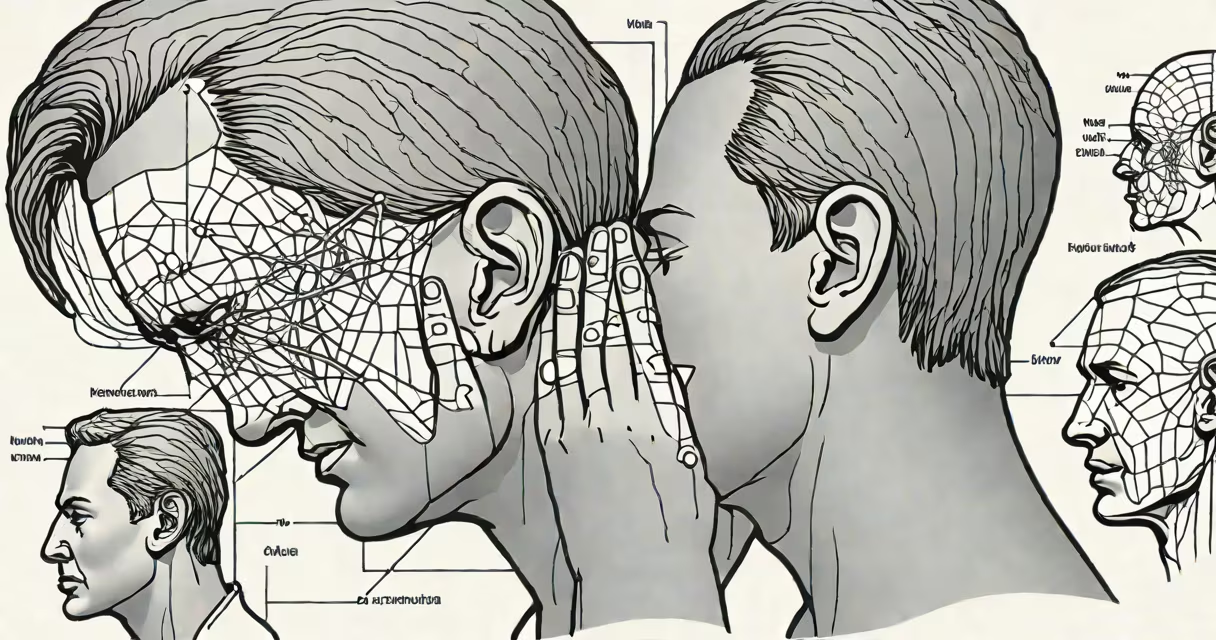
An ice pick headache behind the ear is a brief, sharp, stabbing pain typically localized to one side of the head near the ear or temple. It lasts seconds to minutes and may recur unpredictably. This condition is often associated with trigeminal nerve irritation or cluster headache patterns.
These episodes feel like a needle or ice pick piercing the skin or skull. They occur suddenly, peak quickly, and resolve just as fast. Unlike migraines or tension headaches, they don't build gradually. The pain is usually unilateral-on one side-and may happen multiple times a day or less frequently.
According to the International Classification of Headache Disorders (ICHD-3), ice pick headaches fall under "primary headache disorders" and are classified as "short-lasting unilateral neuralgiform headache attacks with cranial autonomic symptoms" (SUNA). They are distinct from migraines, tension-type headaches, and secondary causes such as infections or tumors.
The pain arises from abnormal activity in the trigeminal nerve-the primary sensory nerve for the face and head. When this nerve fires erratically, it sends sharp signals to the brain interpreted as intense pain. The area behind the ear lies within the distribution of the greater auricular nerve, a branch of the cervical plexus, which can also be involved in similar pain patterns.
Triggers are rarely identifiable. Some patients report stress, cold exposure, or jaw movement as potential catalysts, but no consistent pattern emerges. Unlike cluster headaches, which follow circadian rhythms and often occur at night, ice pick headaches lack a predictable schedule. They can strike at any time, day or night.
A 2021 study published in *Headache: The Journal of Head and Face Pain* found that 68% of patients with ice pick headaches also experienced other forms of facial pain, suggesting overlapping neuropathic mechanisms. This supports the idea that these episodes stem from central or peripheral nerve sensitization rather than vascular changes.
There is no single subtype of ice pick headache behind the ear, but clinical presentations align with specific diagnostic categories:
| Feature | Ice Pick Headache | Cluster Headache | Trigeminal Neuralgia |
|---|---|---|---|
| Duration | 10-30 seconds | 15-180 minutes | 1-2 minutes |
| Pain Quality | Stabbing, sharp | Burning, deep | Electric shock-like |
| Location | Behind ear, temple, eye | Around eye, temple | Face, jaw, cheek |
| Frequency | Multiple times daily | 1-4/day during clusters | Episodic or constant |
Diagnosis relies on symptom history. The ICHD-3 requires at least five attacks with a specific quality, location, and duration. Imaging like MRI is not routinely needed unless red flags appear-such as neurological deficits or worsening pain.
One non-obvious distinction: ice pick headaches do not cause autonomic symptoms like tearing, nasal congestion, or drooping eyelid. These features are typical of cluster headaches and SUNA variants. Their absence helps rule out those conditions.
Patients often visit emergency departments or neurologists after experiencing a sudden, severe stab behind the ear. Because the pain mimics stroke or brain tumor symptoms, doctors perform imaging to rule out structural causes. In most cases, scans show nothing abnormal.
Common misdiagnoses include temporomandibular joint (TMJ) disorder, dental pain, or sinusitis. A 2019 case series in *The Journal of Neurological Sciences* reported that 32% of patients initially diagnosed with TMJ dysfunction actually had ice pick headaches. Misattribution leads to unnecessary dental procedures or jaw surgery.
I've seen a patient who underwent two rounds of physical therapy for neck stiffness before being referred to a headache specialist. He described the pain as "like someone stuck a frozen needle behind my ear." After a detailed history and exclusion of other causes, he was diagnosed with episodic ice pick headaches. Treatment with low-dose amitriptyline reduced frequency from 10 episodes a day to one every few days.
Ice pick headache behind ear is frequently mistaken for cluster headaches due to the sharp, unilateral nature of the pain. However, cluster headaches last longer-up to three hours-and occur in cycles lasting weeks to months. Ice pick headaches have no cycle, no pattern, and no associated autonomic signs.
Another frequent mix-up is trigeminal neuralgia. While both involve sharp facial pain, trigeminal neuralgia is triggered by light touch, chewing, or speaking. The pain is brief but can be provoked by routine actions. Ice pick headaches are spontaneous and not stimulus-dependent.
For example, a 45-year-old woman reported stabbing pain behind her left ear while reading. She didn't touch her face, didn't chew, and felt no trigger. The episode lasted 15 seconds. Her MRI showed no lesions. She was later diagnosed with ice pick headache after ruling out other causes.
Understanding the difference between these conditions ensures accurate diagnosis and avoids ineffective treatments. Ice pick headache behind ear is rare but treatable. Early recognition prevents unnecessary interventions and improves quality of life.