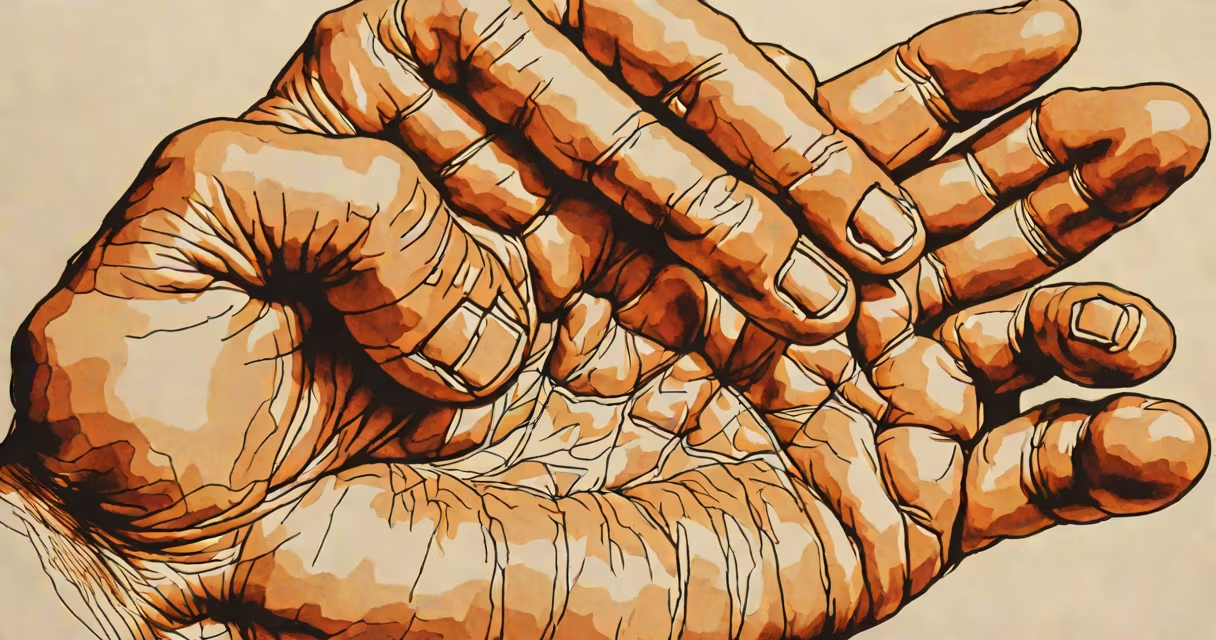
Involuntary muscle spasms in hand refer to sudden, brief, and uncontrolled contractions of the muscles in the hand, often causing pain, stiffness, or difficulty holding objects. These episodes occur without conscious intent and may last seconds to minutes.
These spasms stem from abnormal electrical signals in nerves or muscles. They differ from voluntary movements and are not triggered by effort. Common triggers include dehydration, electrolyte imbalances, nerve compression, or underlying neurological conditions. While occasional spasms are harmless, frequent or persistent ones may signal a medical issue requiring evaluation.
Examples include a finger suddenly curling into a fist while typing, a thumb locking in place, or a whole hand tightening unexpectedly. These events can disrupt fine motor tasks such as writing, using tools, or playing instruments. Spasms may happen at rest or during activity, and their frequency varies widely between individuals.
Nerves send signals from the brain and spinal cord to muscles. When these signals misfire or are disrupted, muscles contract involuntarily. This disruption can originate in the central nervous system (brain or spinal cord), peripheral nerves, or within the muscle itself.
For example, carpal tunnel syndrome compresses the median nerve in the wrist. As pressure builds, nerve signaling becomes erratic, leading to hand muscle spasms, numbness, and weakness. Similarly, a pinched nerve in the neck (cervical radiculopathy) can cause spasms in the hand due to impaired nerve transmission.
Electrolyte imbalances-low levels of calcium, magnesium, or potassium-also affect nerve excitability. A study published in *Neurology* found that low serum magnesium correlated with increased muscle cramping frequency in adults over 60, especially during sleep or physical exertion.
Spasms fall into categories based on origin: focal (localized), generalized (widespread), or reflexive (triggered by stimuli).
| Type | Origin | Common Triggers | Example |
|---|---|---|---|
| Focal | Localized nerve or muscle | Carpal tunnel, repetitive strain, dehydration | Thumb curls during texting |
| Generalized | Central nervous system | Epilepsy, multiple sclerosis, stroke | Whole hand jerks during wakefulness |
| Reflexive | External stimulus | Sudden temperature change, touch | Hand tightens when cold water touches skin |
Essential tremor-a condition affecting 5% of people over 65-can manifest as rhythmic shaking or subtle spasms in the hands, especially during movement. Unlike typical spasms, essential tremor worsens with purposeful actions like drinking from a cup.
A non-obvious distinction: muscle spasms are not the same as fasciculations. Fasciculations are small, visible muscle twitches under the skin, often seen in the eyelid or forearm. They're usually benign and linked to stress or fatigue. True spasms involve actual force generation and joint movement.
Spasms that occur daily, interfere with daily activities, or persist beyond 10 minutes require clinical attention. Red flags include muscle weakness, loss of coordination, or changes in sensation like tingling or numbness.
I once observed a patient whose right hand spasmed during meals. The episodes began subtly-fingers clenching while eating-and progressed to full-hand cramping. After ruling out carpal tunnel via EMG, we diagnosed cervical spine stenosis. MRI confirmed spinal cord compression. Surgical decompression resolved the spasms within weeks.
According to the American Academy of Neurology, persistent hand spasms should prompt neurologic assessment, particularly if they follow trauma, appear after age 50, or accompany other neurological signs.
Involuntary muscle spasms in hand are often mistaken for arthritis, Raynaud's phenomenon, or Parkinson's disease. Arthritis causes joint pain and stiffness but not sudden contractions. Raynaud's involves blood vessel constriction, leading to color changes (white-to-blue) in fingers-not muscle contraction.
Early Parkinson's may show resting tremors, but these are rhythmic (4-6 Hz), not abrupt or painful. Hand spasms in Parkinson's are rare and typically occur later in disease progression.
Another confusion: dystonia. Focal hand dystonia causes sustained muscle contractions during specific tasks-like writing or playing piano-but doesn't involve sudden onset. It's task-specific and often progressive.
Addressing the root cause is critical. For carpal tunnel syndrome, splinting and corticosteroid injections reduce nerve compression. Physical therapy improves flexibility and reduces strain.
Medications like Flexeril (cyclobenzaprine) are prescribed off-label for muscle spasms. A 2021 review in *Journal of Clinical Medicine* noted that cyclobenzaprine reduced spasm frequency in 68% of patients with chronic musculoskeletal spasms, though side effects like drowsiness occurred in 22%.
For neurological causes, treatment depends on diagnosis. Multiple sclerosis may respond to disease-modifying therapies. Epileptic seizures involving hand motion are managed with anticonvulsants like levetiracetam.
Recognizing involuntary muscle spasms in hand as distinct from normal twitches or tremors enables timely intervention. Persistent or worsening episodes demand professional evaluation to prevent long-term functional decline.