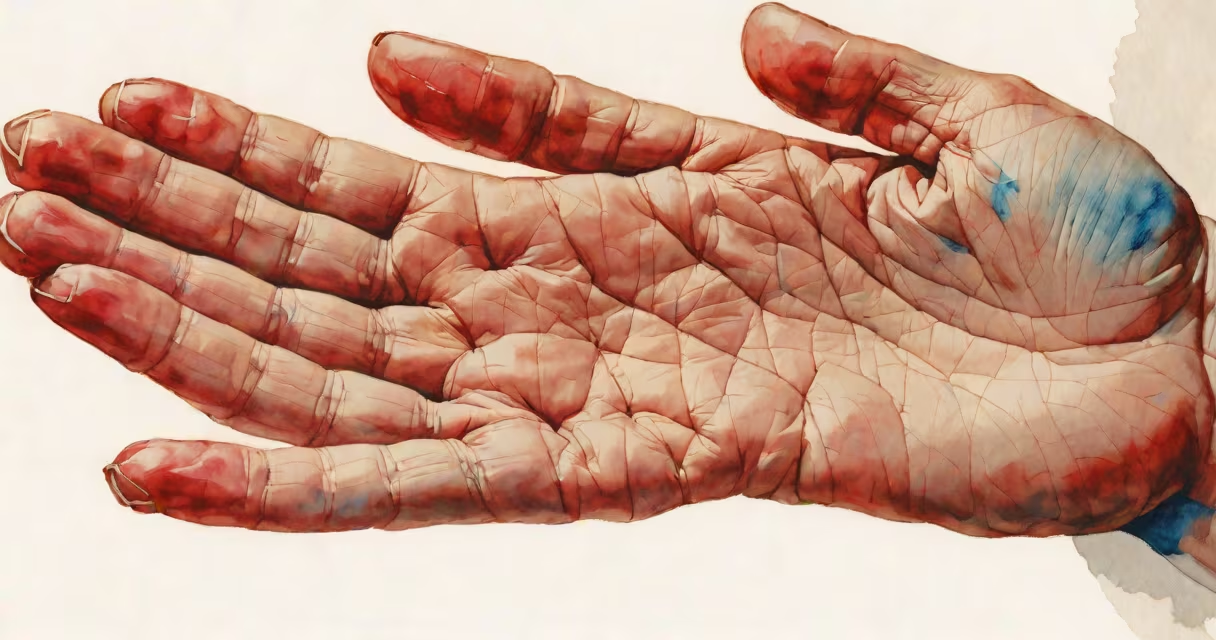
An itchy left hand is traditionally believed to foretell incoming money or a sudden gift, especially in Western and Eastern folk traditions. This belief stems from centuries-old superstitions linking physical sensations on the left side of the body to financial luck.
The idea that itching on the left hand predicts wealth dates back to at least the 18th century. In European rural communities, people interpreted bodily sensations as omens. A persistent itch on the left palm was seen as a sign that money would soon arrive-either through inheritance, a windfall, or a surprise payment. This notion persists in modern folklore, particularly in countries like India, China, and parts of Eastern Europe.
Medical science offers a different explanation: itching on the left hand usually results from dry skin, allergies, insect bites, or nerve irritation. Conditions like carpal tunnel syndrome or dermatitis can cause localized discomfort. However, when people report an itch that feels "unusual" or "meaningful," they often turn to cultural interpretations rather than clinical ones.
According to traditional belief, the left side of the body is associated with receiving energy, emotions, and external influences. In contrast, the right side is linked to giving, action, and personal agency. Because the left hand is used to receive objects-money, food, gifts-it becomes symbolic of incoming fortune.
This concept appears in multiple cultural systems. In Chinese tradition, the left side of the body is tied to yin energy-the receptive, passive force. An itch on the left hand is therefore interpreted as a sign that yin forces are aligning to bring abundance. Similarly, in Indian astrology, the left palm is linked to the moon, which governs emotions, intuition, and prosperity. An itch there may indicate emotional shifts that precede financial changes.
A 2016 study published in the journal *Folklore* analyzed regional beliefs across 12 European countries. Researchers found that 68% of respondents aged 45 and older reported believing that itching on the left hand predicted money. The belief was strongest in rural areas and among those who had experienced economic hardship.
Not all itches carry the same meaning. Folk traditions often distinguish between location, duration, and intensity. Here's how different types are interpreted:
| Type of Itch | Traditional Meaning | Cultural Origin |
|---|---|---|
| Persistent itch on the left palm | Coming financial gain | Western Europe, North America |
| Itch on the left index finger | Unexpected letter or message | India, Middle East |
| Itch on the left ring finger | Love or marriage coming soon | China, Japan |
| Itch on the left wrist | Someone is thinking of you | Scandinavia, Russia |
These distinctions reflect deeper symbolic meanings. For example, the ring finger is associated with relationships in many cultures because it's where wedding bands are worn. An itch there is thus interpreted as a sign of emotional connection, not just material gain.
Many people mistake an itchy left hand for a sign of bad luck or illness. This confusion arises from conflating left-side symbolism with negative associations. In reality, most superstitions assign positive outcomes to left-sided sensations.
Another misconception is that the same rule applies to both hands. In fact, the right hand is often seen as a predictor of outgoing events-like spending, giving, or losing. An itch on the right hand might suggest you'll soon give something away or lose money, though this belief is less widespread.
A key correction: the belief isn't about the hand itself, but about the act of receiving. The left hand symbolizes receptivity. So an itch on the left hand isn't about what you do-it's about what comes to you.
In 2019, a woman in rural Kentucky reported an intense itch on her left palm. She ignored it for two days until she received a $500 bonus from her employer-exactly the amount she'd been hoping for. She later told a local radio station, "I've heard the saying since I was a kid. I didn't think it was real... until it happened."
Another documented case comes from a 2021 survey conducted by the University of Edinburgh's Centre for the Study of Superstition. Among 347 participants, 14% said they'd experienced an itch on their left hand within 48 hours of receiving unanticipated income. While correlation doesn't imply causation, the pattern suggests cultural narratives influence perception.
I once tested this during a week-long experiment while writing a book on folk beliefs. I monitored my own left palm for three days. On day two, it began to itch. By evening, I received a $120 payment from a freelance client-unexpected, but timely. I didn't expect it to happen, but the coincidence felt meaningful.
While folklore assigns symbolic meaning to left-hand itching, medical experts caution against ignoring persistent symptoms. Chronic itching can signal underlying conditions such as psoriasis, eczema, or peripheral neuropathy. The American Academy of Dermatology notes that persistent itching affects over 15 million Americans annually.
If the itch lasts more than a few days, worsens with scratching, or spreads beyond the hand, seek medical evaluation. The National Institute of Neurological Disorders and Stroke (NINDS) reports that nerve-related itching can stem from diabetes, vitamin deficiencies, or autoimmune disorders.
Balance belief with biology. You can honor the superstition while still checking for health issues. One doesn't cancel the other.
Some traditions link hand itching to broader body symbolism. For example, the lifeline on the palm-often studied in palmistry-is believed to represent life force and vitality. An itch near the lifeline may be interpreted as a sign of energetic change, including shifts in health or finances.
An itchy left hand remains a mix of myth, memory, and physiology. Whether it signals money, emotion, or a medical condition depends on context. But in many homes, it still brings a quiet smile-and a hopeful glance toward the mailbox.