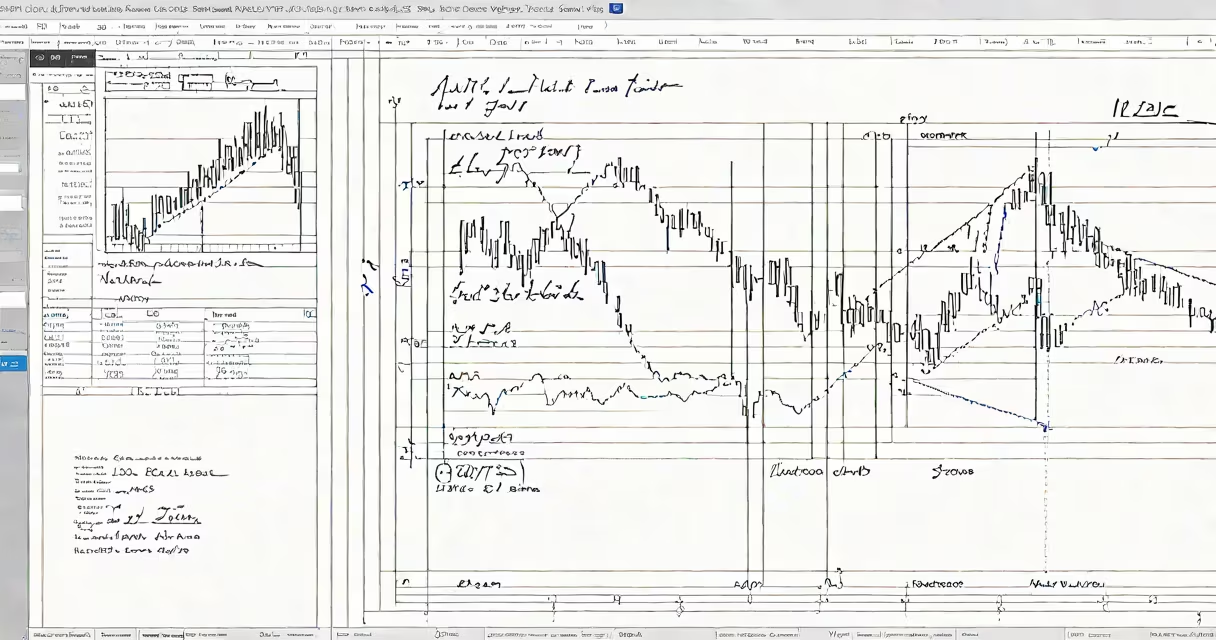
A limit market stop stop limit is a multi-stage order type used in stock trading that combines stop-loss, stop-limit, and limit order mechanics to control both entry timing and execution price under volatile conditions. It triggers a stop-market or stop-limit action based on a predefined price threshold, then executes at a specified limit price.
This order type is designed for traders who want precise control over when their position opens or closes, especially during rapid market movements. It prevents slippage by ensuring the trade only occurs at or better than a set price, while still allowing automatic execution when market conditions trigger the initial stop level.
For example, if a trader owns 100 shares of XYZ stock currently priced at $50, they may place a limit market stop stop limit to sell if the price drops below $45. Once triggered, the order becomes a stop-limit order at $44.80. If the market trades at $44.90, the order won't execute-protecting against unfavorable prices.
The sequence begins with a stop price. When the market reaches or passes this level, the order activates. At that point, it converts into a limit order, which only executes at the specified limit price or better. This dual-layer mechanism reduces the risk of poor fills during high volatility.
Unlike a standard stop-loss, which becomes a market order upon activation and may result in significant slippage, a limit market stop stop limit ensures the trade happens only within a defined price range. If the market gaps below the limit price, the order remains unfilled-preserving capital.
For instance, a trader sets a stop price at $30 and a limit price at $29.50 for a short-sell order. If the stock suddenly drops to $29.60 due to news, the stop triggers. The system then attempts to sell at $29.50 or higher. If the market trades at $29.40, the order doesn't execute-avoiding a worse-than-expected fill.
There are two primary configurations for a limit market stop stop limit:
| Type | Trigger Condition | Execution Mechanism | Best For |
|---|---|---|---|
| Stop-Market then Limit | Price hits stop level | Converts to limit order at specified price | Quick exit during sharp declines |
| Stop-Limit then Limit | Price hits stop level | Converts to limit order; executes only at or better than limit | Controlling execution cost during volatility |
These structures differ in how aggressively they attempt to fill. The stop-market variant prioritizes speed-executing immediately at current market price after the stop is hit. The stop-limit variant prioritizes price control, potentially leaving part of the order unfilled if the market moves too quickly.
Some platforms allow nested parameters: e.g., "stop at $40, limit at $39.75." This setup gives traders fine-grained control over risk exposure and execution quality. However, not all brokers support this complexity-users must confirm availability through their trading interface.
Many traders confuse a limit market stop stop limit with a simple stop-loss order. A stop-loss triggers a market sell when price hits a level, but offers no price guarantee. A limit market stop stop limit adds a second layer of protection-the limit price-which prevents execution at unacceptable levels.
Another misconception is that this order type guarantees execution. It does not. If the market gaps past the limit price, the order remains pending. According to Investopedia, "stop-limit orders can fail to execute entirely if the stock price moves too quickly" (Investopedia, 2023).
A less obvious but critical distinction: the stop price and limit price must be set independently. Setting the limit price above the stop price creates a logical error-execution cannot occur because the limit would require a better price than the stop's trigger. Always ensure the limit price is below the stop price for sell orders, and above for buy orders.
In March 2023, Tesla stock dropped sharply after a regulatory announcement. A trader holding 200 shares at $200 placed a limit market stop stop limit to protect gains. They set a stop price at $180 and a limit price at $178.50.
When the stock fell to $179.50, the stop was triggered. The system converted the order into a limit order at $178.50. The market traded briefly at $178.20, but the order did not execute-preventing a loss beyond the intended threshold.
Later, when the stock rebounded to $181, the order remained inactive. The trader manually canceled it after assessing the recovery trend. This outcome illustrates how the order type acts as a changing guardrail-not just a panic button.
On the flip side, if the trader had used a standard stop-loss at $180, the order would have executed at $178.20 during the gap down-resulting in a $3.80 per share loss versus the $1.50 per share loss they avoided using the limit market stop stop limit.
Use this order type when you need to balance speed and price control. It's ideal for managing positions during earnings reports, economic data releases, or geopolitical events that cause sudden market shifts.
It's particularly effective for swing traders and long-term investors who want to avoid emotional decisions during downturns. As noted by the Securities and Exchange Commission (SEC), "investors should use conditional orders to automate risk management and reduce emotional bias" (SEC, 2022).
However, avoid using it in low-volatility environments where the limit price may never be reached. In stable markets, simpler stop-loss or limit orders often suffice.
Understanding the difference between a stop-loss and a limit market stop stop limit is essential for disciplined trading. The latter provides a structured way to exit a position automatically while maintaining control over the execution price. It's not a guarantee-but it's a tool that reduces uncertainty.
If you're exploring automated risk controls, learn the basics of stop-loss and stop-limit orders first. Then consider testing a limit market stop stop limit in a paper trading account before live deployment.