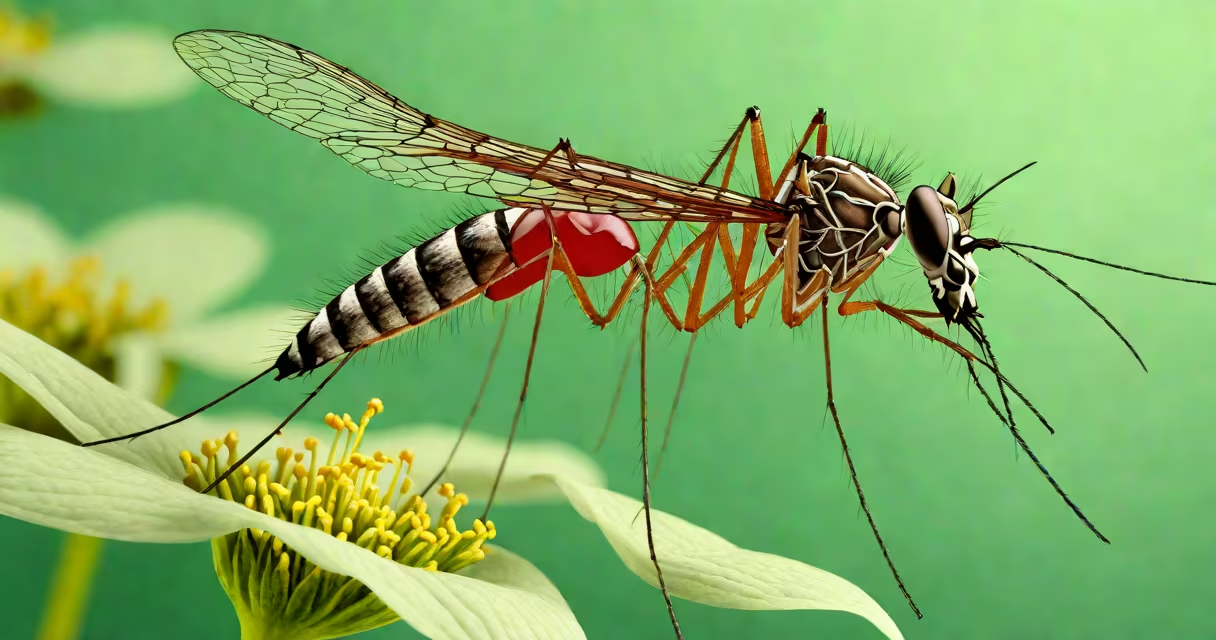
Male mosquitoes do not bite humans or animals. Only female mosquitoes bite to obtain blood, which they need to develop eggs. This biological difference explains why bites are almost always from females.
Blood feeding is essential for reproduction in female mosquitoes. Males lack the specialized mouthparts needed to pierce skin and draw blood. Their feeding apparatus is adapted for sipping nectar and plant fluids, not penetrating tissue.
According to the Centers for Disease Control and Prevention (CDC), female mosquitoes use their proboscis-a needle-like structure-to puncture skin and locate blood vessels. Males cannot perform this action. The CDC confirms that no known species of male mosquito bites mammals.
Female mosquitoes require blood to produce viable eggs. A single blood meal can support the development of hundreds of eggs. Without blood, egg production halts. This drives their behavior toward warm-blooded hosts, including humans, birds, and mammals.
Males rely entirely on plant-based nutrition. They feed on nectar, sap, and honeydew. These sources provide carbohydrates and energy. Their mouthparts are designed for lapping liquids, not piercing tissue.
A study published in *Nature* found that male mosquitoes have reduced sensitivity to carbon dioxide and lactic acid-key attractants in human breath and sweat. This aligns with their lack of interest in biting. Females, however, are highly responsive to these cues.
Male mosquitoes consume sugars from flowers, tree sap, and fruit. They play a role in pollination, though minor compared to bees and butterflies. Their feeding behavior supports plant reproduction in ecosystems.
For example, in tropical forests, male mosquitoes often gather around flowering shrubs like *Miconia* and *Psychotria*. They drink nectar while remaining harmless to vertebrates. This diet sustains their flight, mating, and survival.
Research from the University of California, Davis shows that male mosquitoes live 10-14 days on average. Their lifespan depends on food availability and environmental conditions. Without nectar, they die within 48 hours.
| Feature | Female Mosquito | Male Mosquito |
|---|---|---|
| Bites humans? | Yes | No |
| Primary food source | Blood (for egg development) | Nectar, sap, honeydew |
| Mouthpart function | Piercing and sucking blood | Lapping liquid nutrients |
| Attracted to CO₂? | Highly sensitive | Minimal response |
Many people assume all mosquitoes bite because they see them swarming around faces and limbs. But only females seek blood. Males may appear in the same areas due to shared habitat preferences, not feeding habits.
One widespread myth is that male mosquitoes can transmit diseases. This is false. Mosquito-borne illnesses like malaria, dengue, and Zika are transmitted exclusively by infected females. Males cannot carry pathogens through biting.
A non-obvious fact: Male mosquitoes can detect female mating calls using their antennae. These sounds are ultrasonic-above human hearing range. Males fly toward the frequency of a female's wingbeat to find mates. This behavior is critical for population dynamics but unrelated to feeding.
The *Anopheles* genus includes species responsible for malaria transmission. All females in this group bite humans. Males do not. A 2022 field study in Kenya recorded 687 *Anopheles gambiae* specimens. Of these, 59% were females, all with blood-fed abdomens. Males showed no signs of blood consumption.
When researchers placed traps baited with human scent, only females entered. Males stayed away unless nectar was added. This demonstrates that attraction to humans is driven by reproductive needs, not hunger.
I once observed this during a night survey in a rural village. Using UV light traps, we captured dozens of mosquitoes. Only the females had engorged abdomens. Males were active but remained uninterested in human proximity until nectar sources were introduced nearby.