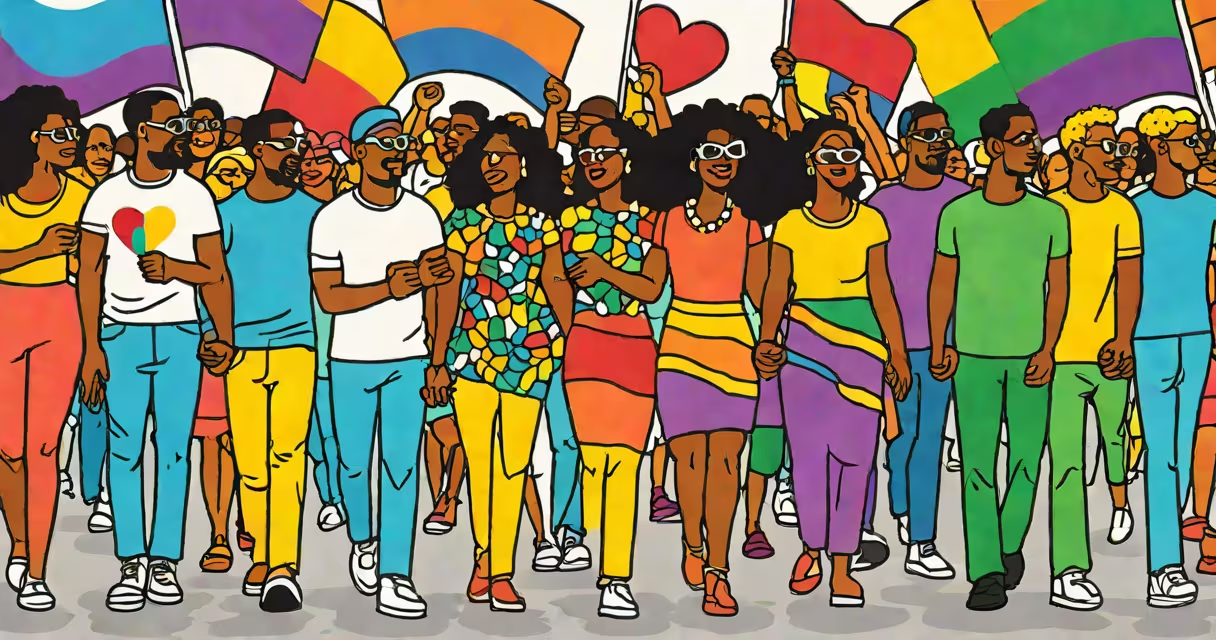
A marriage equality article examines the legal, political, and cultural struggle to secure the right for same-sex couples to marry under national law, focusing on key court decisions, public opinion shifts, and ongoing barriers to full implementation.
Marriage equality refers to the legal recognition of marriage between individuals regardless of gender. It helps same-sex couples have the same rights, responsibilities, and benefits as opposite-sex couples under civil law. This includes access to spousal health insurance, joint tax filing, inheritance rights, and immigration sponsorship. The movement gained momentum in the late 20th century as LGBTQ+ advocates pushed for equal treatment under the law.
The United States Supreme Court's 2015 decision in Obergefell v. Hodges established marriage equality nationwide. The ruling held that the Fourteenth Amendment requires states to issue marriage licenses to same-sex couples and to recognize same-sex marriages performed in other states. This decision built on earlier precedents, such as Lawrence v. Texas (2003), which struck down laws criminalizing consensual same-sex relations. According to the American Civil Liberties Union (ACLU), the Obergefell decision was "the culmination of decades of activism and litigation" to achieve full inclusion under the Constitution.
Legal marriage equality functions through constitutional interpretation, federal legislation, and state-level enforcement. When a country or state recognizes same-sex marriage, it allows couples to register their union with government authorities, granting them legal standing in areas like property ownership, medical decision-making, and parental rights. In the U.S., this means that a marriage certificate issued in New York is valid in California, thanks to the Full Faith and Credit Clause.
Couples who marry under marriage equality laws gain access to over 1,100 federal benefits tied to marital status, including Social Security survivor benefits, veterans' pensions, and immigration petitions. For example, a U.S. citizen can sponsor their same-sex spouse for a green card using Form I-130, a process that became available after the 2013 Windsor decision invalidated Section 3 of the Defense of Marriage Act (DOMA).
Internationally, marriage equality varies widely. As of 2024, 36 countries legally recognize same-sex marriage, according to the Human Rights Campaign. Countries like Canada, South Africa, and Spain were early adopters. In contrast, nations such as Russia, Uganda, and Saudi Arabia ban same-sex relationships outright, and in some places, marriage is punishable by imprisonment or death.
Not all forms of relationship recognition are equivalent. Some governments offer domestic partnerships, civil unions, or registered partnerships that grant limited rights. These differ from full marriage equality because they do not carry the same legal weight or symbolic recognition.
| Type of Recognition | Legal Rights | Examples |
|---|---|---|
| Marriage Equality | Full legal rights, federal benefits, international recognition | United States (since 2015), Germany (since 2017) |
| Civil Union | State-level rights; no federal recognition | Connecticut (before 2010), Vermont (2000-2009) |
| Domestic Partnership | Employer benefits, local protections; no federal status | California (pre-2008), Washington D.C. |
One common misunderstanding is equating civil unions with marriage equality. While both provide some legal protection, civil unions do not afford the same federal benefits. For example, a couple in a civil union in Oregon cannot file joint federal taxes unless they are married. The distinction matters: in 2013, the U.S. Supreme Court ruled in United States v. Windsor that DOMA violated the Equal Protection Clause, forcing the federal government to recognize same-sex marriages performed in states where they were legal.
Some people believe marriage equality undermines religious freedom. However, courts have consistently ruled that requiring religious institutions to perform same-sex weddings violates neither the Free Exercise Clause nor the Establishment Clause. The Supreme Court affirmed this in Masterpiece Cakeshop v. Colorado Civil Rights Commission (2018), stating that while religious objections must be taken seriously, they cannot override anti-discrimination laws.
Another myth is that marriage equality is a recent phenomenon. In reality, the movement began in the 1970s. In 1970, a same-sex couple in Minnesota applied for a marriage license and were denied. Their case, though dismissed, laid groundwork for future challenges. By 2004, Massachusetts became the first U.S. state to legalize same-sex marriage following Goodridge v. Department of Public Health. That decision set a precedent for others.
Even today, disparities persist. In 2023, the U.S. Department of Justice reported that 17 states still lack explicit protections against discrimination based on sexual orientation in employment, housing, and public accommodations. A marriage equality article must address these gaps, not just celebrate victories.
In 2013, James Obergefell and John Arthur, a couple from Ohio, married in Maryland, where same-sex marriage was legal. After Arthur died of ALS, Obergefell sought to have his name listed as the surviving spouse on Arthur's death certificate. Ohio refused, citing state law banning same-sex marriage. Obergefell sued, arguing that the state's refusal violated the Equal Protection and Due Process Clauses of the Fourteenth Amendment.
The case reached the Supreme Court. In a 5-4 decision, the Court ruled that the fundamental right to marry is likely to same-sex couples under the Constitution. Justice Anthony Kennedy wrote: "The right to marry is a fundamental right inherent in the liberty of the person." The ruling applied to all 50 states, making same-sex marriage legal nationwide.
This outcome did not eliminate resistance. In 2022, the Supreme Court declined to hear a challenge from a Kentucky county clerk who refused to issue marriage licenses to same-sex couples. The Court's silence preserved Obergefell, but lower courts continue to grapple with cases involving religious exemptions and public officials' duties.
I attended a wedding in 2016 in Portland, Oregon, where a same-sex couple exchanged vows in a city hall ceremony. The officiant, a licensed marriage celebrant, emphasized that the legal recognition meant their marriage would be honored in every state. The couple later traveled to Arizona for a vacation and were able to access emergency medical care under spousal rights-something they couldn't have relied on before the Obergefell ruling.
That moment underscored how legal recognition translates into tangible security. It wasn't just symbolic-it changed how people live, travel, and plan for emergencies.
Marriage equality is not merely about ceremony. It is about legal parity. Without it, same-sex couples face higher risks during medical crises, inherit less, and are more vulnerable to workplace discrimination. A 2021 study by the Williams Institute found that same-sex couples in states without marriage equality had lower household income and higher rates of poverty compared to those in marriage-recognized states.
When reading a marriage equality article, look beyond the headline. Seek out data on economic outcomes, mental health impacts, and policy implementation. Articles that cite the National Center for Transgender Equality or the Urban Institute provide deeper context than those relying solely on emotional appeals.
Marriage equality remains a living standard. It is not a finished chapter but a foundation for further progress. As long as legal gaps exist-such as in adoption rights, military benefits, or international recognition-advocacy continues. A well-researched marriage equality article reflects this complexity, not just the triumph.