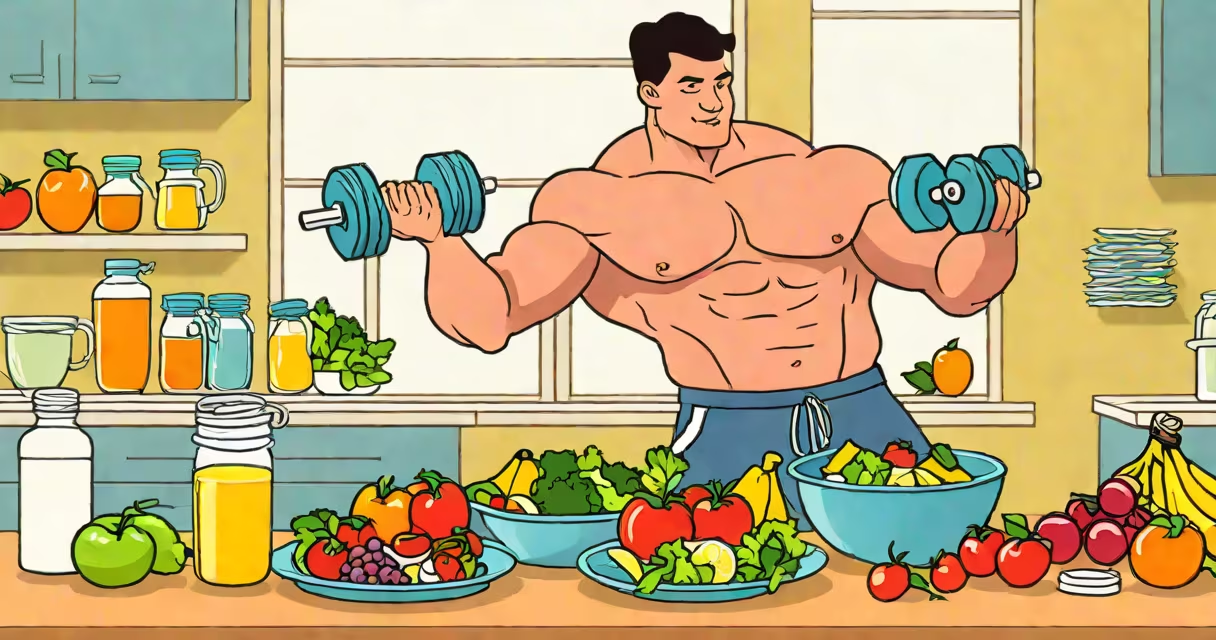
A nutrition plan to lose weight and gain muscle is a structured eating strategy that creates a slight calorie deficit while providing enough protein and nutrients to preserve and build lean muscle during fat loss. This approach, known as body recomposition, allows simultaneous fat reduction and muscle gain through precise macronutrient distribution and resistance training.
Body recomposition differs from traditional weight loss or bulking. Instead of drastically cutting calories or overeating to bulk, it uses moderate energy restriction-typically 10-20% below maintenance-to reduce fat while supporting muscle growth via protein intake and progressive overload in training. Research shows that individuals who consume 1.6-2.2 grams of protein per kilogram of body weight daily while in a mild caloric deficit can maintain or increase lean mass during fat loss.
The foundation of this plan lies in balancing three core elements: total daily energy expenditure (TDEE) estimation, protein distribution across meals, and timing of nutrient intake around workouts. A 2021 study published in Frontiers in Nutrition found that participants consuming 1.8 g/kg/day of protein while training with weights lost 2.3 kg of fat and gained 1.4 kg of muscle over 12 weeks-without changing their calorie intake.
The human body adapts to energy availability. When calories are too low, muscle breakdown increases. When protein is insufficient, the body cannot synthesize new muscle tissue even with resistance training. A nutrition plan to lose weight and gain muscle avoids both extremes by aligning food intake with metabolic demands.
For example, a 180-pound (81.6 kg) male aiming to lose fat while gaining muscle would calculate his TDEE at approximately 2,800 kcal/day based on activity level. He then reduces intake by 15%, landing at 2,380 kcal/day. Of that, 30% comes from protein-about 180 grams per day. The remaining 55% is carbohydrates and 15% fats, distributed evenly across four meals.
Protein timing matters. Consuming 40-50 grams of protein within two hours post-workout maximizes muscle protein synthesis. Leucine, an essential amino acid abundant in whey and animal proteins, triggers mTOR pathways responsible for muscle repair. A 2020 review in Journal of the International Society of Sports Nutrition confirmed that distributing protein intake across multiple meals enhances net muscle protein balance compared to consuming it all at once.
There's no single template for a nutrition plan to lose weight and gain muscle. The most effective versions are customized based on body composition, training frequency, and metabolic health. However, common structural patterns include:
| Type | Calorie Target | Protein (g/kg) | Best For |
|---|---|---|---|
| Beginner Recomp | 10-15% below TDEE | 1.6-2.0 | New lifters, those with higher body fat |
| Intermediate Recomp | 15-20% below TDEE | 2.0-2.2 | Experienced trainees with moderate fat levels |
| Advanced Recomp | 20% below TDEE or more | 2.2+ | Low body fat athletes needing precision |
Each type adjusts the energy deficit and protein density. Beginners often see better results with lower deficits because they're still adapting to training stress. Advanced lifters may require higher protein intake due to greater muscle mass and recovery demands.
Meal timing strategies such as the "anabolic window" have been overstated. While consuming protein shortly after training improves recovery, the total daily protein intake matters more than timing. A 2018 meta-analysis in Medicine & Science in Sports & Exercise concluded that spreading protein across 3-4 meals yields better muscle retention than consuming it all post-workout.
Many assume that losing weight and gaining muscle simultaneously requires extreme measures-like fasting or cycling between bulking and cutting. This is incorrect. Body recomposition is achievable without drastic shifts in routine.
Another misconception is that high-carb diets prevent fat loss. Carbohydrates are not inherently fattening. They fuel intense training sessions and replenish glycogen stores. A 2022 study in Nutrients showed that subjects on a 50% carbohydrate diet lost more visceral fat than those on a 30% carb diet when total calories were matched.
Some people believe plant-based diets hinder muscle gain. But research from the British Journal of Sports Medicine confirms that well-planned vegan diets support muscle growth equally well when protein quality and total intake are optimized. Soy, pea, and rice protein blends provide complete amino acid profiles when combined properly.
Consider a 32-year-old woman weighing 175 pounds (79.4 kg), with 30% body fat. Her TDEE is 2,600 kcal/day. She chooses a moderate deficit: 2,100 kcal/day. Her protein goal is 1.8 g/kg × 79.4 = 143 grams per day.
Her daily meal plan includes:
Total: 2,200 kcal, 153g protein. She trains five days a week with progressive resistance exercises. After 12 weeks, she weighs 162 pounds, with 22% body fat. She gained 3.5 lbs of muscle and lost 13 lbs of fat-despite a consistent calorie deficit.
This outcome reflects the principle that muscle gain during fat loss depends less on absolute calorie restriction and more on protein adequacy, training stimulus, and consistency. A 2023 study in Obesity found that individuals following similar plans saw an average 4.2% improvement in lean mass percentage over six months, even while losing fat.
When designing your own nutrition plan to lose weight and gain muscle, avoid the trap of comparing yourself to social media transformations. Focus on measurable progress: body measurements, strength gains, and how clothes fit-not just the scale. Track your food using apps like Cronometer or MyFitnessPal to ensure accuracy.
Success comes not from perfection, but from consistency. Stick to your nutrition plan to lose weight and gain muscle for at least eight weeks before evaluating changes. Small adjustments compound over time. The goal isn't to look different in a photo-it's to feel stronger, healthier, and more capable in everyday life.