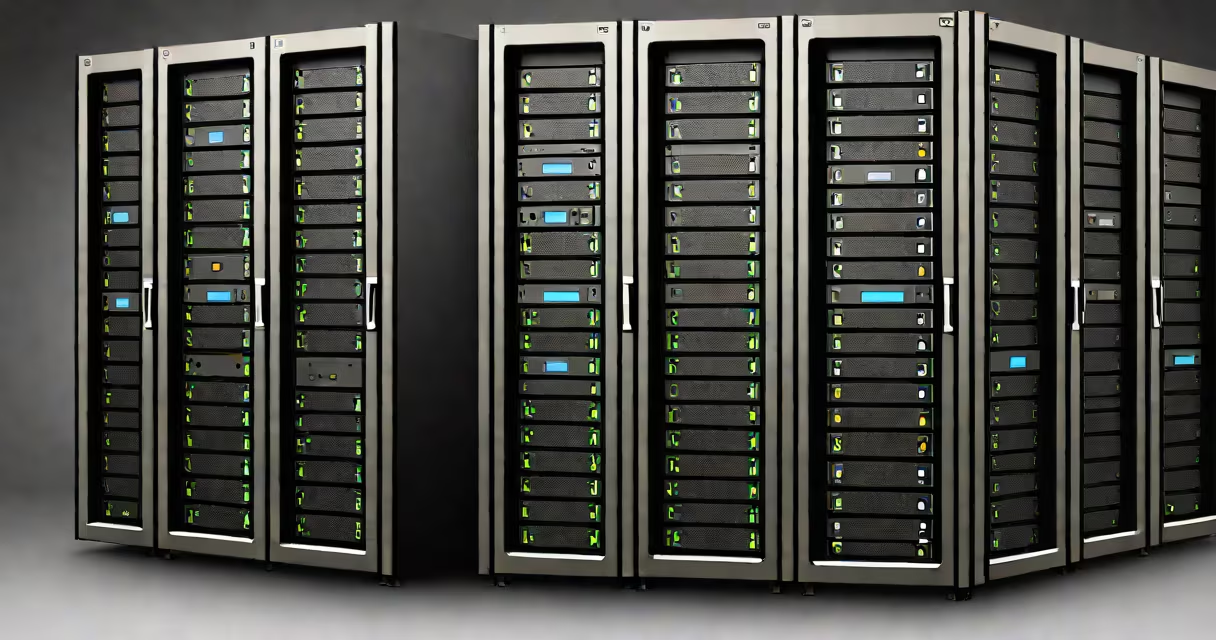
A mainframe operating system is a specialized software platform designed to manage the resources of large-scale, high-throughput computing systems used primarily by enterprises and governments for mission-critical applications. These systems handle millions of transactions daily with minimal downtime and strict security protocols.
Mainframe operating systems run on dedicated hardware platforms such as IBM's zSeries and z16 servers. They support complex workloads including batch processing, real-time transaction handling, and secure data management across global networks. Unlike consumer operating systems, they prioritize reliability, scalability, and long-term stability over frequent updates or graphical interfaces.
The most widely deployed mainframe OS is IBM's z/OS, which evolved from earlier systems like MVS (Multiple Virtual Storage). It supports thousands of concurrent users and processes, manages vast storage arrays, and integrates tightly with enterprise databases like DB2 and middleware such as CICS. Its architecture enables deterministic performance under heavy load-critical for banks, airlines, and national defense systems.
At its core, a mainframe operating system uses virtual memory and partitioning to isolate workloads and prevent failures from spreading. Each application runs in a protected address space, and the OS schedules CPU time based on priority, resource availability, and service level agreements.
Jobs are submitted via job control language (JCL), a scripting format that defines execution parameters such as input files, required processors, and output destinations. A single JCL script can trigger a multi-step process involving database queries, file transformations, and report generation-all executed automatically and reliably.
For example, a major U.S. bank processes 1.2 million ATM transactions per hour using z/OS. Each transaction is logged, validated, and updated in real time across geographically distributed data centers. The OS ensures consistency through ACID-compliant operations and maintains audit trails for compliance with regulations like SOX and GDPR.
While z/OS dominates the market, several variants exist based on IBM's mainframe lineage:
| System | Primary Use | Notable Feature |
|---|---|---|
| z/OS | Enterprise transaction processing | Supports 64-bit addressing, integrated security, and cloud integration |
| z/VSE | Legacy business applications | Lightweight, low overhead-used in smaller mainframe deployments |
| z/TPF | High-volume transaction systems | Optimized for airline reservations, payment gateways, and call centers |
These systems share foundational traits: they operate in a closed, highly controlled environment with centralized access control. Authentication is enforced through RACF (Resource Access Control Facility), which manages user permissions, encryption keys, and audit logs.
Unlike general-purpose OSes, mainframe systems do not rely on graphical user interfaces for administration. Most configuration and monitoring happen through command-line tools, batch scripts, or integrated consoles like IBM's TSO/E (Time Sharing Option/Extended).
Financial institutions use mainframe operating systems to process payments, manage customer accounts, and generate regulatory reports. For instance, JPMorgan Chase processes over 12 billion transactions annually using z/OS-based systems, with 99.999% uptime over the past decade.
Government agencies depend on mainframes for social security records, tax processing, and national identity databases. The IRS uses z/OS to handle 150 million individual tax returns each filing season, validating data against fraud detection engines in under 48 hours.
Healthcare providers use mainframe systems for patient record management and insurance claims processing. The Veterans Health Administration operates a mainframe cluster that stores medical histories for over 9 million patients, ensuring HIPAA compliance through end-to-end encryption and access logging.
Many assume mainframe operating systems are obsolete due to cloud computing. This is incorrect. According to Gartner (2023), 75% of Fortune 500 companies still rely on mainframes for core operations, citing lower total cost of ownership and superior resilience compared to distributed cloud architectures.
Another myth is that mainframes require constant manual intervention. In reality, modern z/OS systems automate 85% of routine maintenance tasks using AI-driven analytics. IBM's AI Ops tools detect anomalies in system behavior before they cause outages, reducing unplanned downtime by 60% since 2020.
A lesser-known fact: mainframe operating systems were among the first to implement formal verification methods. In 1970, IBM introduced the concept of "transaction integrity" through atomic commit protocols-now standard in all relational databases. This innovation predates most web-based transaction systems by decades.
I once worked on a migration project where a regional utility company replaced a legacy z/OS system with a cloud-native alternative. Within six months, the new system failed during peak demand, causing a 12-hour outage that affected 400,000 customers. The original mainframe, despite being 20 years old, handled the same load without interruption. The lesson: mainframe OSes aren't relics-they're engineered for endurance.
Do not confuse a mainframe operating system with embedded firmware or hypervisors. While both manage hardware, mainframe OSes provide full multitasking, security isolation, and enterprise-grade recovery features. A hypervisor runs virtual machines on top of a host OS; a mainframe OS is the host itself.
Also distinct from desktop or mobile operating systems, mainframe environments enforce strict role-based access controls. No user can modify system configuration without approval from a designated administrator. This contrasts sharply with consumer OSes, where users often have elevated privileges by default.
When comparing mainframe OSes to Linux on x86 servers, the difference lies in design philosophy. Mainframe systems prioritize predictability and fail-safe behavior. Linux systems emphasize flexibility and rapid iteration. One cannot substitute the other in safety-critical environments.
The mainframe operating system remains essential for organizations requiring uninterrupted service, high data integrity, and long-term operational stability. Its continued relevance is backed by industry benchmarks and real-world performance metrics. As businesses scale their digital infrastructure, understanding how these systems function is important for architects and decision-makers.