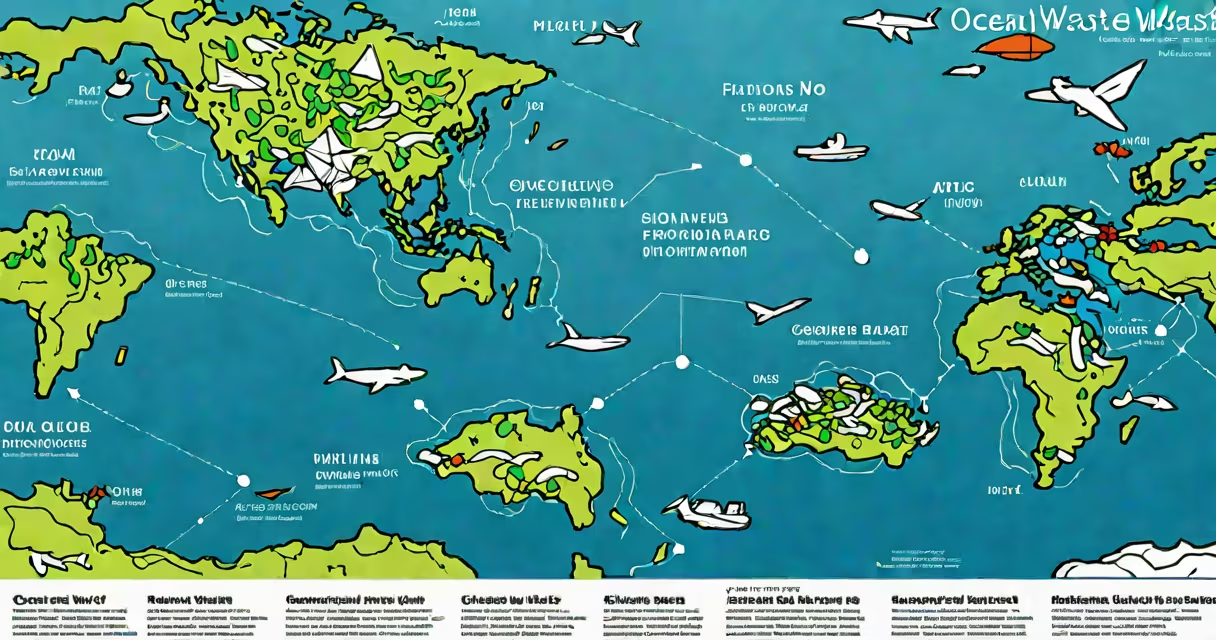
Ocean waste facts describe the scale, sources, and consequences of human-generated debris polluting marine environments. Over 8 million metric tons of plastic enter oceans annually, with 90% originating from land-based activities such as improper disposal and industrial runoff. This debris accumulates in gyres, harms wildlife, and degrades ecosystems.
Plastic waste dominates ocean pollution. Single-use items like bottles, bags, and packaging make up the majority of visible debris. Microplastics-fragments under 5mm-now permeate water columns, sediments, and even seafood consumed by humans. These particles originate from larger plastics breaking down, synthetic textiles shedding during washing, and industrial pellets used in manufacturing.
Marine animals ingest or become entangled in waste. Sea turtles mistake plastic bags for jellyfish, their primary food. Seabirds feed plastic to chicks, leading to starvation. A 2020 study published in *Science Advances* found that 90% of seabird species have ingested plastic, with mortality rates rising in regions like the North Pacific. The World Wildlife Fund (WWF) reports that over 1 million marine animals die annually due to plastic pollution.
Waste enters oceans through rivers, storm drains, coastal dumping, and shipping. Rivers carry an estimated 1.15 million tons of plastic annually into seas-half from just ten rivers, including the Yangtze and Ganges. Once in water, currents transport debris into five major gyres: the North and South Atlantic, North and South Pacific, and the Indian Ocean gyre. These swirling systems trap waste, forming massive accumulation zones.
The Great Pacific Garbage Patch spans over 1.6 million square kilometers-larger than Texas. It contains an estimated 1.8 trillion pieces of plastic, weighing 80,000 tons. Most of it lies below the surface, making detection difficult. Satellite imagery and drone surveys confirm that only 10% of visible debris floats above water; the rest sinks or disperses.
Climate change intensifies waste movement. Stronger storms increase runoff. Rising sea levels expose buried waste in coastal areas. Warmer waters accelerate plastic degradation, releasing toxic chemicals like bisphenol A (BPA) and phthalates into marine food chains.
Not all ocean waste is plastic. Debris includes fishing gear, metal, glass, rubber, and organic material. However, plastic accounts for 85% of marine litter by mass, according to the United Nations Environment Programme (UNEP).
| Type | Source | Impact | Example |
|---|---|---|---|
| Microplastics | Breakdown of larger items, synthetic clothing wash | Enters food chain, bioaccumulates in fish | 100,000 microfibers shed per laundry load |
| Fishing gear | Abandoned nets, lines, traps | Ghost fishing, entanglement | 100 million fishing nets lost annually |
| Single-use plastics | Consumer packaging, bottles, straws | High visibility, slow degradation | Plastic bottle takes 450 years to decompose |
| Industrial pellets | Raw material spill during transport | Confused with food by birds and fish | 100,000 pellets spilled in 2019 off UK coast |
One non-obvious fact: most ocean waste doesn't come from direct beach dumping. A 2022 UNEP report found that only 15% of marine debris originates from direct coastal disposal. The rest comes from inland sources-urban runoff, inadequate waste collection, and informal recycling systems in developing nations.
Many assume ocean waste is mostly from boats and ships. In reality, maritime transport contributes less than 1% of total ocean debris. The largest source is land-based, particularly urban centers with poor waste management infrastructure. Countries like Indonesia, the Philippines, and Vietnam contribute disproportionately due to high population density and low formal recycling rates.
Another misconception is that all plastic floats. In fact, 70% of ocean plastic sinks within months. Sunlight and saltwater degrade polymers, causing them to lose buoyancy. Sinking plastic accumulates on seafloor habitats, disrupting benthic ecosystems and smothering coral reefs.
A third error: people think cleanup efforts are effective at removing large-scale debris. While projects like The Ocean Cleanup's System 001/B have collected tens of thousands of kilograms of waste, they capture only a fraction of annual inputs. The system collects 10% of the plastic in the Great Pacific Garbage Patch annually-insufficient to reverse accumulation.
In 2019, researchers from the University of California, Santa Barbara, mapped the Great Pacific Garbage Patch using satellite data and drone surveys. They found that 92% of the debris was composed of fragments smaller than 5 cm. The average concentration was 240,000 pieces per square kilometer.
One team collected 100 samples from a 10 km² area. They recovered 12,300 plastic pieces, averaging 123 pieces per square meter. Of these, 68% were fragments from degraded fishing nets, 22% were microbeads from cosmetics, and 10% were single-use bottles. All samples contained detectable levels of BPA and phthalates.
This data shows that even remote ocean zones are contaminated. Plastic is not just a surface issue-it infiltrates entire marine ecosystems, from surface waters to deep-sea trenches.
Human health is directly affected. A 2021 study in *Environmental Science & Technology* found that people who eat shellfish from polluted regions consume an average of 11,000 microplastic particles per year. These particles may carry heavy metals and pathogens, increasing long-term disease risk.
Economically, marine pollution costs $13 billion annually in damages to fisheries, tourism, and coastal infrastructure. The World Bank estimates that reducing plastic waste by 50% could save $20 billion in cleanup and healthcare expenses by 2030.
When I visited a coastal cleanup site in Bali in 2023, we removed 3,200 kg of waste in four hours. Over half was single-use plastic-bottles, cutlery, and food wrappers. Local fishermen reported declining catches, attributing it to reduced fish populations and damaged reefs.
Understanding ocean waste facts reveals a crisis rooted in consumption patterns, not just individual behavior. Global agreements like the UN Treaty on Plastic Pollution aim to phase out single-use plastics by 2040. National policies in countries like Canada and the EU mandate extended producer responsibility, requiring manufacturers to manage end-of-life product disposal.