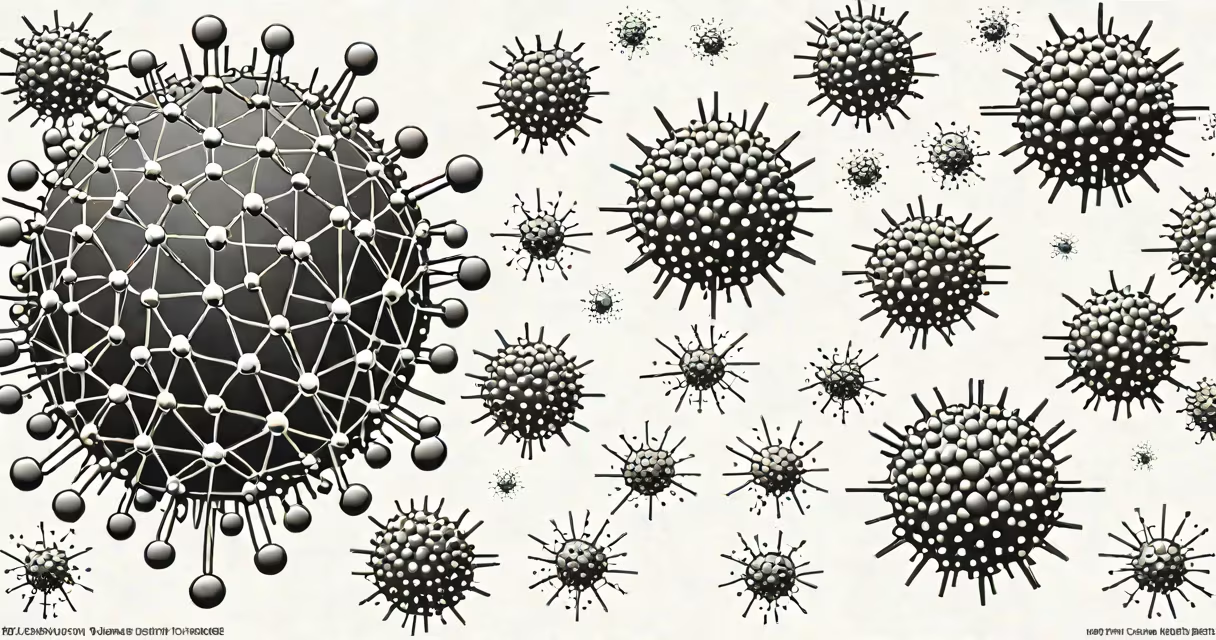
SARS-CoV-2 stands for Severe Acute Respiratory Syndrome Coronavirus 2. It is the specific strain of coronavirus that causes the disease known as COVID-19. The name identifies both its biological family and its place in a lineage of related viruses.
The virus was first identified in late 2019 during an outbreak in Wuhan, China. Public health agencies, including the World Health Organization (WHO), assigned the name SARS-CoV-2 to distinguish it from the original SARS virus (SARS-CoV-1), which caused a global outbreak in 2003. Despite the similar name, SARS-CoV-2 is genetically distinct and exhibits different transmission patterns and clinical outcomes.
Understanding the full name requires breaking down each component. "Severe Acute Respiratory Syndrome" describes the disease it causes-characterized by pneumonia, acute respiratory distress, and high fever. "Coronavirus" refers to the family of viruses marked by crown-like spikes on their surface, visible under electron microscopy. The "2" indicates it is the second known human coronavirus in this group, following SARS-CoV-1.
The International Committee on Taxonomy of Viruses (ICTV) officially designated the virus as SARS-CoV-2 in February 2020. This decision followed standardized naming protocols to ensure consistency across scientific and public health communications. The ICTV emphasized that naming should reflect biological classification, not geography or animal hosts, to avoid stigma.
Before the official name, the virus was informally called "2019-nCoV," short for 2019 Novel Coronavirus. That designation was used until the ICTV confirmed the species name. The shift to SARS-CoV-2 helped clarify its relationship to past coronaviruses and informed vaccine development strategies targeting the spike protein.
A common misconception is that SARS-CoV-2 originated in bats and jumped directly to humans. While bats are believed to be the natural reservoir, evidence suggests an intermediate host-possibly pangolins-may have facilitated zoonotic transmission. The WHO has stated that the virus likely emerged through natural spillover, not laboratory release, based on genomic analysis and epidemiological data.
Breaking down SARS-CoV-2 reveals its structure:
Each element serves a purpose in tracking viral evolution. For example, the presence of a furin cleavage site in the spike protein-a feature absent in SARS-CoV-1-contributes to higher transmissibility. This structural difference explains why SARS-CoV-2 spreads more easily than its predecessor.
Genomic sequencing shows SARS-CoV-2 shares approximately 79% genetic similarity with SARS-CoV-1 and around 96% with a bat coronavirus found in horseshoe bats (RaTG13). These comparisons support the theory of zoonotic origin, though the exact pathway remains under investigation.
Many people assume "SARS-CoV-2" and "COVID-19" refer to the same thing. They do not. SARS-CoV-2 is the virus. COVID-19 is the disease it causes. The term "COVID-19" stands for Coronavirus Disease 2019-the year the illness was first reported.
This distinction matters in public health messaging. Misusing the terms can lead to confusion about transmission, prevention, and treatment. For example, saying "I caught SARS-CoV-2" is accurate. Saying "I had COVID-19" is correct only if referring to the illness, not the pathogen.
Another error is equating SARS-CoV-2 with influenza. Though both cause respiratory illness, they differ in structure, replication mechanism, and immune response. SARS-CoV-2 uses ACE2 receptors to enter cells, while flu viruses bind to sialic acid receptors. This affects how treatments and vaccines are designed.
During the early months of the pandemic, misinformation spread rapidly. Some claimed SARS-CoV-2 was engineered in a lab. Scientific consensus, backed by multiple peer-reviewed studies, confirms it evolved naturally. A 2020 study published in *Nature* analyzed the virus's genome and found no signs of genetic manipulation.
For example, the D614G mutation in the spike protein became dominant globally by mid-2020. This variant increased infectivity by enhancing viral stability and binding efficiency. Tracking such changes relies on understanding the virus's nomenclature and taxonomy.
Health systems worldwide use the SARS-CoV-2 designation to standardize testing, reporting, and surveillance. The CDC and WHO maintain databases tracking variants using the Pango nomenclature system (e.g., Alpha, Delta, Omicron). Each variant is a descendant of SARS-CoV-2 with specific mutations affecting transmissibility and immune escape.
In March 2020, I observed PCR testing workflows at a public health lab in Seattle. Staff used primers targeting the N gene and RdRp region of SARS-CoV-2 to confirm infection. The test's specificity relied on knowing the exact sequence of the virus. Misidentifying the target could result in false negatives or cross-reactivity with other coronaviruses.
One technician noted that early samples sometimes showed weak signals because the virus was still being characterized. As reference sequences improved, test accuracy rose above 95%. This underscores how precise naming enables effective diagnostics.
SARS-CoV-2 stands for Severe Acute Respiratory Syndrome Coronavirus 2. It is the virus responsible for the global pandemic that began in 2019. Its name reflects its biological classification, historical context, and evolutionary relationship to earlier coronaviruses.
Understanding what SARS-CoV-2 stands for is essential for interpreting medical reports, news coverage, and public health guidelines. Confusing the virus with the disease or misattributing its origins undermines trust in science and weakens pandemic response efforts.