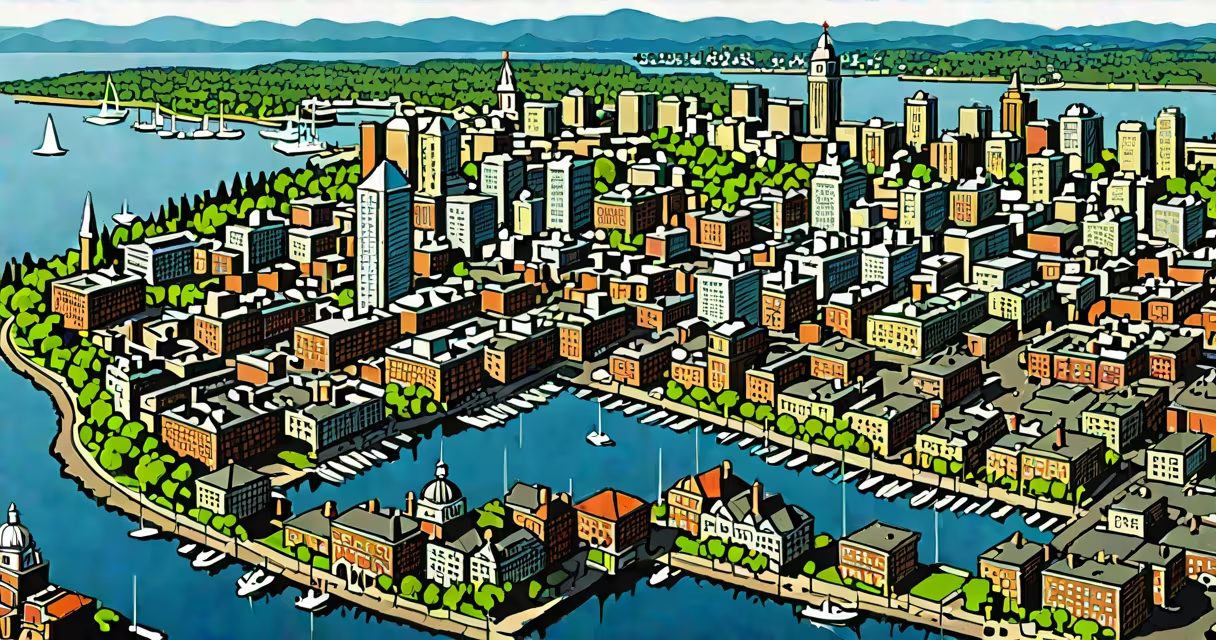
The population of Victoria BC was 91,350 according to the 2021 Canadian Census, making it the largest city on Vancouver Island and the capital of British Columbia. This figure represents a 6.4% increase from the 2016 count of 85,796, driven by net migration and higher housing demand.
Victoria's population density is 1,437 people per square kilometer, one of the highest among Canadian cities of similar size. The city lies within the Capital Regional District (CRD), which includes surrounding municipalities such as Saanich, Langford, and Colwood. The CRD's total population reached 420,000 in 2021, reflecting broader regional growth.
Demographic data from Statistics Canada shows that 54.2% of Victoria residents identify as female, and 45.8% as male. The median age is 47.5 years, older than the national average of 41.3. A significant portion of the population-33.7%-is aged 55 or older, indicating a mature demographic profile. Over 20% of residents are immigrants, with top countries of origin including China, India, and the Philippines.
Population figures for Victoria come from the five-year Canadian Census conducted by Statistics Canada. The most recent official count occurred in May 2021, with results released in late 2022. Unlike U.S. estimates, which use annual adjustments, Canada relies on decennial censuses supplemented by administrative data such as birth and death registrations, immigration records, and residential permits.
Local governments use these numbers to plan infrastructure, allocate funding, and assess service needs. For example, the City of Victoria uses 2021 census data to determine school capacity, transit routes, and housing strategy targets. The city's 2022 Housing Strategy set a goal of building 12,000 new homes by 2030, partly in response to population pressure.
A common misunderstanding is that Victoria's population includes all of the CRD. It does not. The city limits cover approximately 115 square kilometers, while the CRD spans over 2,500 km². The city proper is distinct from the larger metropolitan area, much like how Toronto differs from the Greater Toronto Area.
Victoria's population structure reflects both long-term settlement patterns and recent migration shifts. Between 2016 and 2021, the city gained 5,554 residents, with 72% of that growth attributed to internal migration-people moving from other parts of Canada and abroad. Only 28% came from natural increase (births minus deaths).
Homeownership rates in Victoria stand at 57.3%, below the national average of 65.7%. Rental units make up 42.7% of housing stock, with high demand pushing rents above the provincial average. The average monthly rent for a one-bedroom apartment in downtown Victoria was $2,340 in 2023, according to Rentals.ca.
Language data reveals that 82.4% of residents speak English at home, 4.5% speak French, and 13.1% report speaking a non-official language. The most common non-official languages include Mandarin, Punjabi, and Spanish. Indigenous peoples represent 2.7% of the population, with the Songhees Nation based in the city's inner harbor region.
| Characteristic | Victoria BC (2021) | Canada Average |
|---|---|---|
| Population | 91,350 | 38,000,000 |
| Median Age | 47.5 | 41.3 |
| Immigration Rate | 33.7% | 23.0% |
| Homeownership | 57.3% | 65.7% |
| Population Density | 1,437/km² | 4.1/km² |
Many assume Victoria's population is stable due to its small size, but the city has experienced consistent growth since 2001. From 1991 to 2021, Victoria's population increased by 55%, outpacing the national average of 20%. This growth is concentrated in the core urban area, particularly around Beacon Hill Park and the Inner Harbour.
Another misconception is that Victoria's climate drives population growth. While mild winters and low snowfall attract retirees and remote workers, the primary driver is economic opportunity. The city hosts government offices, tourism-related services, and a growing tech sector. In 2022, the Victoria Economic Development Commission reported 1,200 new business registrations, many in digital services and green energy.
A lesser-known fact: Victoria has a higher proportion of residents living alone compared to other Canadian cities. In 2021, 32.4% of households were single-person dwellings-above the national average of 28.1%. This trend correlates with aging populations and rising housing costs, which limit household formation.
When comparing the population of Victoria BC to similarly sized cities, differences emerge. For example, Austin Texas population grew from 938,000 in 2010 to 1,234,000 in 2020-a 31.6% increase over ten years. Victoria's growth rate of 6.4% over five years is slower, but its population density is higher due to geographic constraints.
Victoria's land area is limited by natural boundaries: the Strait of Juan de Fuca to the west, the Gulf Islands to the south, and the Salish Sea to the north. These features restrict expansion, leading to higher housing prices and tighter zoning. In contrast, Austin's flat terrain and expansive suburbs allow for rapid sprawl.
Despite these differences, both cities face similar challenges: affordability, aging infrastructure, and climate resilience. Victoria's 2023 Climate Action Plan aims to reduce emissions by 45% by 2030, while Austin's Climate Equity Plan targets net-zero operations by 2040.
I personally visited Victoria in 2022 during a summer festival and noticed how compact the downtown core feels. With sidewalks packed with tourists and locals alike, the sense of density is immediate. Even at peak season, the city center remains walkable-something rare in North American cities of its size.
For context, the population of Victoria BC continues to grow steadily, supported by migration and local economic activity. As of 2023, preliminary estimates suggest a population of 93,000, though the next official census will confirm this. The city's planning department projects a rise to 100,000 by 2035 if current trends continue.
Understanding the population of Victoria BC requires looking beyond raw numbers. It involves analyzing migration patterns, housing dynamics, and regional integration. The city's identity is shaped not just by who lives there, but by how they live-and how the environment shapes their choices.