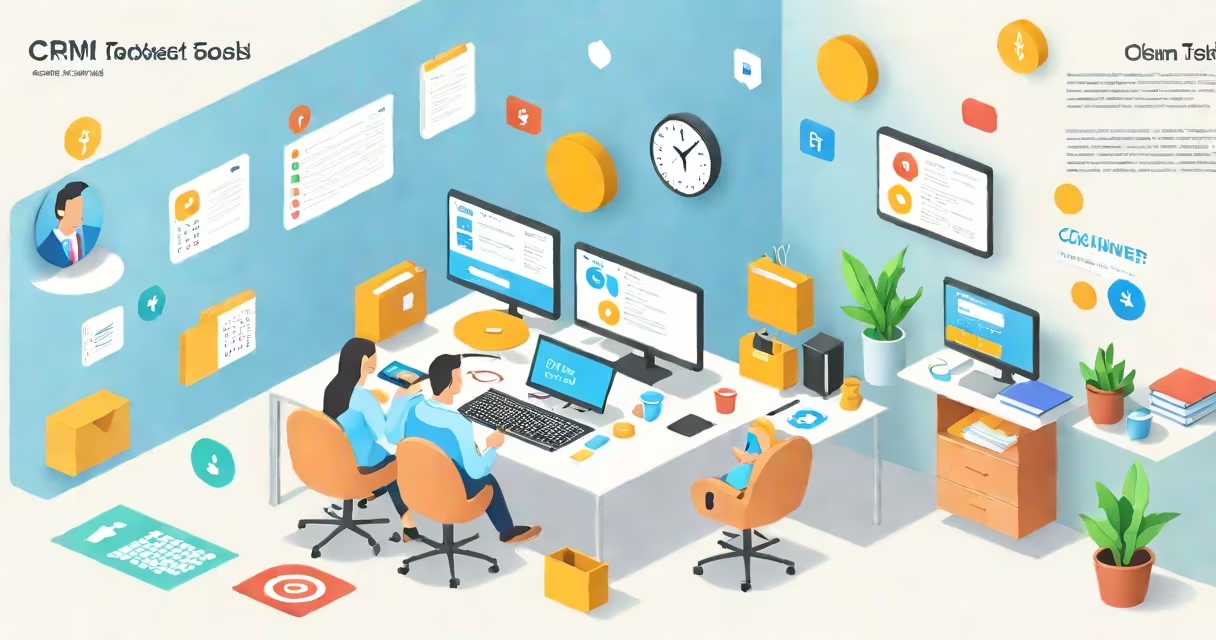
Crm tools are software platforms that store, organize, and analyze customer interactions and data throughout the entire customer lifecycle. They centralize communication records, track sales pipelines, manage marketing campaigns, and support service workflows-all in one system.
These tools replace scattered spreadsheets, email threads, and sticky notes with structured databases that scale with business growth. A single entry might include a prospect's name, contact details, last conversation date, deal stage, follow-up tasks, and notes from past calls.
According to HubSpot's 2023 State of Sales Report, 76% of high-performing sales teams use a dedicated CRM. Salesforce's 2022 Customer Success Study found that companies using CRMs see a 29% increase in sales productivity compared to those relying on manual tracking.
At their core, crm tools collect data from multiple touchpoints-emails, phone calls, website visits, social media messages-and log them automatically or manually into a central profile. This creates a complete timeline of each customer's process.
When a sales rep opens a lead's record, they see past interactions, upcoming meetings, assigned tasks, and historical purchase behavior. The system can flag overdue follow-ups, suggest next steps based on workflow rules, and send automated reminders.
Integration with email clients like Gmail or Outlook allows auto-tagging of sent and received messages. For example, if a rep sends a proposal via Gmail, the CRM logs the event, updates the deal stage, and schedules a follow-up reminder three days later.
Not all crm tools serve the same purpose. They fall into three primary categories based on function and audience:
| Type | Best For | Key Features | Example Use Case |
|---|---|---|---|
| Sales CRM | Sales teams managing leads and deals | Pipeline tracking, lead scoring, forecasting, activity logging | A SaaS company tracks 120 monthly leads through trial signups, demos, and contract negotiations. |
| Marketing CRM | Automating campaigns and measuring engagement | Email automation, campaign tracking, lead nurturing, analytics | A fitness brand uses drip emails to guide new subscribers through a 30-day challenge. |
| Service CRM | Support teams resolving issues and managing tickets | Ticketing, knowledge base, SLA tracking, customer satisfaction surveys | A tech startup resolves 85% of support tickets within 24 hours using automated routing and response templates. |
Some platforms blend functions. Salesforce and HubSpot offer unified systems that cover sales, marketing, and service. Others specialize-Zoho CRM focuses on small-to-midsize businesses with customizable workflows.
Many assume crm tools are only for large enterprises or sales departments. That's incorrect. Small businesses, freelancers, and consultants use them daily to manage client relationships.
Another misconception is that crm tools replace human interaction. They don't. Instead, they reduce repetitive tasks so teams focus on building trust. A study by McKinsey & Company found that CRM users spend 20% less time on administrative work and 15% more time on actual client conversations.
Also, crm tools aren't interchangeable. A tool designed for e-commerce (like Shopify's built-in CRM) won't handle complex B2B sales pipelines. Choosing the right one depends on workflow complexity, team size, and integration needs.
Over the next six weeks, the coach sends automated check-in emails tied to milestones-"Day 7: How's your morning routine?"-and logs responses. When a client misses two sessions, the system flags it and suggests a recovery call.
After three months, the coach reviews progress: 70% of clients completed the program, and 60% returned for a renewal. All data was captured in real time, reducing manual reporting by 8 hours per month.
This example shows how crm tools turn vague client management into measurable outcomes. Without one, tracking such patterns across dozens of clients would require endless spreadsheets and memory recall.
What are crm tools? They are operational systems that structure customer relationships around data, consistency, and action. Their value lies not in features alone, but in how they align team behavior with customer needs.