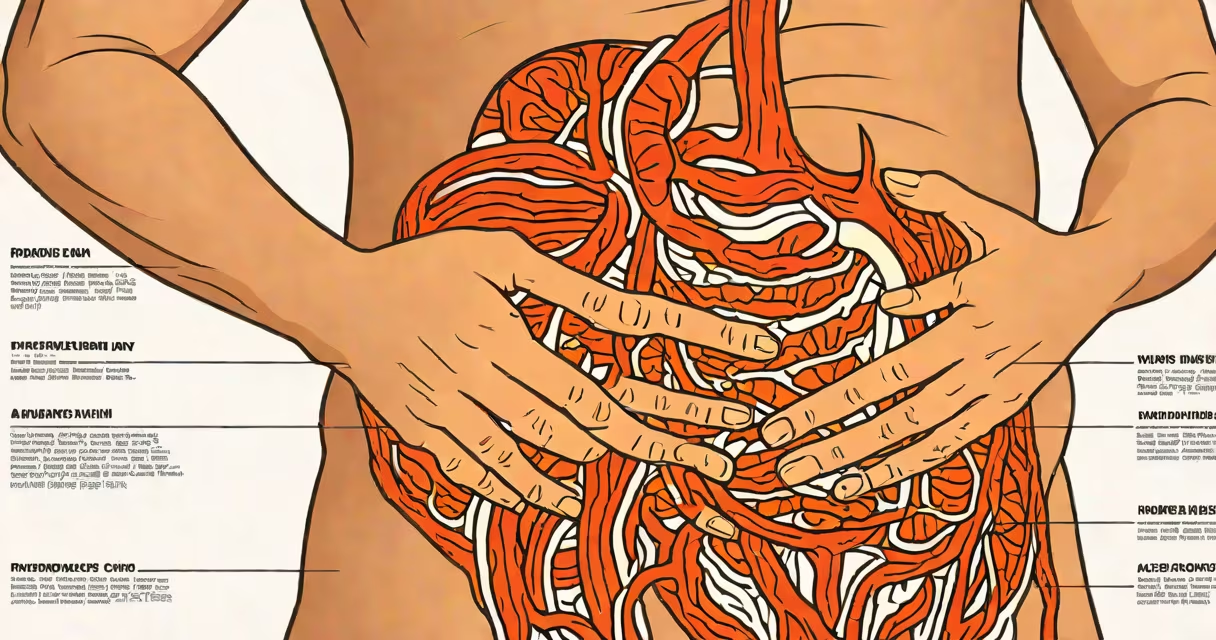
Lower left abdominal pain when pressed is a symptom indicating localized tenderness in the left lower quadrant of the abdomen, often signaling inflammation, infection, or structural issues in organs such as the sigmoid colon, left ovary, or left ureter. This sensation typically worsens under pressure and may suggest conditions ranging from mild gastrointestinal upset to serious disorders requiring prompt treatment.
When pressure applied to the lower left abdomen triggers pain, it reflects irritation or inflammation in underlying tissues. The response is not just a sign of discomfort-it's a physical indicator that something in the area is compromised. Clinicians assess this through palpation during physical exams, using standardized techniques to locate the source of tenderness. Pain upon pressing is not a diagnosis, but a clinical clue pointing toward specific anatomical regions and potential pathologies.
The lower left abdomen houses several important structures. Pressing on this region activates nociceptors-nerve endings sensitive to mechanical stress-within the peritoneum, muscles, and organ walls. If those tissues are inflamed or diseased, stimulation triggers pain signals to the spinal cord and brain. This is known as rebound tenderness when pain increases after sudden release of pressure, a sign of peritoneal irritation.
For example, during a physical exam, a doctor presses firmly on the lower left quadrant and asks the patient to report pain. If the patient winces or says "yes" when pressure is applied, especially if pain persists after release, it suggests inflammation involving the peritoneum-the lining of the abdominal cavity. This mechanism helps distinguish between benign muscle strain and serious internal issues like appendicitis (though usually right-sided), diverticulitis, or pelvic inflammatory disease.
The lower left quadrant contains the descending colon, sigmoid colon, left ureter, left ovary and fallopian tube (in women), and parts of the left kidney and adrenal gland. Any of these can cause pain when pressed. Common causes include:
According to the American College of Gastroenterology, diverticulitis accounts for nearly 70% of cases of acute left lower quadrant pain in adults over 50. A CT scan confirms the diagnosis in 95% of cases, showing thickened colonic walls and surrounding fluid.
Lower left abdominal pain when pressed is frequently mistaken for gas, constipation, or muscle strain. However, persistent or worsening pain with fever, nausea, or blood in stool indicates a need for imaging and specialist evaluation. One common error is assuming that left-sided pain is always related to the colon-yet ovarian pathology can mimic colonic symptoms.
For instance, a 32-year-old woman presented with lower left abdominal pain that worsened when pressed. She had no bowel changes. Initial diagnosis was constipation. After two days of worsening pain and fever, a pelvic ultrasound revealed a ruptured ovarian cyst. This case highlights how similar symptoms can stem from vastly different systems.
Another misstep is confusing this pain with irritable bowel syndrome (IBS). While IBS causes cramping and bloating, it rarely causes localized tenderness to pressure. The absence of systemic signs like fever or weight loss helps differentiate functional from organic causes.
Pain that worsens with pressure and is accompanied by any of the following warrants urgent evaluation:
| Symptom | Why It Matters |
|---|---|
| Fever above 100.4°F (38°C) | Indicates infection or inflammation; may signal diverticulitis or pelvic infection. |
| Blood in stool or vomit | Points to gastrointestinal bleeding, possibly from ulceration or tumor. |
| Inability to pass gas or have a bowel movement | Suggests bowel obstruction, which can result from adhesions or tumors. |
| Pain lasting more than 24 hours without improvement | Increases risk of complications like abscess formation in diverticulitis. |
Research from the National Institute of Diabetes and Digestive and Kidney Diseases shows that delayed treatment of diverticulitis raises hospitalization rates by 40%. Early intervention reduces complications and recovery time.
A 58-year-old man reported sharp pain in his lower left abdomen that intensified when he pressed on the area. He had no recent travel or food poisoning. His primary care provider performed a physical exam and noted rebound tenderness. A CT scan confirmed a 1.5 cm abscess in the sigmoid colon with surrounding inflammation-diagnosed as complicated diverticulitis.
He was admitted for IV antibiotics and later underwent a sigmoid colectomy. Without early imaging, the abscess could have ruptured into the peritoneal cavity, leading to sepsis. This case underscores that pain when pressed is not just a symptom-it's a diagnostic threshold.
While lower left abdominal pain when pressed often points to gastrointestinal or gynecological origins, it can overlap with musculoskeletal or neurological causes. For example, a hernia or nerve entrapment (like the iliohypogastric nerve) can refer pain to the lower abdomen. These are less likely to show tenderness on palpation but may mimic it.
Understanding the difference between visceral pain (from organs) and somatic pain (from skin/muscle) helps clarify the origin. Visceral pain is dull, poorly localized, and often described as cramping. Somatic pain-like from pressing on inflamed tissue-is sharp, well-localized, and worsens with touch. Lower left abdominal pain when pressed is typically somatic in nature.
During a routine visit, I once observed a patient describe pain in the lower left abdomen that flared when pressed. She had no prior history of digestive issues. After a focused exam and ultrasound, we identified a small ovarian cyst. Her pain resolved after hormonal therapy. This reinforced that even subtle signs-like tenderness on pressure-can reveal significant findings.
Lower left abdominal pain when pressed is not a standalone diagnosis. It is a physical finding that demands context: timing, associated symptoms, medical history, and objective testing. Ignoring it risks missing life-threatening conditions like perforated diverticulitis or ruptured ectopic pregnancy.
If you experience consistent or worsening pain in the lower left abdomen when pressed, especially with fever, vomiting, or changes in bowel habits, consult a healthcare provider promptly. Early evaluation improves outcomes and prevents complications.