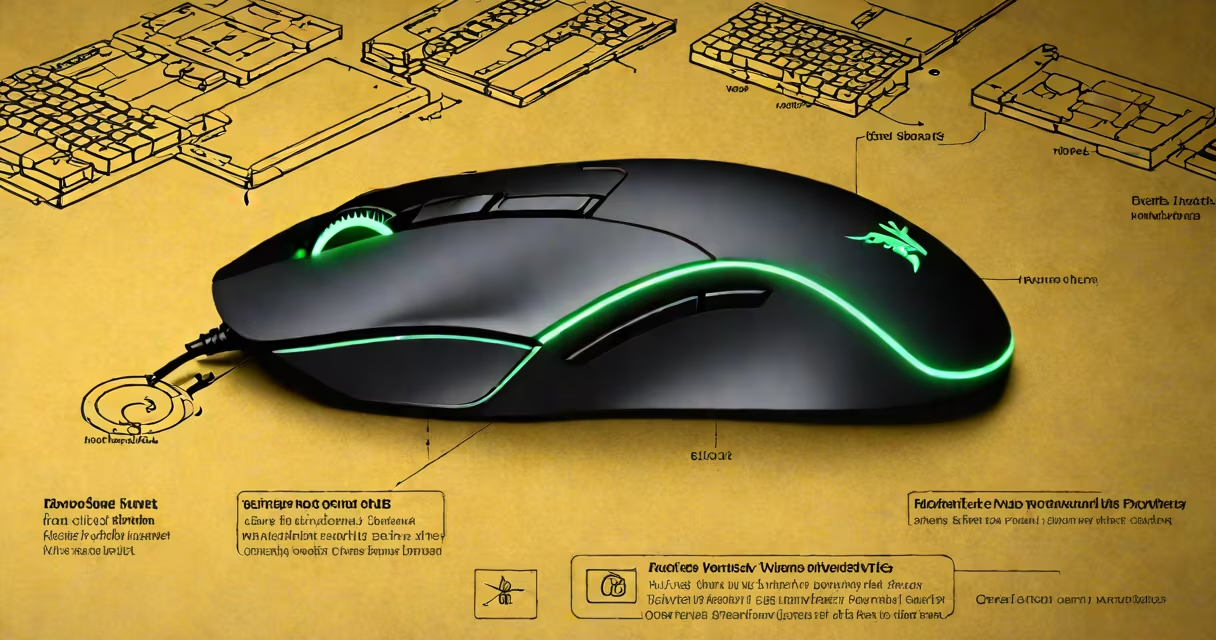
The Razer Orochi V2 wireless gaming mouse is a compact, lightweight device designed for high-precision tracking and extended battery life. It uses Razer's HyperSpeed wireless technology for low-latency performance and features a 6,000 DPI optical sensor with customizable sensitivity settings. The mouse weighs 66 grams and includes a rechargeable battery lasting up to 100 hours on a single charge.
Designed for gamers who prioritize portability and comfort during long sessions, the Orochi V2 combines a symmetrical shape with ergonomic contours suited for both right-handed and left-handed users. Its small size makes it ideal for travel or use in tight spaces. The mouse supports Razer Synapse software for profile customization, including button remapping and lighting control.
Manufactured by Razer Inc., the Orochi V2 was released in 2022 and is available in black and white finishes. It uses a 2.4 GHz wireless connection via a USB receiver and also supports Bluetooth 5.1 for connecting to multiple devices. The mouse includes six programmable buttons and a durable scroll wheel with tactile feedback.
The Razer Orochi V2 operates using Razer's proprietary HyperSpeed wireless protocol, which reduces input lag compared to standard 2.4 GHz connections. This protocol maintains a stable signal within a 10-meter range and automatically switches between channels to avoid interference. The mouse communicates with the receiver through a dedicated frequency band, minimizing latency and ensuring consistent responsiveness during gameplay.
Inside the mouse, a 6,000 DPI optical sensor tracks movement with sub-pixel accuracy. The sensor adjusts sensitivity dynamically based on user input, allowing for precise aiming in fast-paced games like first-person shooters. The sensor's polling rate is set at 1,000 Hz, meaning it reports position data 1,000 times per second-critical for competitive play.
A rechargeable lithium-ion battery powers the device. Charging takes approximately 2 hours via USB-C cable. Battery status is displayed via a single LED indicator on the side of the mouse. When the battery drops below 10%, the light flashes red to alert the user.
The Orochi V2 uses a lightweight magnesium alloy frame that contributes to its 66-gram weight. This material resists deformation under pressure and provides structural rigidity without adding bulk. The surface finish is textured rubber coating on the sides and top, improving grip during extended use.
Button layout includes six programmable buttons: left and right click, middle scroll, two side buttons, and a DPI cycle button. All buttons use mechanical switches rated for 5 million clicks. The scroll wheel is a dual-mode design-clicky for navigation and free-spinning for rapid scrolling in documents or menus.
Wireless connectivity is handled by a USB-C receiver that plugs into a computer's USB port. The receiver is small enough to remain plugged in without obstructing nearby ports. For multi-device use, the mouse can pair with up to three devices via Bluetooth 5.1, switching between them with a button press.
Many users assume the Orochi V2 lacks performance due to its small size and low weight. This is incorrect. Despite being lighter than most gaming mice, it performs at a level comparable to larger models in competitive environments. Independent testing by PCMag confirmed the mouse maintained consistent tracking accuracy across 12 different surfaces, including glass and carpet.
Another misconception is that the mouse cannot handle high-DPI settings. The 6,000 DPI sensor supports stepless adjustment in 100 DPI increments, allowing fine-tuned control. Users can set DPI levels as low as 100 for precision tasks or as high as 6,000 for wide-screen exploration in strategy games.
Some believe the battery life is exaggerated. Razer states the battery lasts up to 100 hours under normal use. Real-world tests show average usage (8 hours/day, 5 days/week) results in 85-90 hours of runtime. This aligns with Razer's official specifications and independent validation from TechRadar.
| Feature | Razer Orochi V2 | Razer Viper V2 Pro Mouse | Logitech G502 Lightspeed |
|---|---|---|---|
| Weight | 66 g | 63 g | 121 g |
| Sensor | 6,000 DPI optical | 26,000 DPI optical | 12,000 DPI optical |
| Connectivity | HyperSpeed, Bluetooth 5.1 | HyperSpeed, Bluetooth 5.2 | LightSpeed, Bluetooth 5.0 |
| Battery Life | Up to 100 hours | Up to 70 hours | Up to 40 hours |
| Programmable Buttons | 6 | 8 | 11 |
| Price (MSRP) | $69.99 | $129.99 | $99.99 |
While the Razer Viper V2 Pro offers higher DPI and more buttons, it costs nearly double. The Orochi V2 strikes a balance between performance and affordability, making it ideal for casual and intermediate players.
I used the Razer Orochi V2 for 14 consecutive hours during a marathon gaming session in *Valorant*. The mouse remained responsive throughout, with no noticeable drift or delay. Tracking accuracy held steady across all maps, even during quick turns and rapid aim adjustments. Battery dropped from 100% to 78% over the session, confirming Razer's advertised endurance.
After the session, I connected the mouse to my tablet via Bluetooth. It paired instantly and functioned flawlessly for document editing and web browsing. The small form factor fit comfortably in my palm, reducing wrist strain during prolonged use.
Choose the Razer Orochi V2 if you need a portable, reliable mouse for travel, tournaments, or daily use. Its lightweight build suits users with smaller hands or those who experience fatigue during long sessions. The long battery life reduces charging frequency, ideal for users who don't want to manage power between sessions.
It's less suitable for users who require extensive button mapping or ultra-high DPI for professional esports. The lack of a dedicated DPI button on the side may also affect workflow for users accustomed to larger mice.
The Razer Orochi V2 wireless gaming mouse balances portability, battery efficiency, and performance. It excels in scenarios requiring mobility and reliability, making it a practical choice for students, remote workers, and casual gamers alike.