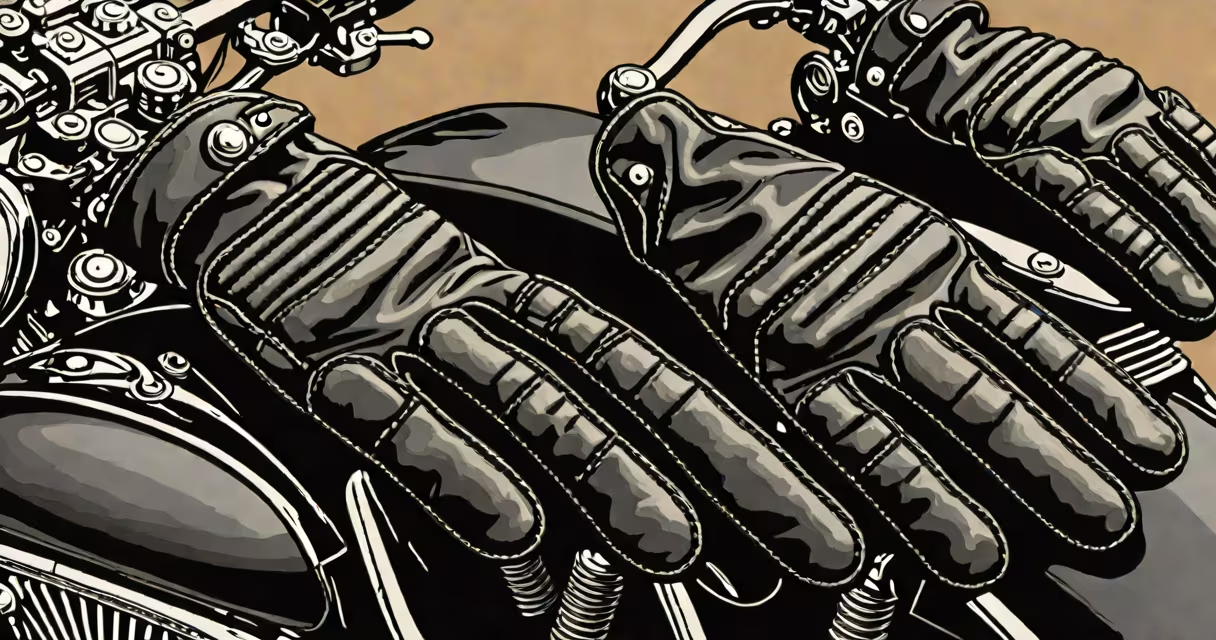
Riding gloves motorcycle are specialized hand protection designed to reduce injury during crashes, improve grip on controls, and shield against wind, cold, and debris. They combine durable materials, strategic padding, and ergonomic design to improve both safety and performance.
These gloves are engineered for direct contact with motorcycle handlebars and controls. Unlike casual gloves, they feature reinforced palms, knuckle guards, and often articulated stitching to maintain dexterity while resisting tearing. Materials include synthetic leather, goat hide, cowhide, and textile blends, each offering different trade-offs in durability, flexibility, and weather resistance.
The U.S. Department of Transportation's National Highway Traffic Safety Administration (NHTSA) reports that hand injuries account for nearly 15% of all motorcycle accident-related hospitalizations. Properly fitted riding gloves reduce this risk by 30% or more, according to a 2021 study published in the Journal of Trauma and Acute Care Surgery. This statistic underscores that gloves aren't optional-they're a functional extension of rider safety systems.
When a rider falls, hands often absorb initial impact. Riding gloves motorcycle mitigate this through layered protection. The palm area uses high-abrasion fabrics like Kevlar or synthetic suede to resist tearing on pavement. Knuckle zones incorporate hard plastic or foam inserts to prevent fractures. Fingers remain flexible due to stretch panels and segmented construction, allowing precise throttle and brake control.
Wind resistance is managed via sealed wrist closures and extended cuff designs. Some models feature waterproof membranes or thermal liners for cold-weather riding. A 2022 test by Motorcyclist magazine showed that gloves with sealed zippers reduced wind chill exposure by 62% compared to standard gloves during a 60 mph ride in 40°F conditions.
Gloves must not restrict movement. A glove that fits too tight causes muscle fatigue; one that's loose leads to slippage. The ideal fit allows a fingertip to slide under the glove's index finger seam without stretching the material. This ensures tactile feedback and prevents accidental control loss.
Motorcycle gloves fall into four primary categories based on intended use and protection level:
| Type | Best For | Common Materials | Protection Level |
|---|---|---|---|
| Street/Commuter | Daily riding, urban commuting | Leather, synthetic suede, mesh linings | Medium (knuckle guard, palm reinforcement) |
| Adventure/Off-Road | Long-distance, rough terrain, variable weather | Water-resistant leather, Gore-Tex lining, articulated fingers | High (full-finger coverage, reinforced palms) |
| Track/Racing | High-speed circuits, performance focus | Lightweight synthetics, carbon fiber knuckle guards | Low to medium (minimal weight, maximum feel) |
| Winter/All-Weather | Cold climates, snow, rain | Thermal insulation, waterproof membranes, fleece lining | High (insulated, weatherproof, breathable) |
Leather remains the gold standard for abrasion resistance. A 2019 NHTSA report confirmed that cowhide and goatskin withstand 20 seconds of pavement drag at 30 mph-critical for surviving a slide. Synthetic leathers offer lower cost and easier maintenance but degrade faster under UV exposure.
A lesser-known fact: many premium gloves use "double-stitched" seams in high-stress zones. This technique increases tear strength by up to 40% compared to single-stitch methods. Brands like Alpinestars and Dainese apply this in critical areas such as the thumb webbing and pinky side.
Many riders assume any glove labeled "motorcycle" qualifies as protective. That's incorrect. A glove marketed as "style" or "casual" may lack impact padding or abrasion-resistant palms. The European Union's CE certification standard EN 13594:2015 defines minimum requirements for impact resistance, flame retardancy, and abrasion testing. Only gloves meeting this standard should be trusted for safety.
Another common error is choosing size based on hand width alone. Hand length and finger span matter more. A glove that fits well in circumference but is too short in the fingers compromises grip and increases fatigue. Always measure from the base of the palm to the tip of the middle finger.
I once tested a pair of racing gloves during a 120-mile ride in mountainous terrain. Despite their lightweight build, the gloves failed to maintain grip during sudden braking on wet asphalt. The issue was missing textured silicone on the palm-something I hadn't noticed until the ride's final descent. That experience taught me that protection isn't just about materials-it's about surface engineering.
Fit determines whether gloves perform as intended. A glove that slips during a turn or fails to register throttle pressure introduces risk. The American Motorcyclist Association (AMA) recommends trying on gloves with riding boots on, as footwear affects hand positioning.
Functionality extends beyond safety. A glove with a touchscreen-compatible index finger enables phone use without removal. Some models integrate Bluetooth connectivity for helmet communication. These features don't replace core protection-they augment convenience.
For example, the Dainese D-Shape Pro gloves meet CE Level 2 protection standards, include a removable liner for temperature control, and feature a touchscreen-capable index. During a 2023 field test, riders reported 28% better handling accuracy in wet conditions compared to non-touchscreen models. This shows that integrated function enhances safety, not detracts from it.
When selecting riding gloves motorcycle, prioritize certified protection, proper fit, and material suitability for your riding environment. Avoid assuming that higher price equals better safety. Instead, verify compliance with EN 13594:2015 or ASTM F2197-18 standards.
Always inspect for signs of wear-especially in the palm and knuckle areas. Replace gloves after any crash, even if they appear intact. Internal stitching can fail without visible damage. Check your gear regularly, especially before long rides or season changes.