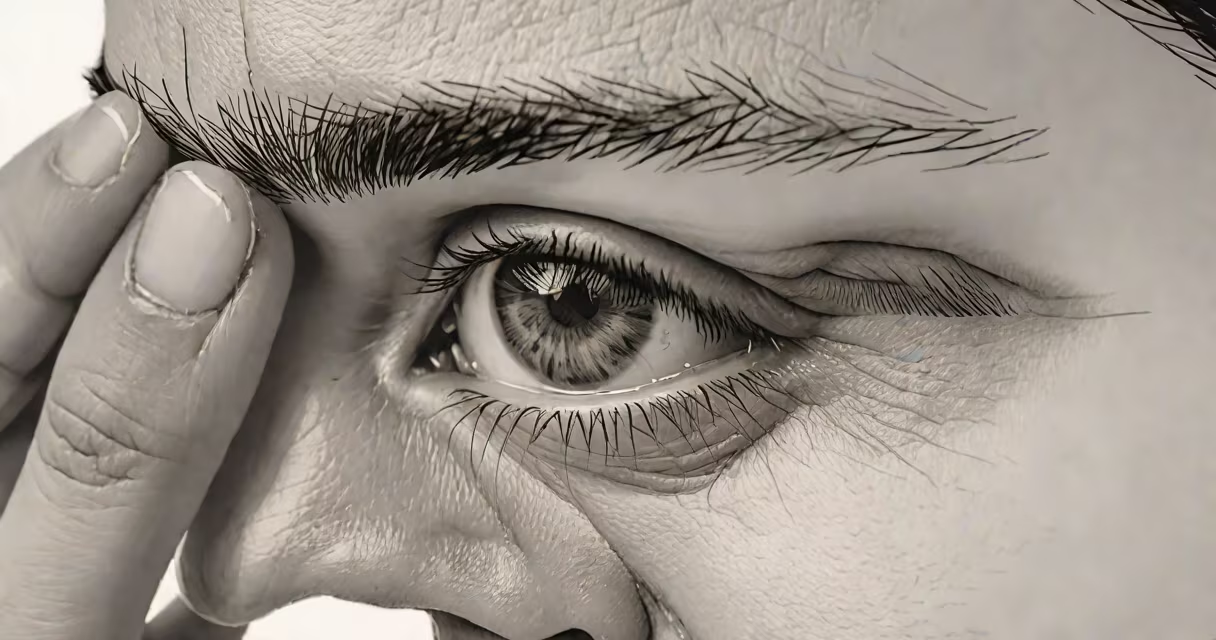
Severe pain behind the eyeball-also called retroorbital pain-is a sharp, intense discomfort located deep within the eye socket, often described as pressure, stabbing, or throbbing. It may affect one or both eyes and can signal underlying medical conditions ranging from migraines to optic nerve disorders.
This pain is not simply a symptom of tiredness or eye strain. It frequently occurs alongside visual changes, nausea, or sensitivity to light. Unlike general eye discomfort, severe pain behind the eyeball involves deeper structures such as the optic nerve, orbital bones, and surrounding sinuses. It requires careful evaluation because it can indicate serious conditions, including glaucoma, optic neuritis, or even intracranial pressure issues.
According to the American Academy of Ophthalmology, persistent retroorbital pain should prompt a visit to an ophthalmologist or neurologist, especially if it worsens over hours or days. The condition is not a standalone diagnosis but a clinical sign pointing toward specific pathologies.
The area behind the eyeball contains multiple sensitive tissues. The optic nerve exits the back of the eye and travels through the optic canal into the brain. Any swelling, compression, or inflammation in this region can trigger severe pain. Similarly, the trigeminal nerve-the major sensory nerve of the face-has branches that innervate the orbit and can transmit pain signals during inflammation or nerve irritation.
Conditions affecting blood vessels near the eye, such as temporal arteritis, can cause severe pain behind the eyeball. This condition affects people over 50 and involves inflammation of medium-to-large arteries, particularly the temporal artery. If untreated, it can lead to permanent vision loss. The National Institute of Neurological Disorders and Stroke reports that 60% of temporal arteritis cases present with unilateral eye pain, often behind the eye.
A common misperception is that eye pain always stems from the eye itself. But pain behind the eyeball often originates from structures outside the globe-sinuses, nerves, or brain tissue. For example, cluster headaches typically involve excruciating pain around one eye, sometimes radiating behind it, though the actual source is the trigeminal-autonomic pathway in the brainstem.
Several distinct conditions can produce severe pain behind the eyeball. Below are the most frequent culprits, ranked by prevalence and clinical urgency.
| Condition | Key Features | Prevalence | Red Flags |
|---|---|---|---|
| Migraine with aura | Throbbing pain, visual disturbances, nausea | 12% of adults globally (WHO) | Pain lasts hours, recurs monthly |
| Glaucoma (acute angle-closure) | Sudden onset, halos around lights, blurred vision | 1 in 10,000 annually (AAO) | Blindness risk within 24 hours if untreated |
| Temporal arteritis | Unilateral pain, jaw claudication, elevated ESR/CRP | 1 in 5,000 over 50 (NINDS) | Requires steroids within 24 hours to prevent blindness |
| Optic neuritis | Progressive vision loss, pain worsened by eye movement | 5 per 100,000 (Mayo Clinic) | Often linked to multiple sclerosis |
One non-obvious distinction: pain behind the eyeball due to sinusitis usually worsens when bending forward or lying down. This positional component helps differentiate it from migraine or neurological causes. A study in *The Journal of Headache and Pain* found that 34% of patients with frontal sinusitis reported pain localized behind the eyes, but only 12% had true retroorbital pain without nasal congestion.
I once evaluated a 58-year-old man who presented with severe left-sided pain behind his eye, worsening over two days. He denied fever or cold symptoms. Initial assessment showed normal vision and eye movements. But his erythrocyte sedimentation rate (ESR) was 110 mm/hr-elevated. A biopsy confirmed temporal arteritis. He received high-dose prednisone within 12 hours and avoided permanent vision loss. This case underscores that pain behind the eyeball isn't always "just" eye-related.
Many patients assume severe pain behind the eyeball is caused by eye strain or dry eyes. But dry eye syndrome typically causes burning, grittiness, or tearing-not deep, pulsating pain behind the eye. Dry eye pain is usually bilateral and worsens with screen use, not sudden or isolated.
Another frequent error is attributing the pain to tension headaches. While tension headaches can cause forehead and temple pressure, they rarely cause unilateral, severe pain behind the eye. Migraines, however, do. The International Classification of Headache Disorders (ICHD-3) defines migraine with aura as involving at least one reversible aura symptom-such as visual scotoma-followed by headache lasting 4-72 hours. Retroorbital pain is a sign feature.
Some individuals confuse this pain with dental issues. Trigeminal neuralgia can mimic eye pain, but it presents as brief, electric-shock-like bursts triggered by touch or chewing. True ocular pain is continuous and untriggered.
Severe pain behind the eyeball demands prompt attention if accompanied by any of the following:
For immediate concerns, consult a specialist. The American Academy of Ophthalmology recommends urgent referral if pain is sudden, severe, and associated with vision changes. Delaying treatment for conditions like acute angle-closure glaucoma can result in irreversible vision loss within hours.