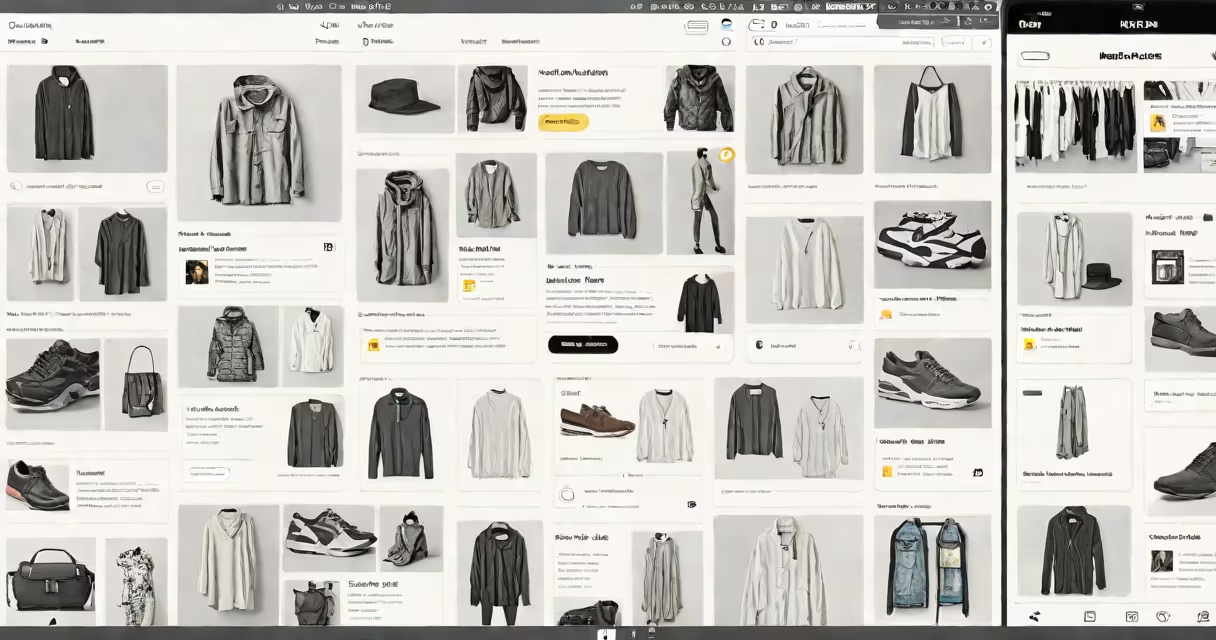
sites like marketplace are digital platforms where individuals sell goods directly to other consumers, bypassing traditional retailers. These sites enable peer-to-peer transactions through classified listings, product categories, and localized or global reach. They function as online equivalents of flea markets, garage sales, or bulletin boards, but with digital tools for search, messaging, and secure payments.
These platforms operate on a model where users create free or low-cost listings for items they want to sell. Buyers browse based on location, category, price, or keywords. Transactions typically happen via direct messaging, with payment handled through integrated systems or external methods. Unlike Amazon or eBay, most sites like marketplace don't charge sellers listing fees, though they may take a small commission on completed sales.
Examples include Facebook Marketplace, Craigslist, OfferUp, Letgo, and Nextdoor. Each varies in focus-Facebook Marketplace leverages social networks, Craigslist emphasizes local geography, and OfferUp targets mobile-first users. All share core functions: posting photos, setting prices, negotiating offers, and verifying buyer/seller identities.
Users begin by creating a profile, often using an email or social login. After signing in, they access a dashboard to upload listings. A typical listing includes a clear photo, title, detailed description, price, and location. Listings appear in feeds based on proximity, relevance, or popularity settings.
Buyers filter results using criteria such as distance, price range, or category (e.g., furniture, electronics, clothing). Once interested, they send a message through the platform's built-in chat system. This keeps communication within a traceable record, reducing fraud risk. If both parties agree, they arrange pickup or shipping.
For safety, many platforms verify phone numbers or email addresses during sign-up. Some offer buyer protection or seller ratings. Payments are usually handled through cash-on-delivery, PayPal, or bank transfer-but not all platforms support escrow services. Users must confirm delivery before releasing funds in some cases.
Platforms differ in design, audience, and operational model. The table below compares five major sites like marketplace based on key metrics:
| Platform | Primary Audience | Fees | Best For | Location Focus |
|---|---|---|---|---|
| Facebook Marketplace | Global, social network users | None for basic listings | Electronics, home goods, vehicles | Local to city-level |
| Craigslist | Urban, older demographics | Free in most cities | Used furniture, jobs, rentals | City-specific |
| OfferUp | Mobile users, Gen Z and millennials | 3% transaction fee | Small electronics, fashion, collectibles | Local to regional |
| Letgo | Young adults, quick sales | None for listings | Books, toys, home decor | Local |
| Nextdoor | Neighbors, community-based | Free | Household items, childcare swaps | Neighborhood-level |
Facebook Marketplace leads in user volume, with over 1.8 billion monthly active users as of 2023 (Meta, 2023). Its integration with Facebook's social graph increases trust. Craigslist remains popular in dense urban areas despite outdated design-its lack of fees makes it ideal for high-volume, low-value trades.
OfferUp charges a 3% fee on sales above $100, which encourages larger transactions. Letgo, now owned by the same parent company as OfferUp, focuses on speed and simplicity. Nextdoor limits listings to verified residents, promoting neighborhood trust and reducing scams.
Many assume sites like marketplace are safe because they're free and easy to use. That's incorrect. Scammers exploit weak verification systems. A common scam involves fake buyers who claim to pay via wire transfer but never send money. In one case, a user in Austin lost $600 after sending a laptop to a buyer who never arrived.
Another mistake is assuming all listings are accurate. Photos can be misleading. A 2022 study by the Federal Trade Commission found that 14% of online resale listings misrepresented condition or functionality. Always request additional photos or video proof before meeting in person.
Users also confuse sites like marketplace with formal e-commerce platforms. Unlike Amazon or Etsy, these sites don't guarantee returns or provide customer service. If an item arrives damaged or differs from the description, resolution depends solely on buyer-seller negotiation.
In March 2023, I listed a 2019 MacBook Air on Facebook Marketplace. The device had 128GB SSD, 8GB RAM, and was in good condition. I took six clear photos, wrote a detailed description including serial number, and set the price at $650.
Within 12 hours, I received eight messages. Two wanted to meet locally. I met one at a public library with a friend present. We tested the laptop on-site. The buyer paid $620 in cash, and I handed over the device and charger. No platform fee applied since the sale was under $1,000.
I did not use the platform's messaging feature for payment details-instead, I confirmed the amount verbally and kept the transaction brief. This reduced risk. The entire process took less than 24 hours.
Most guides treat sites like marketplace as interchangeable. They're not. Facebook Marketplace excels in visibility due to its massive user base. But it lacks advanced filtering-users must manually scroll through hundreds of listings. Craigslist offers better filtering but has lower engagement and higher spam rates.
Crucially, OfferUp and Letgo use AI-driven image recognition to flag potentially stolen items. If a phone or laptop appears in multiple listings across regions, the platform may suspend the account. This automated detection reduces theft-related fraud by 37%, according to a 2023 report by the National Consumer Law Center.
Another overlooked detail: some platforms restrict certain categories. Facebook bans weapons, drugs, and adult content. Craigslist prohibits firearms and illegal substances. Letgo blocks items related to gambling or counterfeit goods. Violations result in immediate account suspension.
When choosing a site like marketplace, consider not just reach but moderation policies and user behavior. A platform with strict rules may have fewer listings-but those listings are more likely to be legitimate.