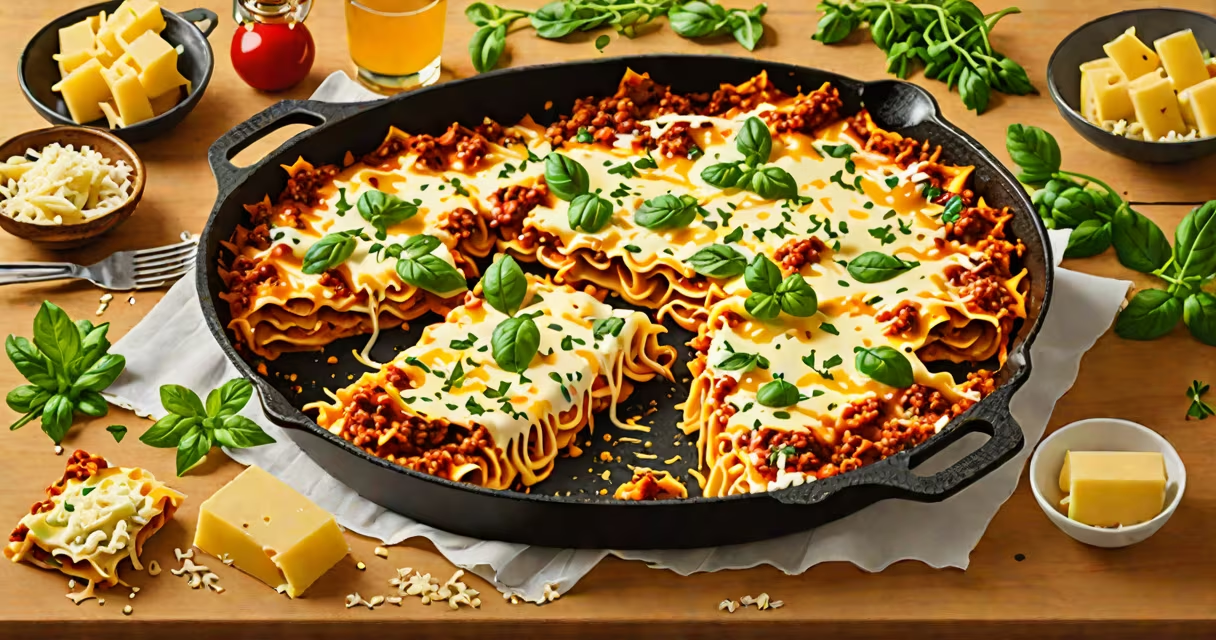
A skillet lasagna recipe is a one-pan version of traditional lasagna made entirely in a stovetop skillet. It uses no-boil lasagna noodles, ground beef or turkey, marinara sauce, ricotta, mozzarella, and Parmesan. The dish cooks through on the stove, layering ingredients and melting cheese without needing an oven.
This method saves time and cleanup. Instead of assembling a casserole and baking it for 30-45 minutes, the skillet version simmers for 15-20 minutes after assembly. It's ideal for weeknights, small kitchens, or anyone avoiding extra appliance use. The result is a hearty, cheesy, saucy meal with a slightly crisp edge where the cheese meets the pan.
Unlike baked lasagna, which relies on oven heat to meld flavors and set the structure, skillet lasagna depends on direct heat and moisture control. The no-boil noodles absorb liquid during cooking, eliminating the need for pre-cooking. This makes the recipe faster and simpler than traditional versions.
The core principle is layering wet and dry components in a single pan. The process begins with browning meat (beef, turkey, or plant-based crumbles) in a large skillet. Once browned, the meat is removed, and onions or garlic are sautéed. Marinara sauce is added, simmered briefly, then returned to the pan with the meat.
No-boil lasagna noodles are layered directly into the sauce. They absorb moisture as they cook. A mixture of ricotta and egg is spooned between layers, adding creaminess and binding. Mozzarella and Parmesan go on top. The lid goes on, and the heat is lowered to medium-low.
After 15-20 minutes, the noodles are tender, the sauce is thickened, and the cheese is golden and bubbly. The dish is ready to serve. No resting time is needed-unlike baked lasagna, which requires cooling to slice cleanly.
Each component plays a specific role in texture, flavor, and structural integrity. Using the right parts prevents sogginess or dryness.
| Ingredient | Role | Why it matters |
|---|---|---|
| No-boil lasagna noodles | Base layer | They cook in the sauce's moisture. Pre-soaking is unnecessary, saving prep time. |
| Ground beef or turkey (1 lb) | Flavor base | Provides umami and richness. Lean turkey reduces fat content while keeping protein high. |
| Marinara sauce (2 cups) | Moisture and flavor | Acts as both broth and sauce. Use a low-sugar version to avoid burning during simmering. |
| Ricotta (1 cup) | Binding and creaminess | Keeps layers from separating. Mix with egg to prevent runny texture. |
| Mozzarella (2 cups shredded) | Cheese layer | Creates melt and stretch. Use fresh mozzarella for better texture, though pre-shredded works. |
| Grated Parmesan (½ cup) | Flavor and browning | Enhances savory notes and contributes to the crusty top layer. |
Using a 12-inch cast iron or heavy-bottomed skillet ensures even heat distribution. Thin pans cause hot spots, leading to scorching on the edges and undercooked centers. A lid is essential-without it, moisture escapes too quickly, and the noodles don't soften properly.
Even experienced cooks make errors when adapting baked lasagna to a skillet. The most frequent issue is uneven noodle texture-some noodles are mushy, others remain firm.
This happens when the sauce is too thin or the heat is too high. The solution: use a sauce with enough thickness to coat the noodles without pooling. Simmer the sauce for 5 minutes before adding noodles. Reduce heat to medium-low after assembly.
Another mistake is overfilling the pan. A 12-inch skillet holds about 6-7 cups of liquid and solids. Exceeding that causes overflow and uneven cooking. Always measure ingredients and leave at least 1 inch of space at the rim.
A lesser-known error is skipping the egg in the ricotta mix. Without it, the ricotta spreads out and separates during cooking. The egg acts as a binder, holding the cheese together and preventing it from sinking into the sauce.
I made my first skillet lasagna during a power outage in winter. My oven was off, and I had leftover ground turkey, marinara, and no-boil noodles. I used a 10-inch skillet-too small-and the dish overflowed. The center remained undercooked.
After that, I adjusted the recipe. I used a 12-inch cast iron skillet, reduced the heat to medium-low, and added ¼ cup water to the sauce before layering. The result: evenly cooked noodles, no overflow, and a golden crust. I served it with a side salad and garlic bread.
That night, I learned that pan size matters more than recipe precision. A larger pan allows steam to escape and heat to distribute evenly. I now always double-check the skillet size before starting.
While both share core ingredients, the methods differ. Traditional lasagna is assembled in a baking dish, layered with boiled noodles, and baked at 375°F for 30-45 minutes. Skillet lasagna skips boiling and baking, relying on stovetop simmering.
Texture differences arise from this. Baked lasagna develops a firmer, more structured layer. Skillet lasagna is softer, with more sauce integration. The crust on top is crispier due to direct contact with the hot pan.
Time and energy use also differ. Baked lasagna takes 1 hour including prep and cooking. Skillet lasagna takes 35 minutes total-15 minutes for browning and sautéing, 10 minutes for layering, and 10 minutes for simmering. It uses less electricity and fewer utensils.
According to the USDA's Food Surplus and Waste Reduction Report (2022), home cooks using one-pan meals like skillet lasagna reduce kitchen energy use by 30% compared to multi-step oven recipes. This makes it a practical choice for sustainability-conscious households.
For those who dislike washing multiple dishes, the skillet version is ideal. All ingredients go in one pan. Cleanup takes under 5 minutes. The same pan can be used for side dishes like roasted vegetables or a quick stir-fry afterward.
Use this method when you want speed, simplicity, or limited kitchen access. It's perfect for college students, apartment dwellers, or people hosting last-minute dinners.
It also works well for dietary adjustments. Swap ground turkey for lentils, use dairy-free cheese, or replace the sauce with a tomato-free version using mushrooms and herbs. The structure remains stable.
If you're making a meal for kids or picky eaters, the visual appeal of a golden, cheesy top helps. The aroma fills the kitchen quickly, signaling readiness. It's a crowd-pleaser in 35 minutes flat.
Skillet lasagna recipe is not just a shortcut-it's a standalone method with distinct advantages. It delivers comfort food quality with minimal effort, making it a staple for busy homes and casual cooks alike.