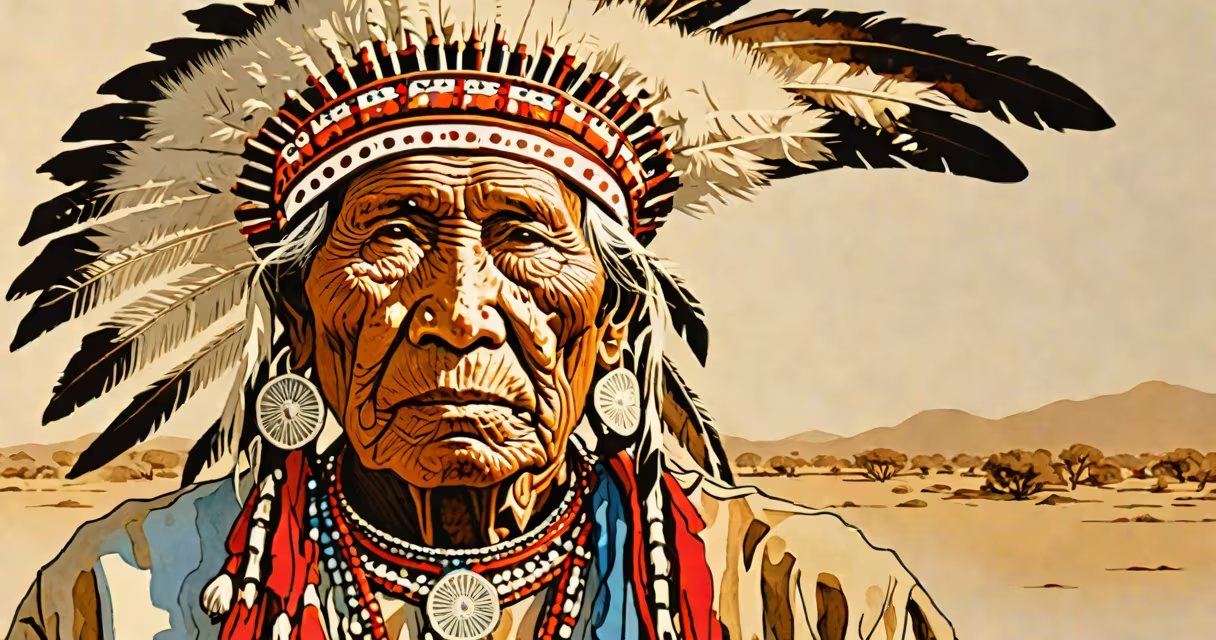
The definition of indigenous refers to people whose ancestors were present in a region before colonial conquest, who maintain distinct cultural practices, and who hold a deep, ongoing relationship with their ancestral territories. This status is not based on race or appearance but on historical continuity, self-identification, and recognition by others.
Indigenous peoples are those who have lived on specific lands for generations, often predating national borders. Their identities are rooted in oral histories, spiritual beliefs tied to landscapes, and social systems developed over centuries. The United Nations defines them as "peoples who are descendants of those who inhabited a country or a geographical region at the time of conquest or colonization."
According to the UN Permanent Forum on Indigenous Issues, indigenous identity is affirmed through collective self-identification, not external labeling. A group may be recognized as indigenous by international standards even if they lack formal legal status in a nation-state. For example, the Māori of Aotearoa (New Zealand) are constitutionally recognized as tangata whenua-the people of the land-despite being a minority population.
Recognition as indigenous depends on three criteria: historical continuity, distinct culture, and self-identification. Historical continuity means the group's presence predates state formation or colonial settlement. Distinct culture includes language, governance structures, spiritual practices, and subsistence methods unique to the community. Self-identification means the group sees itself as indigenous, regardless of government classification.
For instance, the Sámi of northern Scandinavia and Russia have maintained reindeer herding traditions for over 1,000 years. They speak Uralic languages unrelated to surrounding populations and practice shamanistic rituals tied to seasonal migration. Despite living within multiple nation-states, they are internationally recognized as indigenous due to these enduring markers.
Legal recognition varies widely. In Canada, the Constitution Act 1982 recognizes Indigenous rights under Section 35. In Australia, the High Court ruled in Mabo v Queensland (No 2) (1992) that native title exists where Aboriginal people can prove continuous connection to land. These cases show that the definition of indigenous is applied through judicial interpretation, not just policy.
Indigenous identity is not synonymous with poverty, primitiveness, or lack of modernity. Many Indigenous communities operate schools, healthcare clinics, and businesses using both traditional and contemporary models. The Navajo Nation in the southwestern United States runs a tribal university and owns energy infrastructure. Their governance system combines elected leaders with clan-based decision-making.
A common error is equating "indigenous" with "native American" or "Aboriginal." While these terms refer to specific groups, they do not encompass all Indigenous peoples globally. The term "indigenous" applies to over 5,000 distinct groups across 90 countries, including the Ainu of Japan, the San of southern Africa, and the Quechua of the Andes.
Another misconception is that Indigenous peoples must live in remote areas. Urban Indigenous populations exist in cities like Toronto, Nairobi, and Santiago. The National Congress of American Indians reports that 70% of Native Americans live in urban centers. Their identity persists through cultural institutions, language programs, and advocacy networks.
Indigenous groups differ by geography, language family, and historical experience. Below are representative categories based on shared characteristics:
| Type | Region | Distinct Features | Example |
|---|---|---|---|
| Forest Peoples | Central Africa, Amazon Basin | Reliant on hunting, gathering, and shifting cultivation | Yanomami (Brazil/Venezuela), with 35,000 members and 9,000 square miles of territory |
| Arctic and Subarctic Groups | Arctic Circle (Canada, Greenland, Siberia) | Depend on marine mammals, reindeer, and seasonal mobility | Inuit of Nunavut, with 36,000 people and a self-governing territory since 1999 |
| Highland and Mountain Communities | Andes, Himalayas, Papua New Guinea | Practice terraced farming, complex irrigation, and ritual calendars | Quechua in Peru, numbering over 1 million and speaking Quechua in official settings |
| Island and Coastal Peoples | Pacific Islands, Southeast Asia | Use maritime navigation, reef fishing, and oral genealogies | Māori of Aotearoa, with 17% of New Zealand's population identifying as Māori |
These differences show that the definition of indigenous is not monolithic. It reflects diversity in adaptation, governance, and worldview while sharing core elements of territorial attachment and cultural resilience.
The definition of indigenous underpins international human rights law. The UN Declaration on the Rights of Indigenous Peoples (UNDRIP), adopted in 2007, affirms rights to land, resources, education, and self-determination. Article 3 states that Indigenous peoples have the right to autonomy or self-government in matters relating to their internal and local affairs.
Without a clear definition, enforcement of these rights would be inconsistent. For example, in Colombia, the Constitutional Court ruled in 2018 that Afro-Indigenous communities in the Pacific coast qualify for special protections because they meet the criteria of historical continuity and distinct culture. This decision expanded access to land restitution and cultural preservation funding.
One non-obvious fact: Indigenous status can be contested even within a country. In Brazil, the demarcation of Indigenous territories requires federal approval. As of 2023, over 1,000 requests remained pending, despite constitutional guarantees. The ambiguity in implementation reveals that the definition of indigenous is not just academic-it determines who gets access to justice, land, and survival.
"Indigenous" is sometimes confused with "minority," "ethnic," or "marginalized." These terms overlap but are not interchangeable. A minority group may share language or religion with a dominant population but lack ancestral ties to a specific territory. An ethnic group may be culturally distinct but not historically continuous in a place.
For example, Roma people in Europe are often described as "indigenous" in media, but the Council of Europe has clarified that they are not recognized as such under international law. Their migration patterns and lack of stable territorial claim disqualify them from the formal definition, even though they face similar discrimination.
I once attended a ceremony hosted by the Ojibwe community in northern Michigan. Elders spoke in Anishinaabemowin, the language of the people. Children recited creation stories passed down orally for generations. I realized then that the definition of indigenous isn't just legal-it's relational. It's about memory, responsibility, and reciprocity with the earth.
The definition of indigenous is not a static label. It is a living structure grounded in history, culture, and self-determination. It enables rights, protects heritage, and challenges narratives of erasure. Understanding this definition helps us recognize the legitimacy of Indigenous voices in shaping their futures. For deeper context on how this concept evolved across continents, see indigenous definition world history.