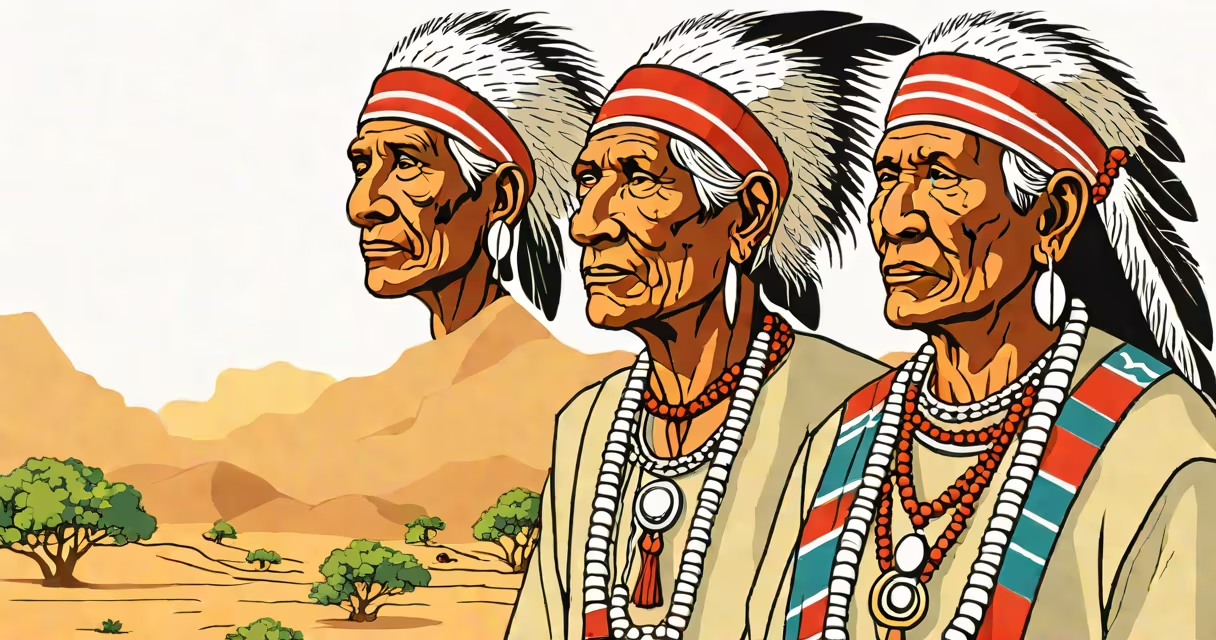
The indigenous definition in world history identifies communities with enduring cultural, spiritual, and territorial connections to specific lands prior to colonial contact, maintaining distinct identities through sustained resistance and adaptation. This definition underpins legal, academic, and political frameworks recognizing Indigenous rights globally.
Indigenous peoples are not defined by time alone but by relationship-deep, ongoing, and often disrupted by external forces. Their connection to place is not symbolic; it is practical, legal, and spiritual. For example, the Māori of Aotearoa (New Zealand) trace their ancestry to Polynesian voyagers who arrived around 1200 CE. Their oral histories, genealogies (whakapapa), and customary laws affirm continuous presence and stewardship of land long before British colonization in 1840.
According to the United Nations Permanent Forum on Indigenous Issues (UNPFII), an Indigenous group must demonstrate "historical continuity" with pre-colonial societies, maintain distinct social, economic, or political systems, and possess a strong sense of identity tied to ancestral territories. These criteria go beyond ethnicity or language-they require proof of persistent existence and self-governance in the face of state expansion.
Legal recognition of Indigenous status hinges on this definition. In Canada, the Supreme Court ruled in *R v. Van der Peet* (1996) that a group qualifies as Indigenous if they have maintained traditional practices related to land and resources since before European contact. The court emphasized that the test was not whether a practice survived unchanged, but whether it remained central to cultural identity.
In Latin America, the Inter-American Court of Human Rights has applied the definition to uphold land rights. In *Awas Tingni v. Nicaragua* (2001), the court recognized the Mayangna people's claim to ancestral territory based on their uninterrupted occupation and cultural practices. The ruling affirmed that "the mere passage of time does not erase the legitimacy of Indigenous land rights."
These cases show that the definition operates not as a static label but as a living standard. It requires evidence-archival records, linguistic continuity, oral traditions, archaeological findings-to prove historical presence and resilience.
Four elements consistently appear in authoritative definitions:
| Element | Description | Example |
|---|---|---|
| Historical Continuity | Unbroken presence in a territory before major external intervention. | Navajo Nation in the American Southwest traces lineage to pre-1500 settlements. |
| Cultural Distinctiveness | Unique languages, governance, spiritual beliefs, or subsistence methods. | San people of southern Africa speak click-based languages and practice hunting-gathering traditions. |
| Self-Identification | Group's internal affirmation of Indigenous identity. | First Nations in Canada formally declare membership through band councils and cultural criteria. |
| Land and Resource Connection | Reliance on and stewardship of specific territories. | Yawanawa in the Amazon rainforest manage forests using traditional ecological knowledge. |
The UN Declaration on the Rights of Indigenous Peoples (UNDRIP, 2007) states that "Indigenous peoples have the right to maintain and strengthen their distinctive spiritual traditions." This clause underscores that identity is not solely about geography-it includes worldview, ceremony, and intergenerational transmission of knowledge.
Many assume Indigenous means "primitive" or "living in the past." This is incorrect. The term refers to continuity, not stasis. Modern Indigenous communities operate schools, run businesses, and engage in international diplomacy-all while preserving cultural foundations.
A common error is equating Indigenous status with poverty or marginalization. While many Indigenous groups face systemic disadvantage, the definition itself does not depend on current socioeconomic status. The Sámi of northern Scandinavia, for example, have high literacy rates and significant representation in national parliaments, yet still meet all criteria for Indigenous recognition under UN standards.
Another misconception is that Indigenous status applies only to pre-colonial populations. But the definition explicitly includes those who have resisted assimilation and maintained autonomy despite colonization. The Mi'kmaq of Atlantic Canada, though displaced by British settlers, continue to assert treaty rights and cultural authority through ongoing negotiations and legal challenges.
For decades, Japan denied the Ainu people Indigenous status. Despite speaking a unique language, practicing animist rituals, and inhabiting Hokkaido for centuries, they were classified as "ethnic Japanese" under state policy. This changed in 2008 when the Diet passed the Ainu Culture Promotion Act, acknowledging their distinct identity.
Even then, recognition was limited. The law did not grant land rights or formal self-governance. It wasn't until 2019 that the government officially recognized the Ainu as Indigenous people-a decision backed by the UN Committee on the Elimination of Racial Discrimination (CERD).
This case illustrates how the indigenous definition world history structure functions: it is not automatic. It requires advocacy, legal pressure, and international scrutiny. The Ainu's struggle took over 150 years to reach formal acknowledgment, despite overwhelming evidence of cultural continuity and territorial attachment.
I once attended a community forum in Sapporo where an elderly Ainu woman spoke in her native language. Her words were translated slowly, each pause heavy with memory. She described how her grandmother had hidden sacred drums during wartime to protect them from being destroyed. That act-of concealment, of preservation-was not just survival. It was proof of continuity. When she finished, a young man stood up and said, "I didn't know we were still here." His voice cracked. That moment captured the emotional weight of the indigenous definition: not just legal recognition, but belonging.
Indigenous definition world history differs from "native" or "aboriginal," which are often used in national contexts but lack consistent global standards. "Native" may refer to birthplace rather than cultural continuity. "Aboriginal" is legally defined in Australia but does not apply universally.
Also distinct is the concept of "autochthonous"-a term used in anthropology to describe people originating in a region. But autochthony doesn't imply cultural persistence or self-determination. An Indigenous group may be autochthonous, but not all autochthonous groups meet the full criteria for Indigenous status.
The indigenous definition world history remains a changing tool. It evolves with new evidence, changing political landscapes, and growing awareness of historical injustice. Its power lies not in rigid categories, but in its ability to validate lived experience, honor ancestral memory, and demand accountability from states and institutions alike.