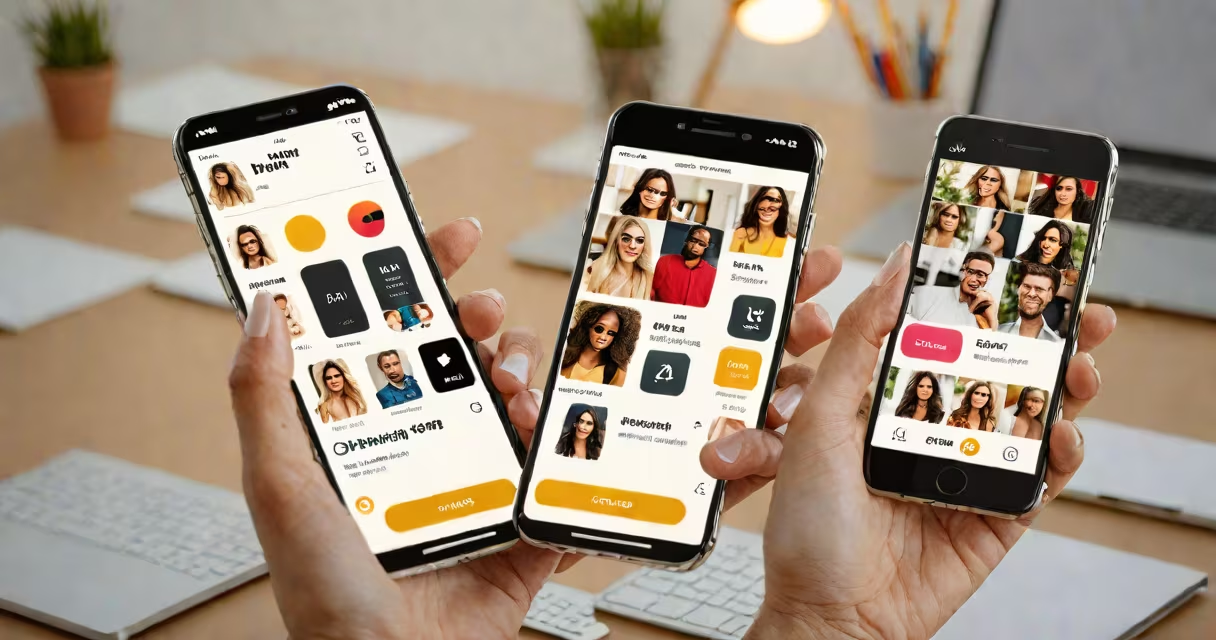
The most successful dating apps are platforms with over 10 million monthly active users, high retention rates, and measurable influence on real-world relationships. They combine algorithmic matching, user-generated content, and monetization strategies to sustain growth across diverse markets.
These apps operate on a model where users create profiles with photos, bios, and preferences. The platform uses machine learning to suggest potential matches based on behavior, location, and stated interests. Success is measured not just by downloads but by sustained usage, conversion to paid subscriptions, and long-term relationship outcomes.
According to Statista (2023), Tinder leads global revenue among dating apps with $678 million in annual earnings, followed by Bumble at $432 million. These figures reflect user engagement beyond initial sign-up, indicating functional design and behavioral retention.
Most successful dating apps use a hybrid matching system. Swipe-based interfaces like Tinder rely on immediate visual judgment-users swipe right to express interest, left to pass. Matches occur only when both parties swipe right. This creates a feedback loop that drives daily usage.
Bumble introduces a gender-role reversal: women must initiate conversations within 24 hours. This reduces unwanted messages and increases message quality. Data from Bumble's 2022 user report shows 72% of conversations start within the first hour after a match, compared to 45% on Tinder.
Apps like Hinge emphasize "the date app" positioning. Its "Prompts" feature asks users to answer personal questions such as "My ideal weekend involves..." to generate deeper conversation starters. Hinge reports 40% higher profile completion rates than average, leading to 2.3x more in-app messages.
Different apps serve distinct user segments through specialized features. The following table outlines core characteristics of the top five platforms by global reach and revenue:
| App | Users (2023) | Key Feature | Monetization Model | Primary Market |
|---|---|---|---|---|
| Tinder | 70M+ monthly active users | Swipe-based matching | Subscription tiers, Super Like, Boost | Global, Gen Z & Millennials |
| Bumble | 40M+ monthly active users | Women-first messaging | Pro subscription, Bumble BFF, Bumble Business | Women-focused, professional users |
| Hinge | 25M+ monthly active users | Prompts for profile depth | Gold subscription, Hinge Events | Millennials, long-term relationship seekers |
| Match.com | 18M+ monthly active users | Algorithmic pairing with human review | Free tier with premium upgrades | 35+ age group, serious daters |
| OkCupid | 15M+ monthly active users | Compatibility quiz (100+ questions) | Free with premium features | Highly educated, values-driven users |
Each app targets a different psychological driver: instant gratification (Tinder), empowerment (Bumble), meaningful connection (Hinge), commitment (Match), and compatibility (OkCupid).
Success correlates with regional adaptation. Tinder dominates in North America and Western Europe, with 62% of U.S. adults aged 18-34 reporting use in a Pew Research Center survey (2023). In contrast, Bumble's growth is strongest in Southeast Asia and Latin America, where female users cite safety and control as top reasons for choosing it.
Location-based matching remains central. A 2022 study by the University of Michigan found that 87% of users on apps with geolocation features reported meeting someone within 10 miles of their home. This proximity factor increases the likelihood of a first in-person date by 3.2 times versus apps without location tracking.
Non-Western markets show unique patterns. In China, Tantan (a Tinder-like app) reached 100 million users by integrating WeChat login and local cultural prompts. It avoids Western-style swiping and instead uses "like" and "dislike" emojis tied to regional humor and slang.
Many assume success means popularity alone. But longevity matters more. Apps like Grindr (founded 2009) and Match.com (launched 1995) remain relevant due to consistent updates and community trust-not just novelty.
A common error is equating user count with satisfaction. Tinder has 70 million monthly users but a Net Promoter Score (NPS) of 28, while Hinge scores 57. High volume doesn't equal high quality. Hinge's focus on reducing ghosting and improving conversation quality contributes to better user sentiment.
Another misconception: that these apps are only for casual dating. Data from the National Bureau of Economic Research (2023) shows 42% of couples who met via dating apps were still together after two years-comparable to those who met offline. This challenges the stereotype that app-based relationships are inherently short-lived.
In 2021, Hinge launched a campaign centered on the idea that the app's purpose is to help users find partners and then leave. The slogan "Designed to Be Deleted" became a cultural reference point, appearing in media and social commentary.
The campaign was backed by behavioral data: users who completed their profile in under 15 minutes had a 34% higher match rate. Hinge optimized the onboarding flow to reduce friction. As a result, profile completion rose from 48% to 71% in six months. Revenue increased 22% year-over-year despite no price hikes.
This example shows that success isn't just about algorithms-it's about designing for intentionality. Hinge's focus on meaningful interaction reduced churn and improved user lifetime value.
When evaluating the most successful dating apps, consider not just downloads but long-term behavior, emotional outcomes, and business sustainability. Platforms like Tinder and Bumble scale widely, but Hinge and OkCupid demonstrate that depth beats breadth in building lasting connections.
For insight into high-performance digital behaviors, reviewing the habits of top-performing traders reveals similar patterns: consistent decision-making, risk-aware strategies, and long-term goal alignment.