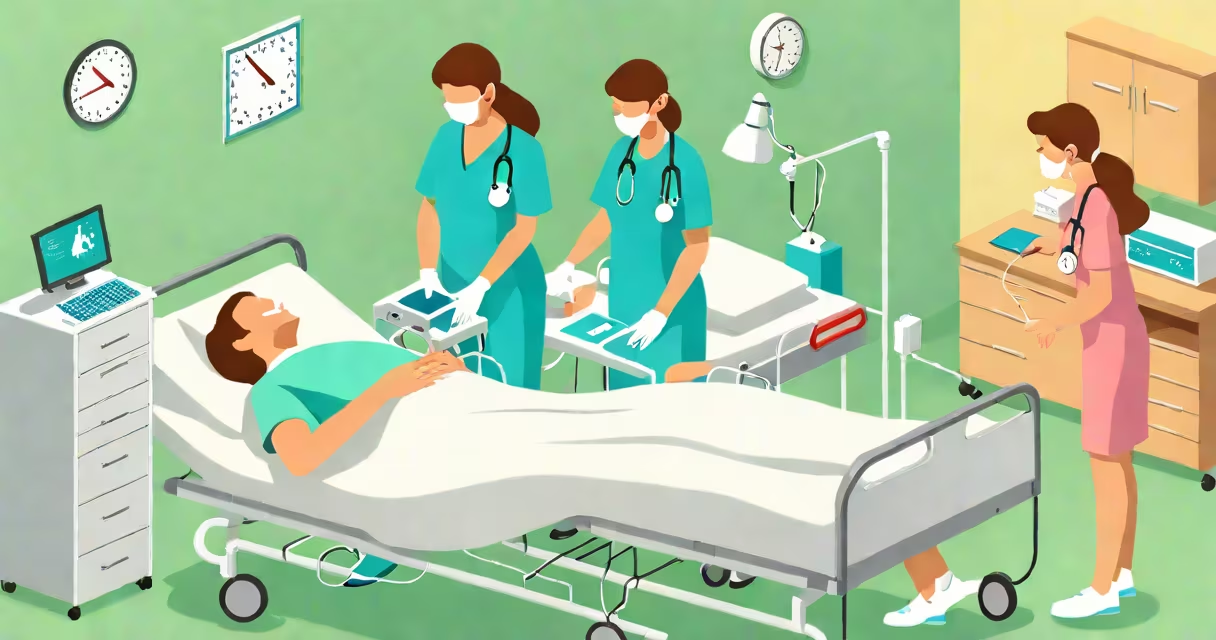
Nurses perform many clinical, administrative, and emotional tasks essential to patient safety and recovery. Their duties include administering medications, monitoring important signs, documenting care, coordinating with doctors, and providing emotional support during illness. These responsibilities vary by setting-hospital, clinic, home health, or long-term care-but all require state licensure and ongoing education.
Nursing duties follow a structured workflow grounded in patient assessment, intervention, and evaluation. A nurse begins each shift by reviewing patient charts and updating care plans based on changes in condition. Important signs such as blood pressure, heart rate, temperature, and oxygen saturation are checked regularly-typically every four hours in acute care settings. Abnormal readings trigger immediate action, such as notifying a physician or adjusting medication doses.
Medication administration is governed by strict protocols. Nurses verify five rights: right patient, right drug, right dose, right route, and right time. Errors in any step can lead to serious harm. According to the Institute of Medicine, medication errors contribute to over 7,000 deaths annually in the U.S., underscoring the precision required in this task.
Documentation is equally critical. Electronic health records (EHRs) require nurses to log every intervention, observation, and change in status. Failure to document accurately can compromise continuity of care and expose facilities to legal risk. A single missed entry may delay diagnosis or treatment.
Nursing roles differ by specialization and work environment. General medical-surgical nurses handle broad patient needs, while specialized roles focus on specific populations or procedures.
| Nursing Role | Primary Responsibilities | Setting |
|---|---|---|
| Registered Nurse (RN) | Assess patients, administer meds, update care plans, communicate with providers | Hospital, outpatient clinic |
| Geriatric Nurse | Manage chronic conditions, prevent falls, coordinate care for elderly patients | Nursing homes, senior care centers |
| Operating Room Nurse | Prepare surgical instruments, assist surgeons, monitor anesthesia levels | Surgeries, ambulatory centers |
| Home Health Nurse | Visit patients at home, manage wound care, educate families on disease management | Patient residences |
Each role demands distinct training and certification. For example, geriatric nurses often complete additional education in aging-related conditions like dementia and osteoporosis. The American Geriatrics Society reports that 60% of adults aged 65+ have at least two chronic diseases, making geriatric expertise important in managing complex cases.
Many people assume nurses only give injections or take temperatures. This underestimates their role in decision-making and patient advocacy. Nurses assess symptoms, interpret lab results, and recommend interventions-even before a doctor arrives. In intensive care units, nurses often detect early signs of sepsis through subtle changes in skin color, breathing patterns, or mental status.
A common error is equating nursing with "doctor's assistant." While nurses collaborate closely with physicians, they operate independently within their scope of practice. In states with full practice authority, advanced practice registered nurses (APRNs) can diagnose conditions, prescribe medications, and manage treatment plans without physician oversight. The National Council of State Boards of Nursing confirms that 24 states allow APRNs to practice independently.
Another misconception is that nursing is purely physical labor. While standing for 12-hour shifts is common, much of the work involves cognitive processing-interpreting data, prioritizing care, and responding to emergencies. During a cardiac arrest, a nurse must rapidly assess rhythms, prepare defibrillators, and coordinate team actions-all within minutes.
Consider Sarah, a registered nurse working a 12-hour night shift in a medical unit. She begins by reviewing her assigned patients' charts. One patient, Mr. Thompson, has a history of congestive heart failure. His morning vitals show a pulse of 120 beats per minute and low oxygen saturation. Sarah checks his oxygen level, administers supplemental oxygen via nasal cannula, and notifies the on-call physician. She reviews his medication list and finds he was due for furosemide-an IV diuretic-two hours ago. She verifies the order, prepares the dose, and administers it after double-checking the five rights.
Later, she documents the intervention in the EHR, including the patient's response. She then spends 30 minutes educating Mr. Thompson's wife on fluid restriction and signs of worsening heart failure. Afterward, she performs a head-to-toe assessment on three other patients, updates care plans, and prepares for the morning handoff. By shift end, she has completed 14 medication administrations, documented 27 entries, and participated in two emergency codes.
This example illustrates that nurses are not passive assistants. They are frontline clinicians who make real-time decisions affecting patient outcomes.
Nursing is not static. New treatments, technologies, and regulations emerge constantly. Nurses must earn continuing education units (CEUs) to maintain licensure. These courses cover topics like infection control, pain management, and electronic record systems. For example, a nurse working in oncology must stay current on immunotherapy protocols and side effect management.
What do nurses have to do? They assess patients, administer medications, document care, advocate for safety, and adapt to changing clinical environments. Their responsibilities span technical skills, emotional intelligence, and continuous learning. From monitoring a newborn's heart rate to guiding a family through end-of-life decisions, nurses are central to effective healthcare delivery. Understanding this scope clarifies why nursing is both demanding and indispensable.