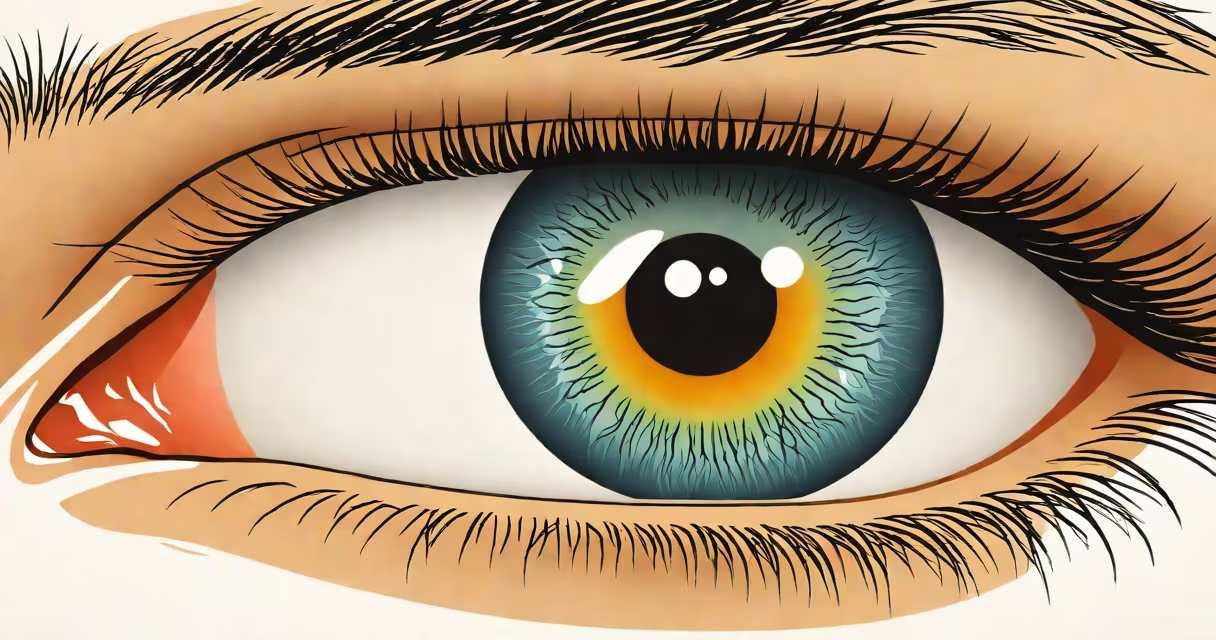
Ocular refers to anything related to the eye or vision. It is derived from the Latin word *oculus*, meaning "eye," and is used in medical, scientific, and technical contexts to describe structures, functions, or conditions involving the eye.
The term appears in clinical settings, research papers, and pharmaceutical descriptions. For example, "ocular hypertension" describes elevated pressure within the eye, a risk factor for glaucoma. In drug labeling, "ocular side effects" refer to vision changes caused by medication.
Ocular is not interchangeable with "optical," which relates to light or lenses. While both terms involve sight, ocular pertains specifically to biological eyes, whereas optical concerns devices or physical properties of light. Confusing the two leads to errors in medical documentation and patient communication.
In healthcare, ocular is used to describe anatomical parts, symptoms, and treatments. Ocular anatomy includes the cornea, retina, optic nerve, and vitreous humor. Ocular diseases such as macular degeneration, diabetic retinopathy, and dry eye syndrome are diagnosed and managed by ophthalmologists and optometrists.
For instance, a patient reporting "blurred vision" may undergo an ocular examination. The doctor checks ocular motility (eye movement), pupillary response, and intraocular pressure. If abnormalities are found, imaging like OCT (optical coherence tomography) is used to assess retinal thickness.
Pharmaceuticals often list ocular side effects. A 2021 study published in *JAMA Ophthalmology* found that 12% of patients taking statins reported transient ocular disturbances, including blurred vision and photophobia. These were documented as "ocular adverse events" in clinical trials.
Ocular conditions fall into categories based on location and cause:
| Type | Description | Example |
|---|---|---|
| Anterior segment | Front part of the eye: cornea, iris, lens | Cataracts, uveitis |
| Posterior segment | Back part: retina, optic nerve, vitreous | Retinal detachment, glaucoma |
| Systemic ocular | Eye issues linked to health | Diabetic retinopathy, hypertensive retinopathy |
A frequent error is assuming "ocular" applies to any visual issue. For example, someone might say "my ocular pain" when describing headaches affecting vision. But headaches are neurological, not ocular. True ocular pain arises from the eye itself-such as in acute angle-closure glaucoma, where intense eye pain, redness, and sudden vision loss occur.
Another misconception is that "ocular" implies severity. It does not. Ocular conditions range from mild (e.g., occasional dry eye) to life-threatening (e.g., central retinal artery occlusion, which requires emergency treatment).
A 68-year-old man visits his primary care provider complaining of "fuzzy vision" and "seeing halos around lights." He has a history of diabetes and high blood pressure. The provider notes the symptoms are bilateral and worsen at night.
After referral to an ophthalmologist, a dilated eye exam reveals microaneurysms and cotton wool spots in both retinas. Fluorescein angiography confirms widespread capillary leakage. The diagnosis is diabetic retinopathy-a condition classified as ocular due to retinal involvement.
Treatment begins with tight glucose control and anti-VEGF injections. Without early detection, this condition can progress to blindness. The term "ocular" correctly frames the condition as eye-specific, guiding appropriate testing and therapy.
Using "ocular" precisely prevents misdiagnosis and ensures accurate data collection. The American Academy of Ophthalmology emphasizes consistent terminology in electronic health records to reduce errors. A 2020 report showed that ambiguous terms like "eye problem" led to 18% higher rates of delayed referrals compared to specific terms like "ocular inflammation" or "ocular hemorrhage."
In research, "ocular" enables precise categorization. A 2022 meta-analysis in *The Lancet Global Health* analyzed 47 studies on ocular infections in tropical regions. Using "ocular" ensured all included conditions-conjunctivitis, keratitis, uveitis-were properly grouped, leading to clearer conclusions about regional prevalence.
When discussing vision issues, always specify whether the concern is ocular (eye-based), neurological (brain-based), or psychological (mental health-related). For example, "visual hallucinations" in dementia are neurological, not ocular-even if the person sees images.
I once reviewed a patient chart where "ocular" was misused to describe double vision caused by a brainstem stroke. Correcting the term to "neurogenic diplopia" improved care coordination and avoided unnecessary eye surgery consultations.
Understanding ocular requires knowing adjacent terms:
These terms overlap but are not synonyms. Ocular is the most accurate descriptor for anything originating in or affecting the eye structure.
For further reading on medical terminology, a short explanation of 10W30 clarifies how technical terms in other fields follow similar logic. If you're exploring financial or mechanical terms, a breakdown of ACH shows how context shapes meaning.
Always verify the intended meaning of "ocular" in context. Whether in a prescription, a research paper, or a patient conversation, clarity prevents harm and improves outcomes.