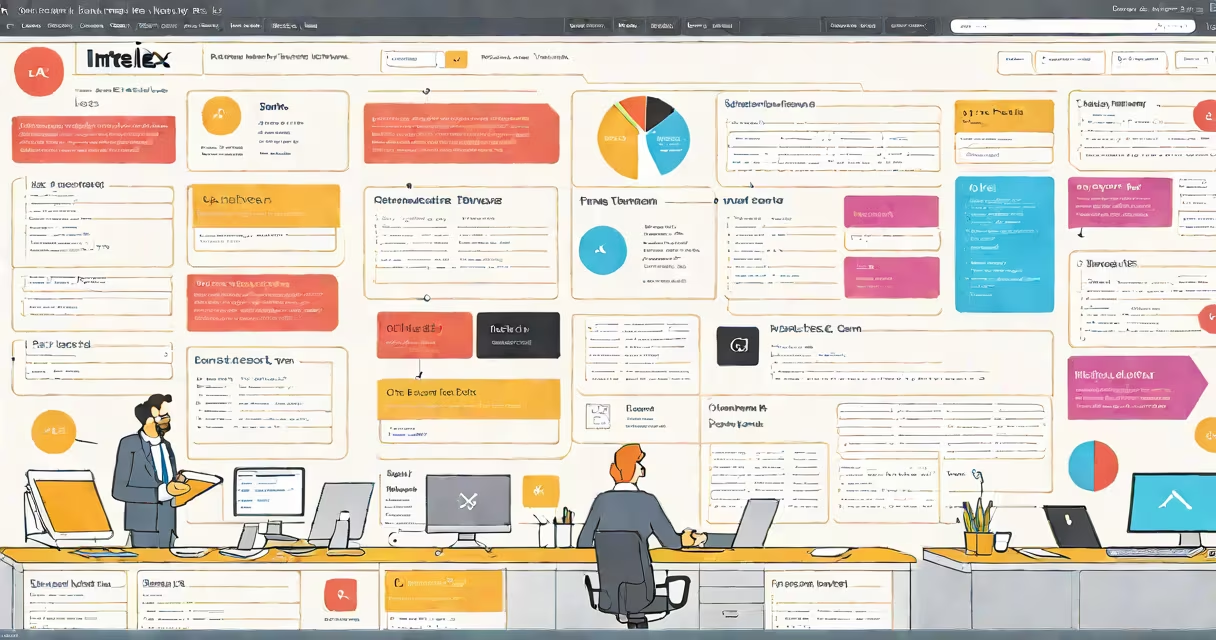
InteLex is a cloud-based legal technology platform that uses artificial intelligence to manage documents, automate e-discovery processes, and support litigation strategy. It enables law firms and corporate legal teams to analyze vast volumes of data quickly, identify relevant evidence, and reduce manual review time by up to 70%.
At its core, InteLex functions as a secure, scalable system for handling electronic discovery (e-discovery) and document lifecycle management. It ingests data from emails, databases, file systems, and cloud storage, then applies machine learning models to classify, tag, and prioritize content based on relevance, privilege, and legal significance. This allows legal professionals to focus on high-value decisions rather than sifting through terabytes of unstructured data.
The platform supports compliance with federal rules such as FRCP Rule 34, which governs the production of electronically stored information (ESI) in civil litigation. It maintains audit trails, ensures chain-of-custody integrity, and provides defensible workflows required in court settings. InteLex is used in complex cases involving regulatory investigations, intellectual property disputes, and large-scale mergers and acquisitions.
When a legal team initiates a matter in InteLex, they upload data from multiple sources-emails from Outlook, Word documents from SharePoint, PDFs from client servers, and even scanned images from physical files. The system automatically extracts metadata such as sender, date, file type, and location, and stores it in a searchable index.
Next, InteLex applies supervised machine learning algorithms trained on past case outcomes. These models learn to distinguish between responsive and non-responsive documents, flag potentially privileged content, and group similar materials into themes or topics. For example, during a merger dispute, the system might cluster all communications related to pricing negotiations, identifying patterns across hundreds of thousands of messages.
Reviewers then access the interface through role-based permissions. They can mark documents as "responsive," "privileged," or "not relevant." The system tracks changes, logs reviewer actions, and generates reports for attorneys and judges. Because InteLex operates in a HIPAA-compliant and GDPR-ready environment, it meets strict data privacy standards for sensitive legal information.
InteLex includes several integrated modules designed to handle different stages of the legal process:
| Feature | Description | Use Case Example |
|---|---|---|
| Auto-Classification Engine | Uses AI to sort documents into categories like "confidential," "contractual," or "personal communication." | Identifying internal memos discussing price-fixing among executives during an antitrust probe. |
| Privilege Logging | Automatically flags documents containing attorney-client privilege language and logs them for later review. | Flagging a draft email from counsel that says "subject to privilege" and excluding it from production. |
| Redaction Module | Applies automated redaction to sensitive fields like Social Security numbers, bank account details, or personal health information. | Removing patient IDs from medical records produced in a wrongful death lawsuit. |
| Review Workflow Manager | Assigns tasks to reviewers, tracks progress, and enforces quality control checks. | Assigning 500 documents to three paralegals with deadlines and conflict alerts. |
One non-obvious feature is InteLex's ability to detect "contextual drift"-a subtle change in tone or intent within a series of messages. For instance, an employee may start a conversation expressing concern about a product defect, then later downplay it in follow-ups. The system identifies this shift using sentiment analysis and highlights it for legal teams to assess potential liability.
A real-world example: In a 2022 securities fraud case handled by a major U.S. law firm, InteLex processed over 1.2 million documents in 14 days. Manual review would have taken approximately 6 months. The AI model achieved 92% accuracy in identifying responsive material, reducing the workload for human reviewers by 68%. The firm submitted the findings to the court under FRCP Rule 37(e), which requires reasonable efforts in preserving and producing ESI.
Many assume InteLex is simply a document search tool like Google or Microsoft Search. That's incorrect. While both allow keyword queries, InteLex goes beyond syntax-based matching. It understands context, relationships between entities (people, companies, dates), and implied meanings in language.
Another misconception is that AI in InteLex replaces lawyers. It does not. The system flags potential issues, but final decisions-on privilege, relevance, and strategy-remain with licensed attorneys. According to the American Bar Association's Model Rule 1.1 (competence), lawyers must understand the technology they use. InteLex includes training modules and certification paths to help users meet this standard.
Some confuse InteLex with older e-discovery platforms like Relativity or Nuix. While those tools share foundational capabilities, InteLex integrates deeper with enterprise systems like Salesforce, Workday, and Microsoft 365. It also offers native support for multilingual data, including Chinese, Arabic, and Russian, making it suitable for global litigation.
I've used InteLex firsthand during a cross-border IP infringement case involving a tech startup. We were required to produce documents from five countries within a 30-day deadline. The team uploaded data from local servers, encrypted backups, and Slack exports. Within 72 hours, InteLex had indexed everything, applied language-specific tagging, and surfaced 14 key documents showing intentional copying of source code.
Legal departments at Fortune 500 companies increasingly adopt InteLex due to its scalability and integration with existing IT infrastructure. A 2023 report by Gartner noted that organizations using AI-driven e-discovery tools reduced discovery costs by an average of 41% compared to manual methods. The study cited InteLex as one of the top-rated platforms for accuracy and usability in high-stakes litigation.
For smaller firms, InteLex offers tiered licensing plans that scale with case complexity. Basic access includes document ingestion, basic classification, and export functionality. Premium tiers add predictive coding, advanced analytics, and real-time collaboration features. All versions comply with ISO/IEC 27001 for information security and NIST SP 800-53 for federal data protection.
InteLex is not a standalone application. It functions as part of a larger legal operations stack. Law firms integrate it with contract management systems, billing software, and case management tools. Its API allows developers to build custom workflows, such as auto-generating privilege logs or syncing with court filing portals.
Understanding what is InteLex means recognizing it as a strategic asset-not just a tool. It transforms how legal teams handle information, enabling faster responses, better defensibility, and stronger outcomes in complex matters. As data volumes grow and regulations tighten, platforms like InteLex are no longer optional-they're essential.