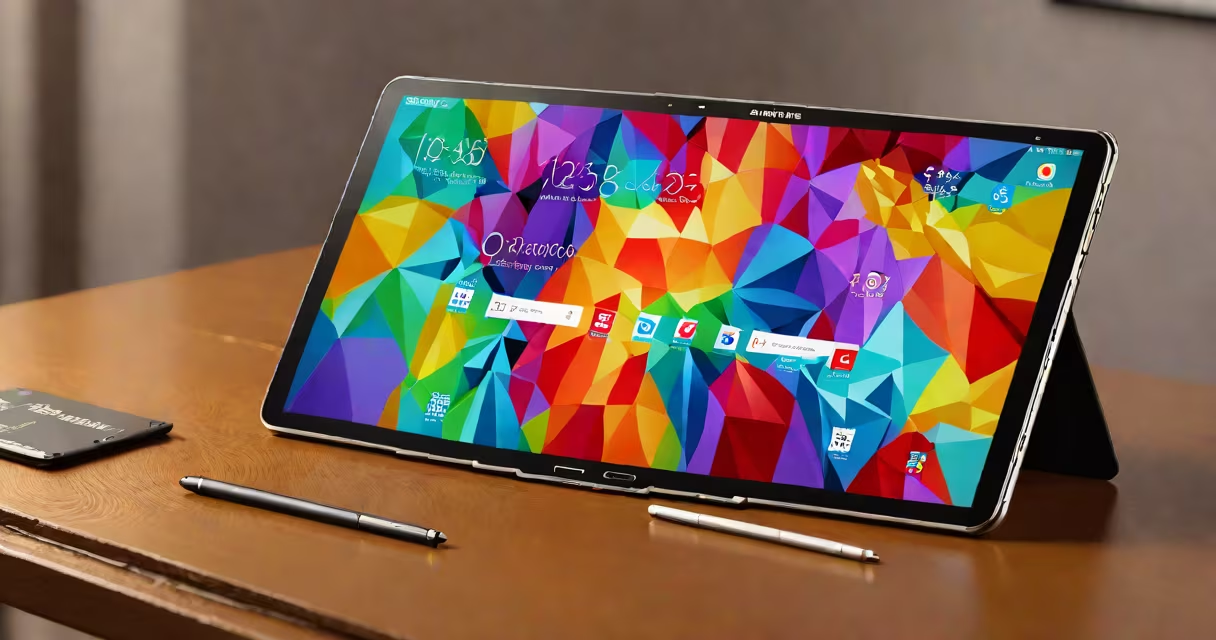
The best Samsung tablet right now is the Galaxy Tab S9 Ultra, a high-end device with a 12.4-inch AMOLED display, Snapdragon 8 Gen 2 processor, and full S Pen integration. It leads the current Samsung lineup in screen quality, processing power, and accessories.
Samsung's tablet strategy centers on the Galaxy Tab S series, which targets professionals, creatives, and users who want a mobile alternative to laptops. The Tab S9 Ultra stands out due to its premium build, 120Hz refresh rate, and support for the S Pen with low latency. It runs Android 14 with One UI 6.1, delivering a refined interface optimized for multitasking and productivity.
For context, Samsung released the Tab S9 series in July 2023. The lineup includes three models: the Tab S9 (11-inch), Tab S9+ (12.4-inch), and Tab S9 Ultra (12.4-inch). The Ultra version is the most useful, featuring 12GB RAM and 256GB internal storage as standard. It supports 5G connectivity and has a 10,090mAh battery, providing up to 14 hours of video playback.
The Galaxy Tab S9 Ultra uses a Qualcomm Snapdragon 8 Gen 2 chip, which delivers desktop-level performance for tasks like video editing, 3D modeling, and running multiple apps simultaneously. This chip enables hardware-accelerated AI features such as real-time translation, scene recognition, and improved camera processing.
Its 12.4-inch Super AMOLED display offers 2560 x 1600 resolution, 120Hz refresh rate, and HDR10+ support. The screen is rated at 500 nits peak brightness and includes anti-reflective coating for outdoor visibility. The display is calibrated for color accuracy, making it suitable for graphic design work.
Input is handled through the S Pen, which connects via Bluetooth and pairs automatically when placed on the side of the tablet. The pen has 4,096 levels of pressure sensitivity and 2ms latency. It supports gestures like double-tap to take screenshots and swipe to switch apps. The S Pen is stored magnetically along the left edge.
There are three models in the current Samsung Tab S9 lineup, each targeting different use cases:
| Model | Display Size | Processor | RAM | Storage Options | Starting Price |
|---|---|---|---|---|---|
| Tab S9 | 11 inches | Dimensity 9200+ | 8GB | 128GB, 256GB | $699 |
| Tab S9+ | 12.4 inches | Dimensity 9200+ | 12GB | 128GB, 256GB | $899 |
| Tab S9 Ultra | 12.4 inches | Qualcomm Snapdragon 8 Gen 2 | 12GB | 256GB, 512GB | $1,199 |
The Tab S9 Ultra is the only model with the Snapdragon 8 Gen 2 chip, which provides better thermal management and sustained performance under load. The Tab S9+ shares the same Dimensity 9200+ chip as the base model but has higher RAM and a larger display.
Storage options differ. The Tab S9 Ultra offers 256GB and 512GB variants, while the others max out at 256GB. All models support microSD expansion up to 1TB, though the Ultra model requires a separate adapter for the SD card slot.
Professionals use the Tab S9 Ultra for presentations, note-taking during meetings, and on-the-go editing. Designers rely on its high-resolution screen and S Pen precision for sketching and vector work. Students use it for e-book reading, annotation, and video lectures.
A real-world example: A freelance illustrator in Austin uses the Tab S9 Ultra to create digital artwork during travel. They run Procreate, Adobe Fresco, and Photoshop Express simultaneously. The 12.4-inch screen allows full workspace visibility, and the S Pen's pressure sensitivity captures fine details. Battery life lasts through a full workday without charging.
Businesses deploying tablets for field service teams often choose the Tab S9 Ultra. Its 5G capability ensures stable connectivity in remote areas. Samsung Knox security features protect company data, including encrypted storage and remote wipe. According to Samsung's official documentation, the device meets ISO/IEC 27001 standards for information security.
Many assume the Tab S9+ is the best because it has the same screen size as the Ultra. That's incorrect. The Tab S9 Ultra has a faster processor, more RAM, and better cooling. The Tab S9+ uses the same Dimensity 9200+ chip as the Tab S9, which limits sustained performance during long sessions.
Another misconception is that all Samsung tablets support the S Pen. Only the Tab S9 series and later models include native S Pen support. Older models like the Tab S7 or S8 require a separate purchase and lack the same level of integration.
A lesser-known fact: The Tab S9 Ultra's display has a 120Hz adaptive refresh rate that adjusts based on content. For static screens, it drops to 10Hz to save power. This feature reduces battery drain by up to 18% compared to constant 120Hz usage, according to Samsung's internal testing reports.
When comparing the best Samsung tablet right now to alternatives, the iPad Air (M2) and Surface Pro 9 stand out. The iPad Air has a slightly brighter display (1,000 nits peak) and better app optimization, but lacks USB-C and S Pen compatibility. The Surface Pro 9 offers Windows 11 and full PC software access but has lower battery life and no integrated stylus.
For users seeking a balance between price and performance, the best affordable Samsung tablet is the Tab S9, priced at $699. It offers 8GB RAM, 128GB storage, and a 11-inch display. While not as useful as the Ultra, it handles most daily tasks efficiently.
Based on benchmarks, the Tab S9 Ultra scores 1,240,000 on AnTuTu v10, placing it among the top-performing tablets in 2024. The Tab S9+ scores 1,120,000, and the Tab S9 scores 1,010,000. These numbers reflect real-world differences in app loading speed, animation smoothness, and multitasking efficiency.
The best Samsung tablet right now is the Galaxy Tab S9 Ultra. It combines raw power, visual fidelity, and accessory integration into a single device designed for serious use. Its performance exceeds that of most competitors in its class, especially for creative workflows and enterprise deployment.