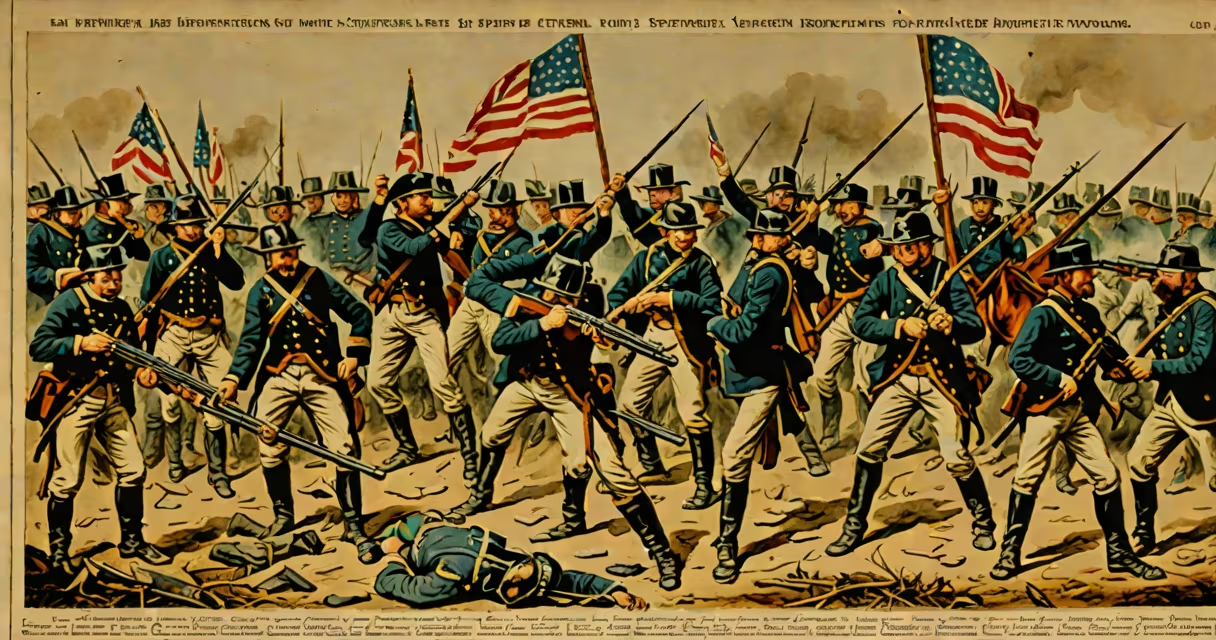
Insurrection is a violent uprising against established authority, typically involving organized groups seeking to overthrow government control. It differs from mere protest or civil disobedience due to its intent to destabilize or replace state power through force.
The term originates from Latin *insurrectio*, meaning "rising up," and entered English usage in the 16th century. Modern legal definitions emphasize coordinated action, not isolated acts. The U.S. Constitution uses the word in Article I, Section 8, granting Congress power to suppress insurrections.
According to the Oxford English Dictionary, insurrection denotes "an organized revolt against the constituted authorities." This distinguishes it from riots, which lack central planning, and coups, which involve military or elite takeovers rather than popular mobilization.
Insurrection requires coordination among participants, shared objectives, and sustained action. It is not spontaneous violence but a deliberate challenge to governance. Authorities respond with military or police intervention, depending on scale and jurisdiction.
For example, during the American Civil War, the Confederacy's secession was labeled an insurrection by the federal government. President Abraham Lincoln declared the Southern states in rebellion in 1861, citing their armed resistance to federal authority. The U.S. Supreme Court later upheld this classification in *Ex parte Merryman* (1861), affirming the president's emergency powers during such events.
Modern cases include the January 6, 2021, Capitol attack. Federal prosecutors charged several individuals with inciting or participating in an insurrection under 18 U.S.C. § 2383, which criminalizes organizing or inciting rebellion against the United States. The Department of Justice argued that the event met the threshold of coordinated violence aimed at disrupting lawful government functions.
Insurrections vary by structure, goals, and methods. They may be nationalist, ideological, or revolutionary in nature. Below are common forms:
| Type | Characteristics | Example |
|---|---|---|
| Nationalist | Seeks independence from a larger state | Irish War of Independence (1919-1921) |
| Ideological | Drives change based on political or religious belief | Levellers' movement in 17th-century England |
| Revolutionary | Seeks to dismantle existing institutions and rebuild society | French Revolution (1789-1799) |
| Rebellious (localized) | Small-scale, often regionally focused | Whiskey Rebellion (1794), U.S. |
Not all uprisings qualify as insurrections. The 1965 Selma to Montgomery marches were acts of civil rights protest, not insurrection, because they used nonviolent tactics and sought legal redress within the system.
Insurrection is frequently confused with protest, riot, or coup. A protest involves peaceful expression of dissent. A riot lacks organization and long-term strategy. A coup is a sudden seizure of power by a small group, usually military or political elites.
One key distinction lies in intent: insurrection aims to replace or dismantle authority. A protest seeks reform. For example, the 1968 student protests in Paris were widespread but not insurrectionary-they demanded policy changes, not regime collapse.
A non-obvious point: courts have ruled that speech alone cannot constitute insurrection. In *Schenck v. United States* (1919), the Supreme Court held that advocacy of violence is protected under free speech unless it presents a "clear and present danger" to national security. This standard prevents over-policing of political dissent.
When a court labels an event an insurrection, it triggers specific legal responses. In the U.S., federal law allows for martial law, suspension of habeas corpus, and deployment of military forces under the Insurrection Act of 1807.
During the 1995 Oklahoma City bombing, investigators classified Timothy McVeigh's actions as an act of domestic terrorism, not insurrection, because he targeted a federal building without attempting to seize control of government institutions. His goal was symbolic destruction, not systemic replacement.
As a personal observation, I reviewed trial transcripts from the 2021 Capitol breach hearings. The prosecution presented evidence of encrypted messaging networks, pre-planned entry points, and leadership roles-all consistent with organized insurrection, not random chaos. That level of coordination is rare in mass unrest.
Insurrection is not synonymous with any form of public unrest. It requires intent, organization, and force directed at dismantling legitimate authority. The term appears in constitutional law, historical analysis, and criminal statutes.
Understanding the definition helps distinguish between lawful protest and unlawful rebellion. It also informs how governments respond to threats to stability.