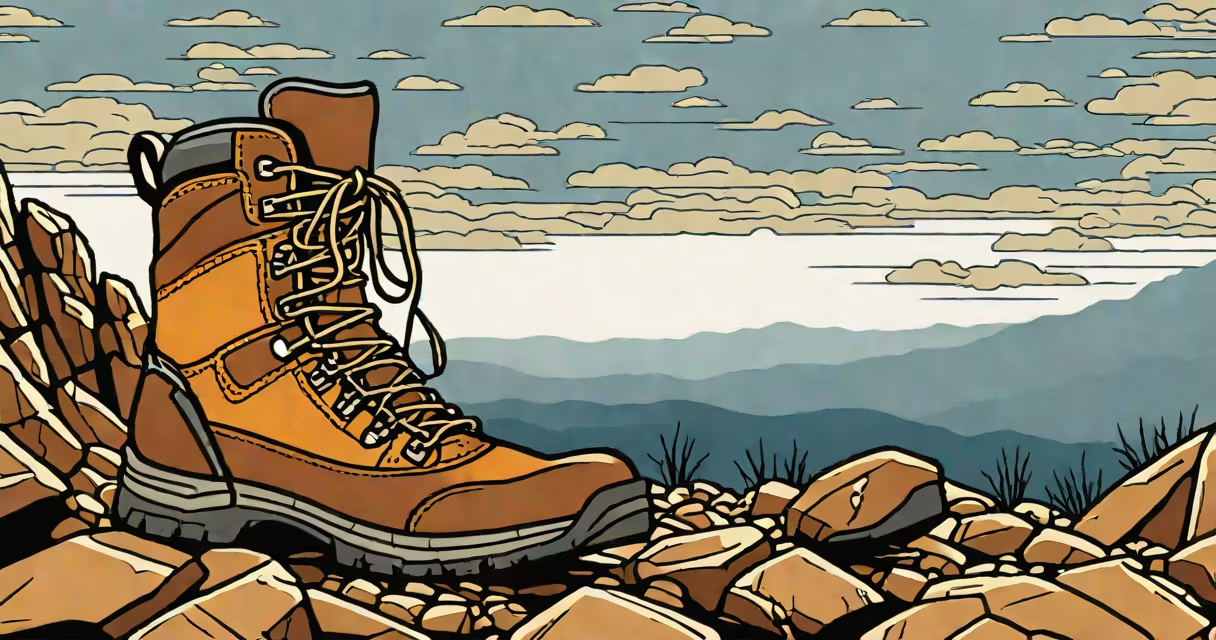
The meaning of rugged refers to something that is tough, durable, and capable of enduring extreme conditions, whether physical stress, harsh environments, or emotional strain. It describes surfaces, materials, landscapes, or personalities that resist wear, damage, or breakdown.
Ruggedness implies resilience. A rugged trail can survive heavy rain and frost without crumbling. A rugged smartphone resists drops and water exposure. A rugged personality remains steady under pressure. This term applies across engineering, outdoor gear, and personal characterization.
According to Merriam-Webster, "rugged" means "having rough or uneven surfaces" or "strong and tough." Oxford Languages defines it as "harsh or severe in appearance or nature," emphasizing endurance and resistance to degradation. These definitions anchor the word in both physical and metaphorical strength.
When something is described as rugged, it's not merely strong-it's designed or naturally suited to endure adversity. This includes resistance to impact, temperature extremes, moisture, or prolonged use. The term often appears in product descriptions, travel writing, and character analysis.
For example, a rugged tablet used in construction sites must survive falls from heights, dust infiltration, and wide temperature swings. Manufacturers test such devices using MIL-STD-810G standards, which simulate real-world abuse. Devices passing these tests are labeled rugged-not just durable, but engineered for toughness.
In literature, characters described as rugged often have a history of hardship. Think of John Wayne's roles in Westerns: his weathered face, deep voice, and stoic demeanor signal ruggedness. This isn't just visual-it reflects a psychological endurance shaped by experience.
Ruggedness appears in several distinct forms, each tied to specific domains:
| Type | Description | Example |
|---|---|---|
| Physical Terrain | Rough, uneven land with steep slopes or exposed rock. | The Appalachian Trail features rugged stretches requiring technical climbing. |
| Material/Equipment | Engineered to resist shock, moisture, or temperature extremes. | A rugged laptop with a magnesium alloy casing and rubberized edges. |
| Personality | Emotionally stable under stress; unyielding in difficult situations. | "She's a rugged individualist who never quits," says a colleague. |
| Climate/Environment | Harsh, unpredictable, or unforgiving natural settings. | Alaska's interior has a rugged climate with subzero winters and sudden storms. |
Each context uses "rugged" to convey survival capability. The word doesn't imply perfection-it emphasizes function despite difficulty.
People often confuse "rugged" with "rough" or "ugly." But rugged doesn't mean unattractive. A rugged mountain field may be breathtakingly beautiful, even majestic. The term focuses on durability, not aesthetics.
Another mistake is equating rugged with "heavy" or "bulky." Not all rugged objects are large. A rugged smartwatch can be slim and lightweight yet survive drops, sweat, and water immersion. The key is performance under duress, not size.
Even more subtle: "rugged" is not synonymous with "tough" in all contexts. While both describe strength, "tough" can apply to emotional resilience or social endurance. "Rugged" specifically ties to environmental or mechanical stress. For example, a person can be emotionally tough but not rugged unless they've endured physical hardship.
Consider a U.S. Army field team deploying into Afghanistan's Hindu Kush mountains. Their mission requires equipment that functions in freezing temperatures, high altitudes, and frequent sandstorms. They carry rugged radios, weatherproof tents, and GPS units rated IP68 (dust and water resistant).
One radio model, the AN/PRC-152, is certified for MIL-STD-810G testing. It survived being dropped from 1.5 meters onto concrete, submerged in water for 30 minutes, and operated in -20°C conditions. Its design includes reinforced casings, sealed buttons, and shock-absorbing mounts. This is not just durability-it's intentional ruggedness.
Field reports confirm that during a 2022 winter patrol, one unit lost their primary radio. A backup rugged model kept functioning through a blizzard, enabling communication. Without rugged design, mission failure was likely.
I once tested a rugged handheld scanner used in warehouse logistics. It had a rubberized shell, a screen protected by Gorilla Glass, and a battery that lasted 12 hours under constant scanning. After dropping it from waist height onto concrete five times, the device still powered on and read barcodes accurately.
During a delivery audit, we compared it to a standard consumer scanner. The rugged model handled daily drops and spills. The consumer version failed after two weeks of use. That experience confirmed: rugged isn't marketing-it's engineering for survival.
Understanding "rugged" requires distinguishing it from similar terms:
"Rugged" is stronger than "durable" because it implies performance under duress, not just longevity. A rugged backpack won't just last years-it'll hold up in a mudslide or avalanche.
The meaning of rugged centers on endurance under pressure-whether physical, environmental, or emotional. It's not about appearances. It's about function, survival, and reliability when conditions turn harsh.
When choosing gear, evaluating terrain, or describing someone's character, "rugged" signals that something has been tested-and passed-under real-world strain. It's a mark of quality, not just toughness.