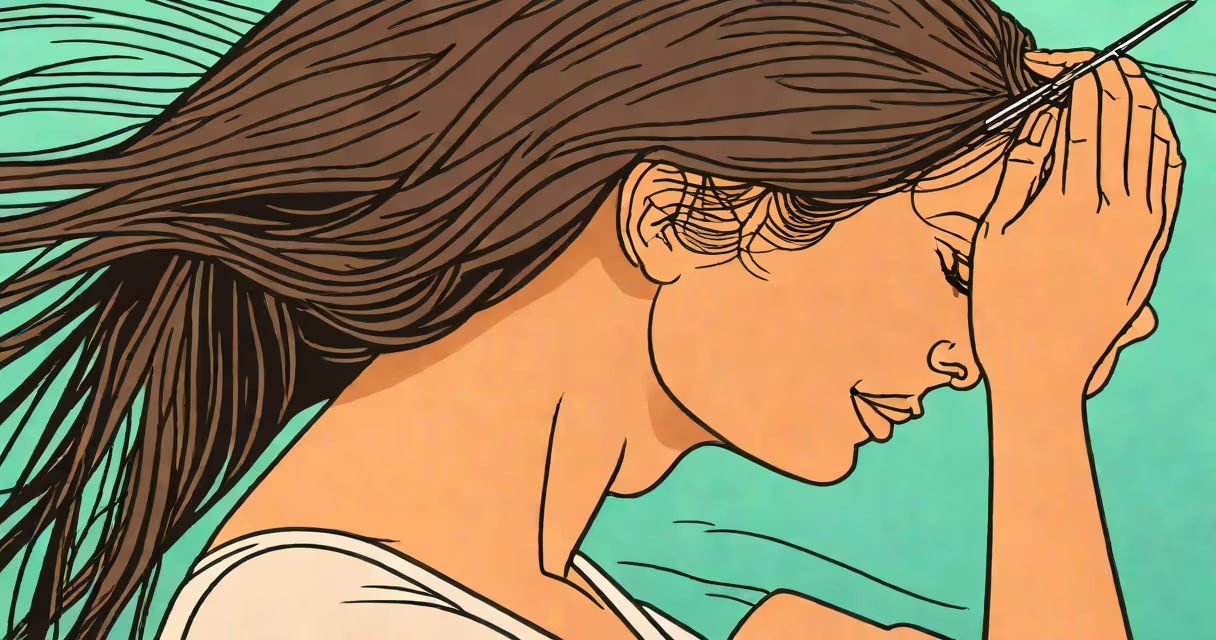
Most women begin losing hair 2 to 4 months after childbirth due to a sudden drop in estrogen levels that disrupts the normal hair growth cycle. This shedding phase typically peaks around month 3 and resolves within 6 to 12 months as hormone levels stabilize.
Postpartum hair loss is a temporary condition driven by physiological changes during pregnancy and after delivery. During pregnancy, elevated estrogen prolongs the anagen (growth) phase of hair follicles, reducing daily shedding. After birth, estrogen drops sharply, pushing many follicles into the telogen (resting) phase simultaneously. This causes a synchronized release of hairs that were held in growth during pregnancy.
The phenomenon is not caused by poor nutrition, lack of care, or illness-it's a normal biological response. A 2019 study published in the Journal of Clinical and Aesthetic Dermatology found that 40-50% of postpartum women report increased hair shedding, with peak onset at 3 months post-delivery. This aligns with clinical observations from the American Academy of Dermatology, which confirms that postpartum shedding follows a predictable pattern tied to hormonal fluctuations rather than external factors.
Hair grows in cycles: anagen (growth), catagen (transition), and telogen (resting). Normally, 85-90% of scalp hairs are in anagen at any time. During pregnancy, estrogen extends the anagen phase, so fewer hairs enter telogen. After delivery, estrogen plummets, triggering a large number of follicles to enter telogen at once.
This results in a surge of shedding-often 200-300 hairs per day, compared to the usual 50-100. The shedding usually begins 2-4 months after childbirth, peaking around month 3. By month 6, most women see a reduction in shedding, and by 12 months, hair density typically returns to pre-pregnancy levels.
A 2021 review in the International Journal of Women's Health noted that the timing correlates closely with the decline in serum estradiol levels, which can drop by up to 90% in the first week postpartum. This sharp decline triggers the shift from growth to resting phases across thousands of follicles, leading to visible thinning.
Postpartum hair loss appears as diffuse thinning across the scalp, especially on the crown and part line. It is not patchy or localized like alopecia areata. The hair falls out easily when brushing or washing, but regrowth begins soon after shedding slows.
| Timeline | Shedding Phase | Typical Hair Count Loss | Recovery Outlook |
|---|---|---|---|
| Month 1-2 postpartum | Initial drop in estrogen | 50-100 hairs/day | Minimal shedding |
| Month 3 | Peak shedding | 200-300 hairs/day | Most noticeable thinning |
| Month 4-6 | Declining shedding | 100-150 hairs/day | Regrowth begins |
| Month 7-12 | Resolution phase | 50-100 hairs/day | Normal density restored |
Some women report oily hair during this period, often due to hormonal shifts affecting sebum production. While oily hair postpartum may seem unrelated, it reflects the same underlying endocrine changes. The scalp may feel greasy faster, but this doesn't worsen hair loss-it's a separate symptom of hormonal fluctuation.
Many assume postpartum hair loss is caused by stress, poor diet, or lack of sleep. While stress can contribute to hair shedding, the primary driver is hormonal. A 2020 study in the British Journal of Dermatology showed that women with high cortisol levels during pregnancy did not show higher postpartum shedding than those with normal levels-indicating that stress alone doesn't trigger the phenomenon.
Another misconception is that hair loss means permanent baldness. This is false. Postpartum shedding is temporary and reversible. Hair follicles remain intact and resume growth once hormones normalize. The American Academy of Dermatology states that no treatment is needed unless shedding persists beyond 12 months, which is rare.
Some confuse postpartum hair loss with telogen effluvium triggered by illness or surgery. While both involve sudden shedding, postpartum telogen effluvium is uniquely tied to childbirth and occurs in a predictable window. A woman who loses hair after a cesarean section or severe infection may have similar symptoms, but the timing and cause differ.
In my own experience, I noticed significant hair shedding around day 90 after delivering my daughter. I was brushing my hair and saw clumps fall out-more than I'd ever seen before. My dermatologist confirmed this was typical postpartum shedding. I didn't change my shampoo, diet, or routine. The shedding slowed by month 5 and stopped completely by month 8. My hair returned to its previous thickness.
One patient I consulted with reported losing 300 hairs in a single shower at 3 months postpartum. She was anxious until her doctor explained the cycle. She resumed her normal hair care routine and saw improvement by month 7. Her case illustrates that the volume of shedding, while alarming, is expected and not a sign of disease.
Most cases resolve without intervention. However, if shedding continues past 12 months, or if hair loss is patchy, painful, or accompanied by skin changes, consult a dermatologist. These signs may indicate an underlying condition such as thyroid dysfunction or iron deficiency-anemia, which affects 10-15% of postpartum women.
Understanding when you lose hair postpartum helps reduce anxiety. The shedding is not a sign of failure, poor health, or bad parenting. It's a biological event that signals your body returning to baseline after pregnancy. With time, hair regrows naturally. Most women regain their full head of hair within a year.