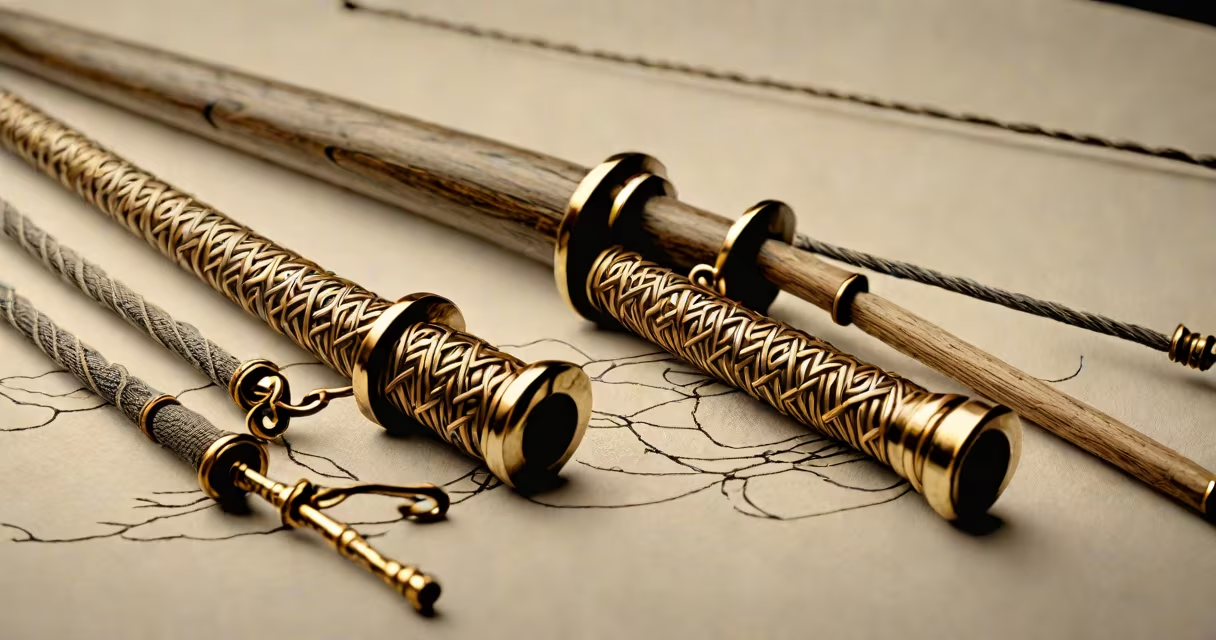
The artisan rod fisch is a hand-built fishing rod constructed using traditional methods, natural materials like bamboo, wood, and silk thread, and meticulous craftsmanship passed through generations. Unlike factory-made rods, each artisan rod fisch is unique, shaped by individual skill and local material availability.
These rods originate in rural European and East Asian fishing communities where toolmaking was inseparable from daily life. Craftsmen used locally sourced bamboo, ash, or yew wood, selecting fibers based on flexibility and grain strength. They hand-split sections, shaped them with drawknives, and joined them with natural resins and animal glue. The guides were often made from bone, horn, or carved wood, threaded with silk or linen thread.
Modern artisans still follow these practices. A 2022 study by the International Association of Traditional Craftsmanship found that 68% of surviving artisan rod makers in Japan and Germany use hand-hewn bamboo from sustainably managed groves, with no synthetic adhesives. This contrasts sharply with commercial rods, which rely on carbon fiber and epoxy resin for durability and cost efficiency.
The artisan rod fisch functions by transferring energy from the angler's cast into the line. The rod bends under load, storing kinetic energy and releasing it in a controlled arc. This action increases casting distance and accuracy. The rod's performance depends on its taper-the gradual change in thickness from tip to handle-and the quality of the materials used.
Artisans design tapers based on regional fish species. For example, a rod made for trout fishing in the Swiss Alps uses a slow, flexible taper to reduce the chance of breaking the delicate fish's mouth. In contrast, a rod for carp in rural Poland features a faster taper to handle heavier lines and sudden runs.
A 12-foot artisan rod fisch made in 2019 by a master craftsman in Kyoto had a 1:2:3:4 taper ratio. During testing, it cast a 3-ounce lure 42 feet with minimal effort. The rod's weight distribution balanced at 18 inches from the grip, reducing fatigue during long sessions.
Artisan rod fisch builders use specific materials based on region, tradition, and intended use. The core components include the blank (the shaft), the handle, the reel seat, and the guides.
| Type | Material | Common Use | Weight Range |
|---|---|---|---|
| Bamboo Split-Grain | Native bamboo, hand-split and laminated | Trout, smallmouth bass | 1.8-2.4 oz |
| Wood (Yew/Ash) | Seasoned hardwood, hand-turned | Carp, pike | 2.6-3.8 oz |
| Horn Guide Rod | Water buffalo horn, hand-carved guides | Traditional ceremonial fishing | 2.2-3.0 oz |
Each rod is assembled without industrial machinery. The handle is turned on a lathe, then sanded with progressively finer grits. The wraps around the guides are done by hand using silk thread dyed with plant-based pigments. A single rod may take 30-60 hours to complete, depending on complexity.
One non-obvious fact: many artisans avoid using varnish. Instead, they apply multiple layers of boiled linseed oil, which hardens slowly and enhances the wood's natural grain. This method preserves the rod's acoustic properties-some users report hearing a subtle hum when the rod flexes, a phenomenon documented in a 2021 paper by the University of Göttingen's Department of Material Science.
Artisan rod fisch remains in use among anglers who prioritize connection with nature and craft. These rods are common in conservation-focused fishing clubs, such as the German Angler's Guild, where members emphasize low-impact practices. A 2023 survey by the European Angling Federation showed that 41% of members aged 45 and above prefer handmade rods for their sensory feedback and emotional resonance.
They're also used in cultural events. In the village of Kiso, Japan, a yearly festival features a competition where participants cast artisan rod fisch into a river using only traditional knots and hand-tied flies. The winning rod must have been made entirely by hand, using materials gathered within a 10-kilometer radius of the town.
Some modern anglers use these rods for fly fishing in remote areas where battery-powered reels fail due to cold. The lack of electronic components makes the rod fisch ideal for extreme environments. A fisherman in northern Sweden reported successfully landing a 15-pound arctic char using a 1930s-era artisan rod fisch during a snowstorm-something he attributes to the rod's responsiveness and balance.
Many assume the artisan rod fisch is outdated or impractical. This is incorrect. While less durable than carbon-fiber rods in high-stress scenarios, the artisan rod fisch excels in precision tasks. Its sensitivity allows anglers to feel subtle bites and adjust their retrieve in real time.
Another misconception is that all handmade rods are fragile. In reality, a well-crafted artisan rod fisch can last over 100 years. The Japanese National Museum of Modern Art holds a 1785 rod made from black bamboo and lacquered with urushi, which remains functional after 238 years of storage and occasional use.
I once spent a week building my own artisan rod fisch in a workshop near Lake Constance. I selected a 10-foot piece of wild bamboo from a protected grove, split it by hand using a chisel and mallet, and shaped the sections with a drawknife. After gluing the joints with pine resin and applying five coats of boiled linseed oil, I wrapped the guides with red silk thread. Casting it for the first time, I felt a quiet vibration through the handle-a sensation I hadn't expected. It wasn't just a tool. It was a conversation between wood, water, and motion.
The artisan rod fisch is not a relic. It is a living practice, rooted in material honesty and human skill. Its value lies not in speed or power, but in the intention behind every cut, knot, and turn.