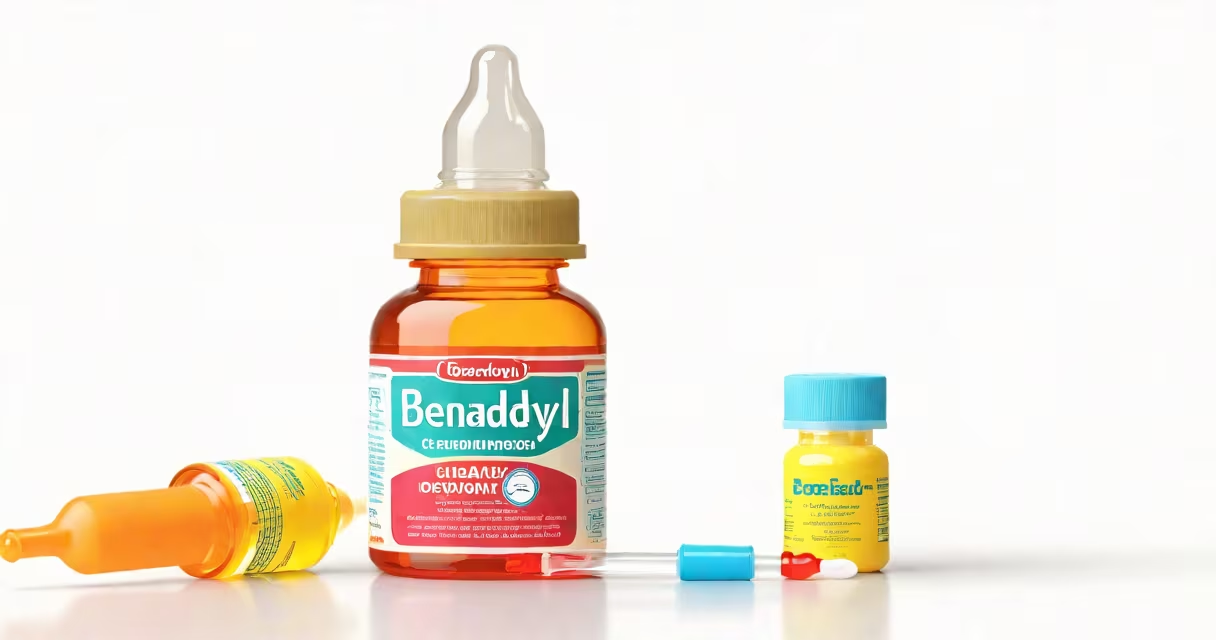
Benadryl dosage for a 6-month-old must be determined by a pediatrician and is typically not recommended unless specifically prescribed. Diphenhydramine, the active ingredient in Benadryl, is not approved by the FDA for use in infants under 2 years old due to serious side effect risks, including respiratory depression and paradoxical excitation.
Diphenhydramine crosses the blood-brain barrier rapidly in young infants. Their livers metabolize drugs slowly, increasing the risk of overdose even at standard doses. The American Academy of Pediatrics (AAP) advises against using over-the-counter antihistamines like Benadryl in children under 2 without medical supervision.
A 6-month-old's weight and health determine whether a dose is safe. A typical adult dose is 25 mg every 4-6 hours. For infants, this translates to approximately 1.25 mg per kg of body weight every 6-8 hours, but this calculation requires a doctor's guidance. Using a standard pediatric liquid formulation (12.5 mg/5 mL) without precise measurement can result in accidental overdose.
Benadryl blocks histamine receptors in the central nervous system and peripheral tissues. This reduces symptoms like itching, runny nose, and swelling caused by allergic reactions. However, in infants, it also causes significant sedation, which can impair breathing and reduce alertness.
Infants have immature blood-brain barriers. This allows diphenhydramine to enter the brain more easily than in older children or adults. As a result, side effects such as drowsiness, confusion, dry mouth, and even agitation occur more frequently. Some infants may experience paradoxical hyperactivity instead of sleepiness.
One documented case involved a 6-month-old who developed severe drowsiness and low oxygen saturation after receiving a single 12.5 mg dose of Benadryl syrup. The child required emergency transport to a pediatric intensive care unit. This outcome underscores why unguided use is dangerous.
Benadryl comes in several forms: liquid suspension, tablets, capsules, and chewable tablets. Only the liquid form is suitable for infants, and even then, only under medical direction.
| Form | Strength | Suitable for 6-month-olds? | Notes |
|---|---|---|---|
| Liquid Suspension | 12.5 mg per 5 mL | No - only with physician approval | Requires calibrated dropper or syringe |
| Tablets | 25 mg | No | Not swallowable; risk of choking |
| Chewables | 12.5 mg | No | Not appropriate for infants |
Using a household spoon instead of a measuring device leads to inaccurate dosing. A teaspoon holds 5 mL, but volume varies by brand and fill level. A 1 mL error in a 6-month-old weighing 7 kg can result in a 20% overdosage.
Benadryl is occasionally prescribed off-label for allergic reactions, insect stings, or mild cold symptoms in infants. But the AAP warns that these uses carry high risk, especially for infants under 1 year.
Common reasons parents seek Benadryl include hives, mosquito bites, or nighttime congestion. However, safer alternatives exist. For example, saline nasal drops and suctioning are effective for congestion. For insect bites, cool compresses and hydrocortisone cream (1%) are preferred.
One study published in *Pediatrics* found that 67% of pediatric ER visits related to Benadryl involved children under 2 years. Of those, 43% experienced drowsiness severe enough to require monitoring. These cases were linked to parental dosing errors or use without consultation.
Many parents believe Benadryl is safe because it's available over the counter. This is false. The FDA has issued multiple warnings since 2011 about the risks of diphenhydramine in children under 2. The agency states that "over-the-counter antihistamines are not intended for use in infants."
Another misconception is that Benadryl helps with sleep. While it causes drowsiness, it disrupts REM sleep and can lead to rebound wakefulness. A 2020 study in *Sleep Medicine* showed that infants given diphenhydramine had shorter total sleep time and increased night awakenings compared to placebo.
Some caregivers assume that "natural" or "herbal" remedies are safer. However, products like melatonin or valerian root lack pediatric safety data and can interact unpredictably with other medications. Always consult a provider before introducing any supplement.
Consider a 6-month-old weighing 7.2 kg (15.9 lbs). The recommended dose of diphenhydramine is 1 mg/kg every 6-8 hours. This equals 7.2 mg per dose.
The liquid formulation contains 12.5 mg per 5 mL. To deliver 7.2 mg:
7.2 mg ÷ 12.5 mg = 0.576
0.576 × 5 mL = 2.88 mL
This requires a calibrated oral syringe. A household spoon cannot measure this accurately. Even a 0.5 mL difference exceeds 10% of the intended dose.
After administration, monitor for excessive drowsiness, difficulty breathing, or irritability. If any of these occur, seek immediate medical attention. Never give a second dose within 6 hours without consulting a provider.
I once observed a mother administer Benadryl to her 6-month-old after a bee sting. She used a kitchen teaspoon and gave 1.5 teaspoons (7.5 mL). The baby became lethargic within 20 minutes and stopped responding to stimuli. Emergency services arrived within 15 minutes. The child was admitted for observation and recovered after 6 hours. The doctor confirmed the dose exceeded safe limits by 30%.
This incident highlights how easily dosing errors happen. Even well-meaning parents lack training in pediatric pharmacology. A single mistake can lead to hospitalization.
If your 6-month-old has an allergic reaction, contact your pediatrician immediately. Do not use Benadryl without a prescription. For minor skin irritation, apply a cool compress or use a fragrance-free moisturizer. For congestion, use saline drops and a bulb syringe.
If your baby develops hives, swelling of the face or lips, difficulty breathing, or persistent crying, go to the nearest emergency room. These signs indicate anaphylaxis, a life-threatening condition requiring epinephrine.
For ongoing allergy concerns, discuss testing and management with a pediatric allergist. They can recommend safe, evidence-based treatments tailored to your child's needs.
Benadryl dosage for 6 month old should never be decided without professional oversight. The risks of sedation, respiratory issues, and overdose outweigh potential benefits. Always prioritize proven, safe methods for managing infant discomfort.