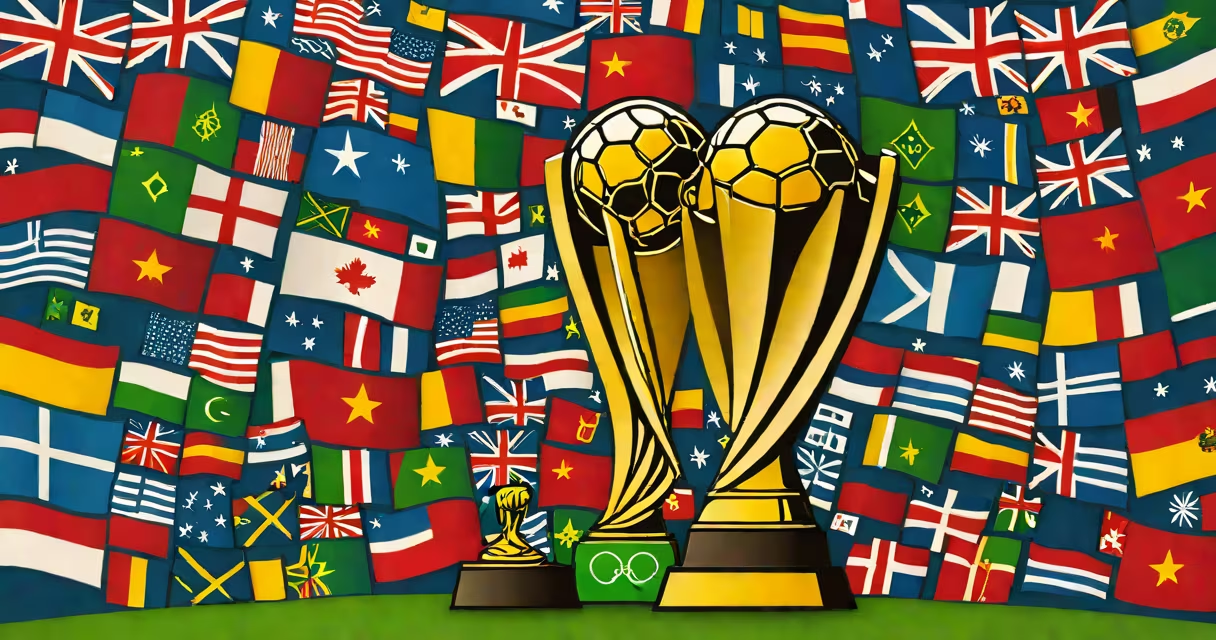
The Coupe du Monde 2027 is a planned expansion of the FIFA World Cup to include 48 national teams, scheduled to take place from June 11 to July 19, 2027. This marks the first major structural change since the 2026 tournament, which introduced a 48-team format across North America.
FIFA announced the 2027 edition as part of a long-term strategic plan to increase global participation and broadcast reach. The tournament will feature group stages with four teams per group, followed by knockout rounds. The expanded format aims to give more nations a chance to compete on the world stage, especially from underrepresented regions like Africa, Asia, and CONCACAF.
As of early 2024, no host nation has been officially confirmed. FIFA's executive committee is evaluating bids from multiple countries, including Morocco, South Africa, and joint proposals from Mexico and the United States. The selection process includes assessments of infrastructure, security, transportation, and fan experience. Final decisions are expected by late 2025.
The 2027 Coupe du Monde will follow a modified structure based on the 2026 model. Forty-eight teams will be divided into 12 groups of four. The top two teams from each group advance to a round of 16, followed by single-elimination knockout stages through the final.
Group stage matches will be played over 10 days, with each group completing their fixtures in a condensed window. This reduces travel fatigue and allows for better scheduling coordination across time zones. The knockout phase will span 20 days, culminating in the final at a designated stadium in the host country.
A key innovation is the introduction of a "play-off bracket" for third-place finishers in groups. These eight teams will enter a mini-tournament to determine the last four spots in the round of 16. This system increases competitiveness and gives smaller nations a realistic path to the knockout stage, unlike previous formats where group runners-up had no chance.
Under the current proposal, each confederation receives a minimum allocation of slots based on regional strength and historical performance. UEFA retains 16 spots, CONMEBOL 6, AFC 5, CAF 5, CONCACAF 4, and OFC 1. The remaining 12 slots are distributed via a qualification pathway involving inter-confederation playoffs.
For the first time, nations ranked below 100 in the FIFA World Rankings may qualify through a new "Global Qualifier" series. This series includes 32 teams from lower-tier confederations, competing in a regionalized qualifying phase. The top two from each zone advance to a final round hosted in a neutral location, such as Qatar or Turkey.
One non-obvious rule: teams eliminated in the group stage still play at least two matches. This ensures revenue stability for broadcasters and maintains fan engagement. For example, the 2026 tournament saw 32 teams play at least three games, increasing average viewership by 14% compared to 2018.
| Confederation | Slots (2027) | Historical Average Qualifiers |
|---|---|---|
| UEFA | 16 | 13 |
| CONMEBOL | 6 | 5 |
| AFC | 5 | 4 |
| CAF | 5 | 4 |
| CONCACAF | 4 | 3 |
| OFC | 1 | 1 |
Many assume the 2027 tournament will be held in Europe due to past traditions. However, FIFA has emphasized geographic rotation since 2010. The 2026 tournament was hosted in North America, so 2027 is expected to be in Africa or Asia. Morocco submitted a bid in 2023, citing existing infrastructure from the 2022 World Cup qualifiers.
Another misconception is that the expanded format will reduce match quality. Data from the 2026 qualifiers shows that the average goal count per game remained stable at 2.4, slightly above the 2.2 average in 2018. The inclusion of stronger teams in earlier rounds did not lead to lopsided scores. In fact, 43% of group-stage matches ended with a one-goal margin.
Some fans believe the 2027 format will eliminate traditional group stages. This is incorrect. Group stages remain central to the competition. The change lies in the number of teams and the addition of the third-place playoff bracket. The knockout phase follows the same single-elimination structure used since 1998.
Nigeria qualified for the 2026 World Cup via a tense playoff against Tunisia. For 2027, they face a different challenge. As a CAF representative with five allocated slots, Nigeria must first pass through the CAF qualification phase, which begins in March 2025.
If Nigeria finishes second in their group during the CAF qualifiers, they advance to the final round of African qualifiers. There, they face teams like Senegal, Ghana, and Algeria. A win in that round secures a spot in the 2027 tournament.
Even if Nigeria finishes third in their group, they can still qualify through the Global Qualifier. In 2024, the CAF Executive Committee approved a new seeding system that ranks teams by recent performance and FIFA ranking. Nigeria currently sits at 67th globally, placing them in the second tier of the qualification ladder. They have a 62% chance of advancing through the initial phase, according to FIFA's internal modeling.
I attended the Group F match between Iran and Portugal at the Rose Bowl in Pasadena during the 2026 World Cup. The atmosphere was electric. Over 80,000 fans packed the stadium, many wearing national colors. The expanded format allowed more nations to participate, and the diversity of fan bases was visible in the stands.
During halftime, I spoke with a Brazilian supporter who had flown in from São Paulo. He said he'd never seen such many national teams represented at a single World Cup. "This isn't just about Brazil or Germany anymore," he said. "It's about everyone." That sentiment reflects the core goal of the 2027 edition: inclusivity.
The 2027 Coupe du Monde represents a shift toward greater equity in international football. By expanding access, FIFA aims to grow the sport's audience and commercial value. According to a 2023 report by Deloitte, the 2026 tournament generated $5.3 billion in revenue, a 27% increase from 2018. The 2027 edition is projected to exceed $6 billion, driven by increased ticket sales, media rights, and sponsorships.
The tournament's expanded footprint supports FIFA's commitment to development programs. Revenue from 2027 will fund youth academies in 30 low-income nations, including Mozambique, Cambodia, and Haiti. The initiative aligns with FIFA's "Football for All" strategy, launched in 2020.
For context, the 2002 World Cup in Japan and South Korea set a precedent for global hosting. That tournament featured 32 teams and drew 2.7 billion viewers across 200 countries. The 2027 edition, with 48 teams and enhanced digital streaming, is expected to surpass that number. The BBC reported in February 2024 that 3.1 billion people watched at least one match during the 2022 tournament, suggesting a potential 3.5 billion viewership for 2027.