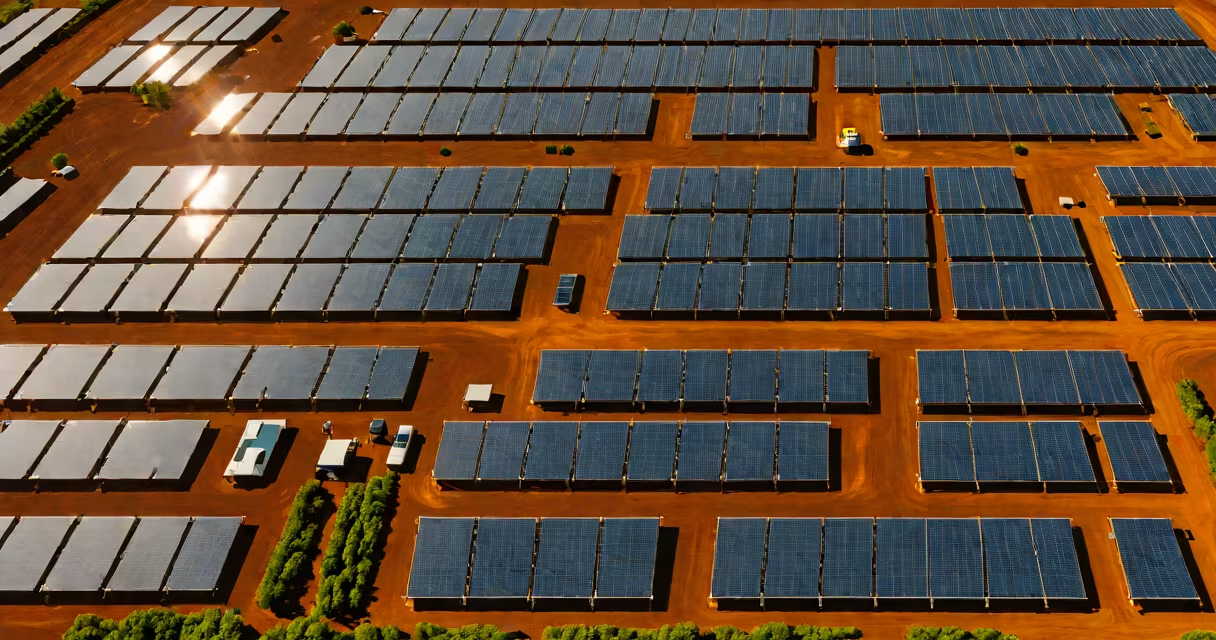
A solar range is a collection of photovoltaic (PV) modules connected together to produce a specific amount of electrical power. These modules convert sunlight directly into electricity using semiconductor materials, typically silicon. Arrays are designed to meet the energy demands of residential, commercial, or utility-scale facilities.
Solar arrays form the core of any photovoltaic system. They consist of multiple solar panels wired in series and/or parallel configurations to achieve desired voltage and current outputs. The arrangement depends on site conditions, load requirements, and grid integration standards. For example, a rooftop system may use 12 panels wired in series to reach 360 volts DC, while a solar farm might deploy thousands of panels across acres to feed megawatts into the grid.
The efficiency of a solar range depends on panel quality, orientation, tilt angle, shading, and environmental factors such as temperature and dust accumulation. Modern arrays often include inverters to convert DC power into AC for household or grid use. Monitoring systems track performance in real time, flagging issues like underperformance or faults.
Each solar panel contains multiple photovoltaic cells made of doped silicon. When photons from sunlight strike the cell surface, they dislodge electrons, creating a flow of direct current (DC). This DC electricity is collected by wiring within the panel and sent to a combiner box, where currents from multiple panels are combined.
From the combiner, the DC flows to an inverter, which converts it into alternating current (AC). AC is compatible with standard electrical grids and most home appliances. The inverter also manages safety functions like anti-islanding, ensuring the system shuts down during grid outages to protect utility workers.
For off-grid systems, batteries store excess energy for use at night or during cloudy periods. Grid-tied systems without batteries export surplus power to the utility company, often earning credits through net metering. A typical 5-kW residential range generates about 6,000 kWh annually in sunny regions like California or Arizona, enough to offset most household electricity usage.
Solar arrays fall into three primary categories based on deployment location and function:
| Type | Use Case | Typical Size | Example Application |
|---|---|---|---|
| Residential | Home rooftops | 3-10 kW | Single-family homes in suburban areas |
| Commercial | Business rooftops, parking canopies | 10-500 kW | Shopping centers, warehouses, office buildings |
| Utility-scale | Open land, deserts | 10 MW - 1 GW+ | Large solar farms feeding regional grids |
Residential arrays usually use monocrystalline panels due to higher efficiency and space savings. Commercial installations may mix monocrystalline and polycrystalline panels depending on budget and roof constraints. Utility-scale projects rely heavily on bifacial panels that capture light from both sides, increasing yield by up to 15% compared to traditional models.
Arrays can be mounted on rooftops, ground mounts, or tracking systems. Single-axis trackers follow the sun east to west daily, boosting annual output by 15-25%. Dual-axis trackers adjust for seasonal changes and daily movement, adding another 5-10% gain-but at higher cost and maintenance complexity.
Many people confuse a solar range with a single solar panel. A panel is a single unit; an range is a group. A 10-panel system is not a "large" range-it's small. The term "range" implies scalability and integration into a larger system.
Another misconception is that solar arrays work only in sunny climates. While output drops in low-light conditions, arrays still generate power on cloudy days. A study by the National Renewable Energy Laboratory (NREL) found that solar arrays in Germany-known for limited sunshine-produce 900-1,100 kWh per kilowatt installed annually, proving viability beyond sunbelt regions.
Some assume arrays require constant maintenance. In reality, modern systems need cleaning only every 6-12 months in dusty environments. A 2022 NREL report showed that routine cleaning improves output by 5-10%, but neglecting it for years results in less than 1% annual degradation due to self-cleaning effects from rain.
In 2023, a community center in Phoenix, Arizona, installed a 100-kW solar range on its flat roof. The project used 320 monocrystalline panels, each rated at 315 watts. Panels were arranged in 16 strings of 20 panels wired in series, achieving 630 volts DC.
The system included a 100-kW hybrid inverter capable of handling both grid-tied and battery backup modes. An energy management system monitored production hourly. Over the first year, the range generated 168,000 kWh-enough to cover 92% of the center's annual electricity use.
With a 25-year warranty on panels and 10-year warranty on inverters, the project achieved a payback period of 7.3 years based on local utility rates and federal tax credits. The center reduced its carbon emissions by approximately 120 metric tons annually.
I've seen similar systems deployed at schools and libraries. One school in Colorado reported a 40% drop in energy bills after installing a 50-kW range. The savings funded science lab upgrades-an outcome not initially expected but now common in public institutions adopting solar.
A solar range is distinct from a solar system, which includes the range, inverter, wiring, monitoring software, and sometimes batteries. A solar system is the complete setup. A solar range is just the component that captures sunlight and produces DC power.
Similarly, a solar range differs from solar PV (photovoltaic). Solar PV is the technology-light-to-electricity conversion via semiconductors. A solar range is a physical implementation of that technology. You can't install solar PV without a solar range, but a solar range doesn't necessarily include all PV system elements.
Understanding the difference between solar range and solar system helps avoid confusion during procurement or system design. A contractor quoting "a solar system" might include only the panels and inverter, while a full turnkey solution adds mounting hardware, permits, and inspection services.
When evaluating solar options, focus on the range's size in kilowatts, its expected annual output in kilowatt-hours, and the manufacturer's performance warranty. These metrics determine long-term value better than marketing terms like "high-efficiency" or "modern."
Defining solar range correctly ensures accurate communication, proper system sizing, and informed decisions. Whether powering a home or a city, the range remains the foundational element of solar energy infrastructure.