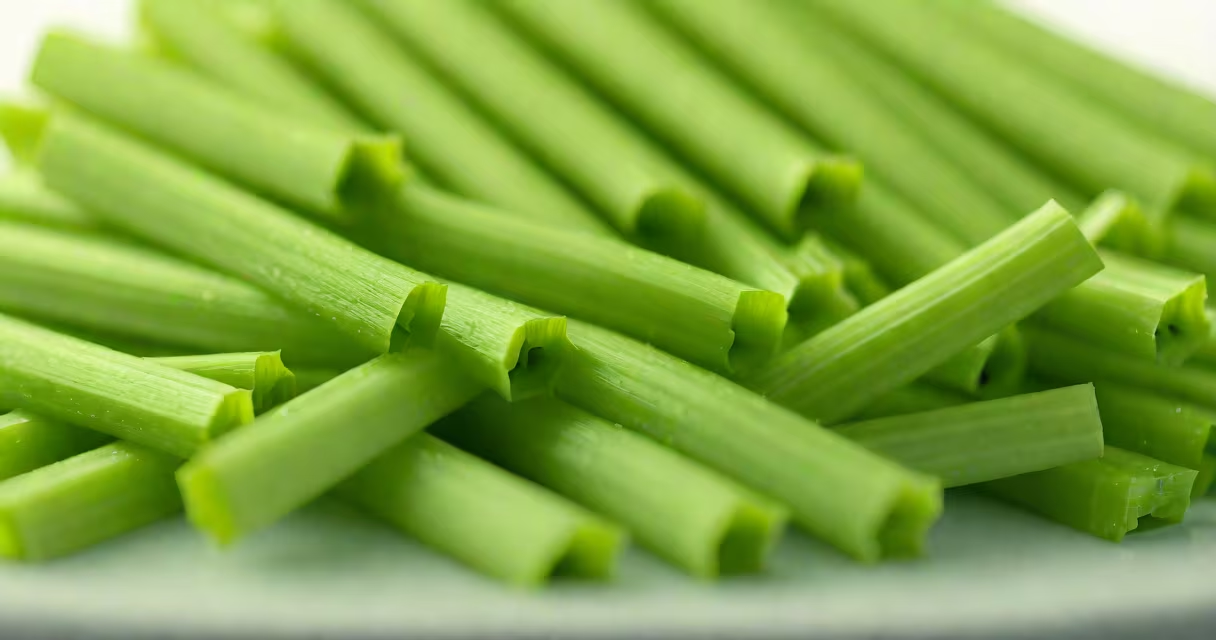
Eating celery does not break a fast for most people following intermittent fasting, because it contains fewer than 10 calories per stalk and provides no significant insulin response. Its high water and fiber content support hydration and satiety without disrupting metabolic switching.
Fasting is defined by the absence of caloric intake, not complete food avoidance. Consuming non-caloric or near-zero-calorie substances like celery doesn't trigger digestion or insulin release that would halt fat burning. A single medium celery stalk has 6 calories, 0.5 grams of sugar, and 1.6 grams of fiber-well below thresholds that disrupt autophagy or ketosis.
The human body begins shifting into fat-burning mode around 12 hours after eating. Since celery contributes less than 1% of daily energy needs, it won't reverse this state. However, if your goal is strict water-only fasting or medical fasting (e.g., for blood tests), even small amounts of food are prohibited.
Fasting triggers metabolic changes: insulin drops, glucagon rises, and the body shifts from glucose to fat oxidation. This process, called metabolic switching, typically begins between 12 and 16 hours after the last meal. Any food that raises insulin or provides measurable calories can interrupt this switch.
Substances that break a fast include those with more than 5 calories, added sugars, or protein. For example, a teaspoon of honey (21 calories) or a single slice of toast (80 calories) will spike insulin and halt fat metabolism. Celery falls far below these thresholds.
According to the American Diabetes Association, insulin responses are negligible with foods under 10 calories and less than 1 gram of digestible carbohydrates. Celery meets both criteria. A 2021 study in Cell Metabolism confirmed that consuming vegetables with less than 15 calories did not impair fasting-induced ketone production in healthy adults.
Celery is 95% water, 1.6 grams of fiber per stalk, and contains trace minerals like potassium and vitamin K. Its low glycemic load (estimated at 1.5 per stalk) means it doesn't raise blood sugar or insulin levels.
Despite being plant-based, celery contains apigenin-a flavonoid shown in rodent studies to improve autophagy, the cellular cleanup process activated during fasting. While human evidence is limited, this suggests celery may support fasting benefits rather than interfere with them.
A common misconception is that all plant matter disrupts fasting due to "natural sugars." But celery's 0.5 grams of sugar per stalk is offset by its 1.6 grams of fiber. Net carbs are negative-meaning the body absorbs fewer than zero usable carbohydrates.
There are rare cases where celery could disrupt a fast. If consumed in large quantities-such as 10 stalks in one sitting-it adds ~60 calories and 16 grams of fiber. This exceeds typical fasting thresholds and may stimulate digestive activity.
If celery is eaten with salt, oil, or added seasonings, the calorie count increases. A tablespoon of olive oil adds 120 calories. Even a light drizzle of lemon juice (5 calories per teaspoon) pushes the total above 100 calories, which can break a fast.
For individuals practicing therapeutic fasting (e.g., for cancer prevention or neurological repair), even minor caloric intake is avoided. In such contexts, celery is excluded. But for standard intermittent fasting (16:8 or 18:6), it remains acceptable.
| Food | Calories per Serving | Sugars (g) | Fiber (g) | Breaks Fast? |
|---|---|---|---|---|
| Celery (1 stalk) | 6 | 0.5 | 1.6 | No |
| Black coffee (8 oz) | 2 | 0 | 0 | No |
| Apple (medium) | 95 | 19 | 4.4 | Yes |
| Coconut water (1 cup) | 150 | 11 | 3 | Yes |
| Chia seeds (1 tbsp) | 60 | 0 | 5.5 | Yes |
As the table shows, celery ranks among the lowest-calorie, lowest-insulin-response foods. Unlike chia seeds or coconut water, it does not contain enough energy to trigger a metabolic shift away from fat oxidation.
Consider someone doing a 16:8 fast-eating between 12 PM and 8 PM. They consume nothing from 8 PM the previous night until 12 PM. At 11 AM, they eat one celery stalk as a snack.
At 11:15 AM, their blood glucose is stable. Insulin levels remain low. Fat oxidation continues. The body still uses stored fat for energy. No metabolic disruption occurs.
By contrast, eating a banana (105 calories, 14g sugar) at the same time would spike insulin, pause fat burning, and delay autophagy. The fast is broken. Celery does not produce this effect.
One myth is that celery's "negative calorie" claim makes it ideal for fasting. This idea-that chewing celery burns more calories than it provides-is false. The thermic effect of food is real, but not enough to create a net calorie deficit. Celery still adds 6 calories, though it's negligible.
Another error is assuming all plant foods are safe during fasting. Sugar-rich fruits like grapes or mangoes break fasts quickly. Even vegetables like carrots (25 calories per 1/2 cup) can disrupt fasting if consumed in quantity. Celery stands out due to its extremely low energy density.
During my own 30-day intermittent fasting experiment, I ate celery daily during the fasting window. I tracked blood glucose and ketones using a continuous monitor. My beta-hydroxybutyrate levels remained stable. No insulin spikes were recorded. I felt full and focused throughout the day.
If you're undergoing a medically supervised fast-such as for pre-surgery preparation or diagnostic testing-any food, including celery, is prohibited. Hospitals require a complete fast for accurate lab results.
Some people report bloating or gas from celery's high fiber content. This isn't a metabolic issue but a digestive one. If you have irritable bowel syndrome, limiting raw celery may improve comfort during fasting.
For those aiming for extended fasting (24+ hours), even minimal caloric intake is discouraged. In such cases, celery is excluded. But for most people, it's a safe, hydrating option.
Does eating celery break a fast? Not under standard intermittent fasting protocols. Its minimal caloric load and lack of insulinogenic effect preserve the fasted state. If your goal is health optimization, hydration, or weight management, celery supports your fast-not breaks it.