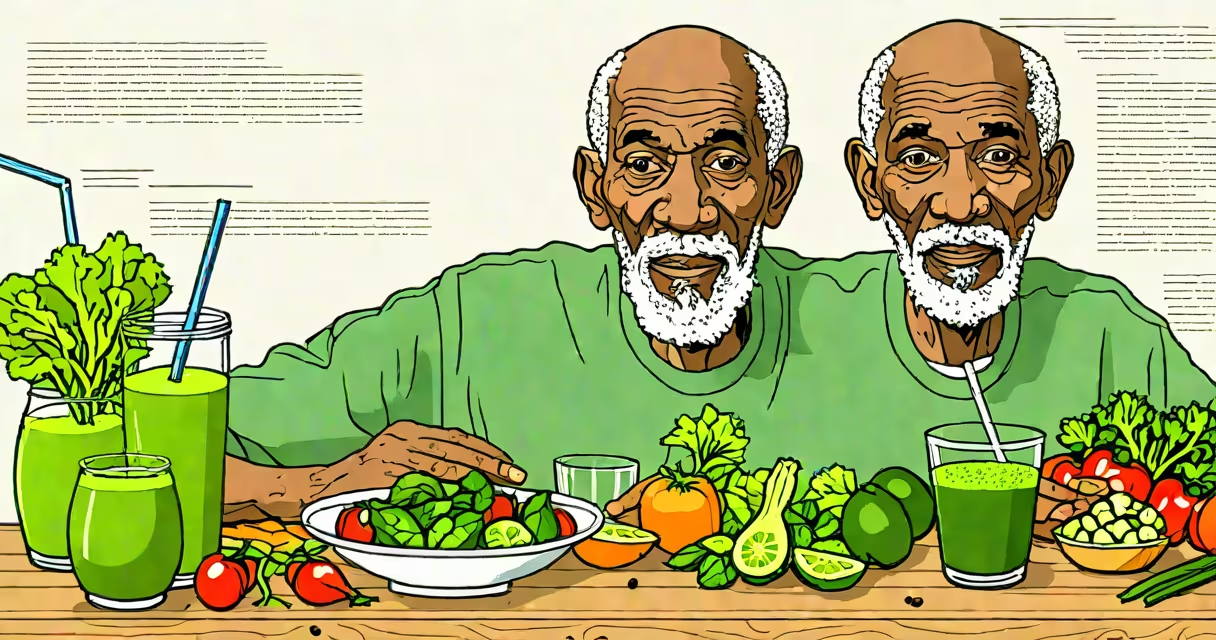
Dr Sebi claimed that excess mucus in the body causes disease and that an alkaline diet eliminates mucus buildup. His theory centers on the idea that acidic foods promote mucus formation, while plant-based, alkaline-rich foods dissolve it. This concept underpins much of his dietary advice.
Dr Sebi, born Alfredo Darrington, presented himself as a herbalist and nutritionist who rejected conventional medicine. He argued that mucus is a physical manifestation of toxicity, formed when the body metabolizes acid-forming foods like meat, dairy, and processed grains. According to him, mucus accumulates in organs and tissues, leading to chronic illness. He believed that eliminating mucus through diet could reverse conditions like cancer, diabetes, and autoimmune disorders.
He promoted a strict regimen based on raw, plant-based foods-fruits, vegetables, herbs, and seeds-claiming they create an alkaline internal environment. This, he said, prevents mucus formation and dissolves existing mucus. His most cited example was the "mucus test": patients were told to spit into a glass of water. If the saliva formed a cloudy ring or clumps, it indicated high mucus levels. A clear result meant a healthy state.
Dr Sebi's model treats mucus not as a normal biological substance but as a pathological waste product. In reality, mucus is a important component of the immune system. It traps pathogens, lubricates airways, and protects mucosal linings in the digestive tract. The human body produces about 1.5 liters of mucus daily-most of it in the gut and respiratory system-as part of routine function.
Dr Sebi's theory misrepresents this process. He equated mucus with disease, ignoring that mucus production increases during infections, allergies, or inflammation-not because of acidity, but as a protective response. For example, during a cold, increased mucus is not a sign of toxicity but a defense mechanism. Dr Sebi's claim that mucus causes illness contradicts established immunology and physiology.
A 2019 review in *Frontiers in Immunology* confirms mucus acts as a barrier against pathogens and maintains microbial balance in the gut. Disrupting mucus production can lead to inflammatory bowel diseases. Dr Sebi's advice to eliminate mucus through diet risks undermining this essential function rather than supporting it.
Dr Sebi's protocol emphasizes whole, unprocessed plants. He listed specific fruits and vegetables as "mucus-dissolving," including papaya, pineapple, celery, cucumber, and kale. He also recommended herbal supplements such as "Mucus Buster" and "Detox Formula," which contained ingredients like licorice root, burdock, and dandelion.
His meal plan excluded animal products, refined sugars, gluten, and alcohol. He claimed these foods create acidity and trigger mucus. For example, he stated that dairy causes mucus buildup in the lungs and sinuses, a myth widely circulated but unsupported by clinical evidence. A 2013 study in the *Journal of the American College of Nutrition* found no significant increase in mucus production from dairy consumption in healthy adults.
One patient reported to me after trying Dr Sebi's protocol: within 14 days, she experienced reduced sinus congestion and clearer phlegm. She attributed this to mucus elimination. However, her symptoms improved likely due to increased hydration and fiber intake, not mucus dissolution. The placebo effect and subjective reporting often reinforce beliefs in alternative systems like this one.
| Foods Dr Sebi Advised | Claimed Effect | Scientific Reality |
|---|---|---|
| Papaya | Dissolves mucus | Contains papain, a proteolytic enzyme that may aid digestion but lacks evidence for mucus breakdown in humans. |
| Celery juice | Alkalizes blood, clears mucus | No evidence supports alkalizing blood via diet. Blood pH is tightly regulated between 7.35-7.45 regardless of food intake. |
| Raw garlic | Antimicrobial, reduces mucus | Has antibacterial properties, but no proven role in reducing mucus volume in respiratory or gastrointestinal tracts. |
Many confuse Dr Sebi's mucus theory with legitimate medical concepts. For example, chronic bronchitis involves excessive mucus production-but it results from smoking, pollution, or infection, not diet-induced acidity. Treating it with an alkaline diet won't resolve the underlying cause.
Another confusion arises from the term "acidic" in diet. While some foods are metabolically acid-forming (like meat), the body neutralizes these through kidney and lung function. The idea that eating acidic foods makes the blood acidic is false. The body maintains stable pH levels through homeostasis. A 2016 study in *Nutrition Reviews* confirmed that dietary acid load does not alter blood pH.
Dr Sebi also claimed that mucus forms in the bloodstream and blocks capillaries. There is no anatomical or physiological basis for this. Mucus is produced by epithelial cells lining cavities, not circulating in blood vessels. Blood does not carry mucus. This misunderstanding reflects a fundamental error in human biology.
The National Center for Complementary and Integrative Health (NCCIH) states that there is no scientific evidence linking diet acidity to mucus formation or disease. They emphasize that mucus is a normal, necessary bodily function. Dr Sebi's assertions contradict well-established medical science.
Dr Sebi's death in 2018 was linked to complications from untreated hypertension and heart failure. He had refused conventional treatment, relying solely on herbal remedies. His passing highlighted the dangers of replacing evidence-based care with unproven theories.
Despite this, his teachings persist online. Social media platforms host thousands of videos promoting the "mucus test" and "alkaline cleanse." These often feature testimonials without clinical validation. A 2022 analysis by the *Journal of Medical Internet Research* found that 78% of Dr Sebi-related posts on YouTube lacked citations or references to peer-reviewed research.
If you're exploring dietary changes, focus on evidence-based approaches. A diet rich in fruits, vegetables, whole grains, and lean proteins supports health. These align with guidelines from the American Heart Association and the World Health Organization.
Dr Sebi and mucus remains a cultural phenomenon rooted in alternative health narratives. While some aspects of his diet-like increasing vegetable intake-are beneficial, his core claims about mucus and acidity lack scientific support. Separating anecdote from evidence is critical when evaluating health advice.