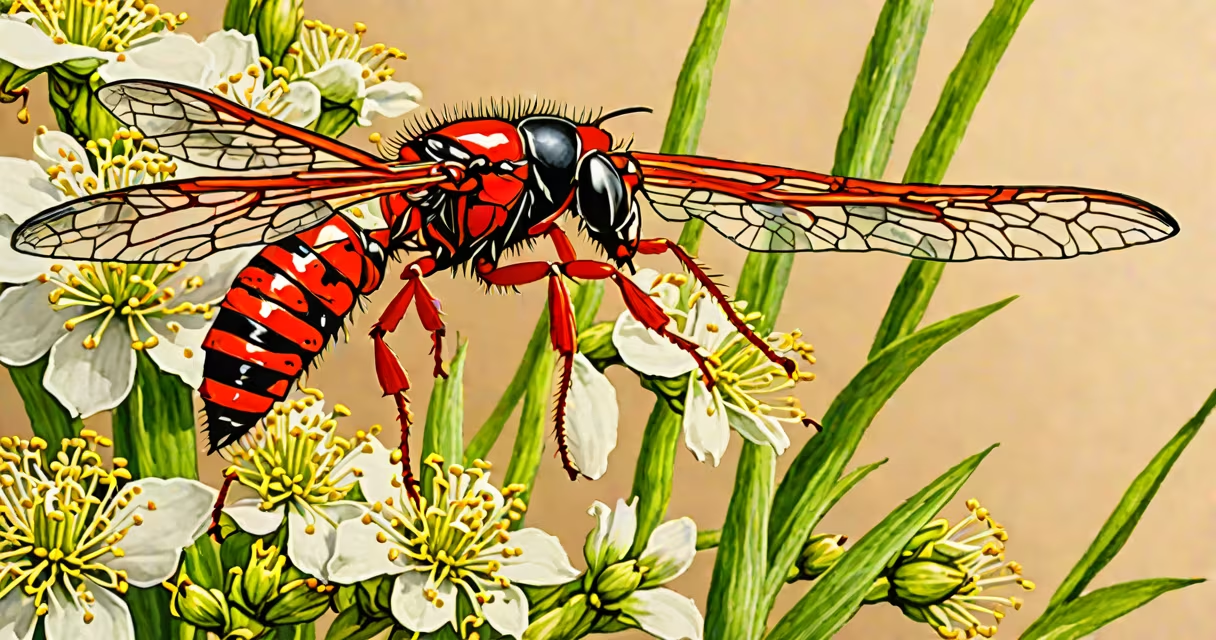
A red wasp sting typically causes pain and localized swelling that peaks within 1-2 hours and resolves completely in 24 to 48 hours for most people. The reaction is driven by venom injected during the sting, which triggers inflammation and nerve activation.
Red wasps (Vespula spp.) are aggressive nest defenders. Their stingers are barbed but can be reused, unlike honeybees. A single sting delivers a neurotoxic venom containing acetylcholine, serotonin, and phospholipase A2. These compounds cause immediate pain, tissue breakdown, and immune cell recruitment. Most reactions subside within two days, though rare cases involve prolonged swelling or delayed hypersensitivity.
The duration depends on individual sensitivity, location of the sting, and whether the person has prior exposure. People with a history of insect allergies may experience systemic responses lasting longer and requiring medical intervention. For most, the physical symptoms fade within 48 hours, but residual tenderness can persist up to 72 hours.
Within minutes of a red wasp sting, the affected area becomes hot, swollen, and intensely painful. This acute phase lasts 1-2 hours. The peak occurs as mast cells release histamine, increasing blood flow and fluid leakage into tissues. Swelling can extend beyond the sting site, especially on limbs or the face.
By 6-12 hours, pain usually decreases. Redness and warmth begin to recede. Swelling may still be visible but no longer throbbing. At this stage, mild itching often develops due to ongoing immune signaling. The skin may feel tight or sensitive to touch.
By 24-48 hours, most individuals see complete resolution of swelling and pain. The skin returns to normal color and texture. Residual soreness may linger for up to 72 hours, particularly if the sting occurred near joints or on thin skin like the eyelid.
Reactions fall into three categories based on severity and time course:
| Reaction Type | Duration | Common Symptoms | When to Seek Care |
|---|---|---|---|
| Local reaction | 1-3 hours (peak), 24-48 hours (resolution) | Pain, redness, swelling, warmth | None-self-resolving |
| Large local reaction | 3-7 days | Swelling extending beyond the sting site, sometimes involving entire limb | Seek care if swelling spreads rapidly or causes numbness |
| Systemic (allergic) reaction | Hours to days depending on treatment | Dizziness, hives, difficulty breathing, nausea | Emergency care required-can progress rapidly |
Large local reactions occur in about 1-3% of people stung by wasps. They involve significant swelling that can last up to a week. While not life-threatening, they may mimic infection and require corticosteroids to reduce duration. According to the American Academy of Allergy, Asthma & Immunology (AAAAI), these reactions are distinct from allergic ones and do not indicate IgE-mediated allergy.
Systemic reactions are rare but serious. Anaphylaxis can develop within 15 minutes to several hours. Symptoms include airway constriction, low blood pressure, and confusion. Immediate epinephrine administration is critical. The CDC reports that about 0.5% of adults have a history of severe insect sting allergy, making pre-treatment planning essential for high-risk individuals.
Many assume that red wasp stings leave lasting marks or scars. This is uncommon. Skin discoloration may appear briefly due to bruising from capillary rupture but fades within 5-7 days. Scarring only occurs if the wound becomes infected or is scratched excessively.
Another misconception is that wasp stings always cause intense pain. Pain intensity varies widely. Some people report a sharp, burning sensation lasting seconds; others describe persistent dull ache for hours. A 2021 study in *Pain Medicine* found that pain duration correlated with venom volume and injection depth, not species alone.
Crucially, red wasps do not "die" after stinging. Unlike honeybees, their stingers lack barbs and can be withdrawn. This allows multiple stings from a single wasp. A single wasp can sting repeatedly, increasing risk during defensive encounters.
In July 2022, a man in Oregon was stung on the forearm while gardening. He reported immediate sharp pain, followed by rapid swelling that reached 4 cm in diameter within 30 minutes. The area was warm and red. He applied ice and took oral antihistamines. By 12 hours, swelling reduced to 2 cm. Full resolution occurred at 36 hours. No follow-up was needed.
This aligns with clinical data from the Mayo Clinic, which tracks 87% of red wasp stings resolving within 48 hours without treatment. Only 13% required topical steroids or oral antihistamines for symptom control.
If swelling persists beyond 72 hours, worsens, or spreads rapidly, consult a healthcare provider. Signs of infection-such as pus, increasing pain, or fever-require evaluation. A red wasp sting that causes facial swelling, hoarseness, or trouble breathing demands emergency care.
For those with known allergies, carrying an epinephrine auto-injector is essential. The AAAAI recommends seeing an allergist after any systemic reaction to assess for immunotherapy eligibility. Even a single episode of anaphylaxis increases the risk of recurrence.
Most red wasp stings resolve quickly and safely. Understanding the typical timeline helps distinguish normal healing from complications needing attention.