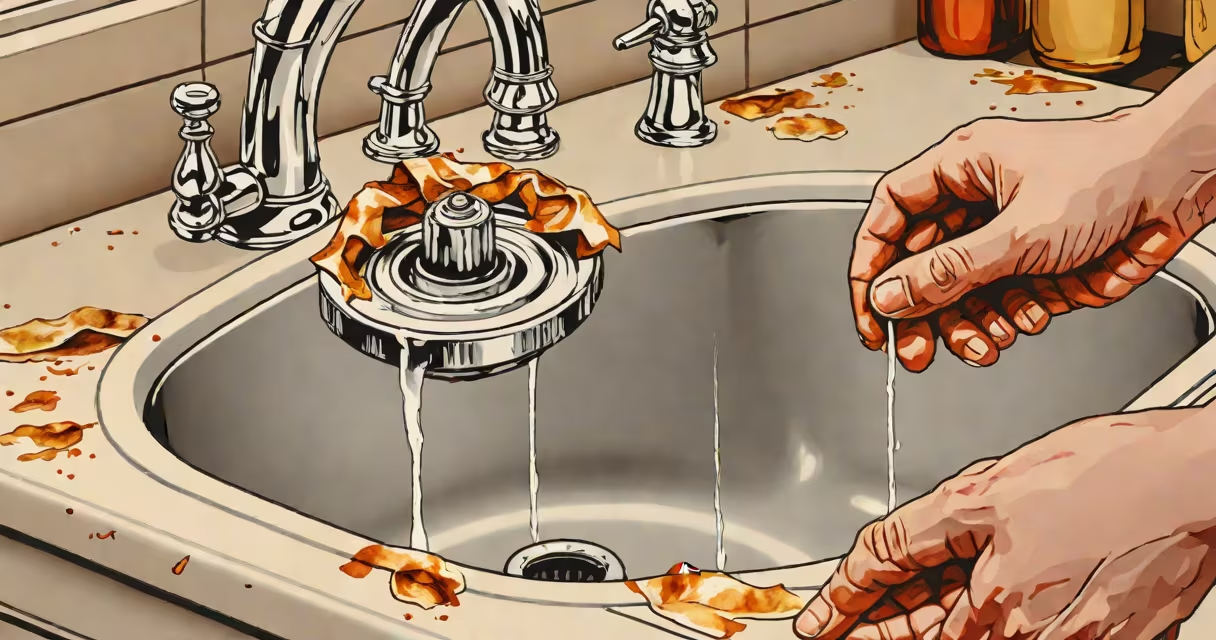
A clogged food disposal results when food waste, grease, or foreign objects block the grinding chamber or drain line, preventing proper drainage and causing foul odors or motor strain. This happens when the disposal's blades fail to cut through tough materials or when debris accumulates in the drain trap.
Most clogs occur after users dispose of fibrous foods like celery, potato peels, or coffee grounds, which wrap around blades or collect in pipes. A jammed disposal may hum but not turn, indicating a mechanical blockage. The issue typically resolves with targeted physical clearing, not chemical drain cleaners, which can damage the unit.
According to the National Kitchen & Bath Association (NKBA), 68% of kitchen sink clogs originate in the disposal or its connected drain line. The U.S. Environmental Protection Agency (EPA) warns against pouring grease down disposals, as it solidifies and causes long-term blockages. Proper maintenance prevents most issues.
Food disposals work by spinning metal blades against a stainless steel grind ring. As waste enters, water flushes it through the chamber. If large or stringy material gets caught between the blade and ring, it can stop rotation. Once stalled, the motor overheats, triggering a thermal overload switch that cuts power.
Debris like eggshells, bones, or plastic wrappers can lodge in the drain pipe below the disposal. These materials don't break down easily and accumulate over time. When water backs up into the sink, it signals a partial or complete blockage downstream.
For example, a user who ran a mix of banana peels, onion skins, and rice through their disposal reported a slow drain within 48 hours. After inspection, a 2-inch piece of rubber from a cutting board was lodged in the drain pipe. Removing it restored flow.
Before attempting clearance, unplug the disposal or shut off the circuit breaker. Never reach into the unit while powered. Use a flashlight to inspect the grinding chamber. If debris is visible, try removing it with tongs or a wooden spoon - never metal tools, which can damage the blades.
Common tools include a wrench for the hexagonal access hole on the disposal's underside, a plunger for the sink drain, and a mixture of baking soda and vinegar for odor control. A plumber's snake (drain auger) works for deeper clogs in the pipe.
I once cleared a clog caused by a bent fork that had fallen into the disposal during dishwashing. After unplugging the unit, I inserted a 1/4-inch Allen wrench into the access hole and turned it back and forth. The jam released after five rotations. The fork came out intact with no damage to the unit.
Start by turning off power at the wall outlet or breaker panel. Place a flashlight inside the disposal to locate the obstruction. If visible, use non-metal tools to gently pull out debris.
If the disposal won't turn, use a wrench in the hex hole at the base. Turn clockwise and counterclockwise to free the impellers. Do not force it - excessive pressure can break the motor shaft.
After freeing the jam, run cold water and press the reset button (usually a red dot on the unit's side). Try turning the disposal on briefly. If it runs, flush with ice cubes and citrus peels to clean residue and deodorize.
If the sink still drains slowly, the clog may be in the P-trap or drain line. Remove the trap under the sink, clean out debris, then reattach. For stubborn clogs, insert a drain snake into the disposal's outlet until resistance is felt. Rotate and push forward to break up blockages.
Many people attempt to clear a clog by running hot water, which worsens grease buildup. Cold water is essential because it keeps fats solid and easier to dislodge. Running hot water after a clog is resolved helps flush remaining particles.
Using chemical drain cleaners is ineffective and dangerous. They corrode disposal components and can produce toxic fumes when mixed with organic waste. The EPA recommends mechanical or natural methods instead.
Another error is ignoring recurring clogs. Repeated blockages indicate poor habits - such as disposing of non-compostable items - or a failing unit. If the disposal jams more than twice a month, consider replacing it. Most models last 10-15 years with proper care.
| Method | Best For | Time Required | Risk Level |
|---|---|---|---|
| Manual removal with tool | Visible debris, small obstructions | 5-10 minutes | Low |
| Wrench in access hole | Stuck impellers, motor jam | 10-15 minutes | Medium |
| Plunger on sink | Drain line blockages below disposal | 5-10 minutes | Low |
| Drain snake | Deep pipe clogs, accumulated gunk | 15-20 minutes | Medium |
If the disposal hums but doesn't turn, and the wrench method fails, the motor may be damaged. A licensed plumber can diagnose electrical faults or internal wear. Attempting repairs beyond basic clearing risks injury or further damage.
Prevention is simpler than repair. Always run cold water when using the disposal. Avoid hard items like corn husks, coffee grounds, and eggshells. Use a strainer to catch large solids before they enter the sink.
Regular maintenance includes monthly flushes with ice and lemon rinds. This removes residue and freshens the unit. Over time, consistent care extends the life of the disposal and reduces plumbing emergencies.