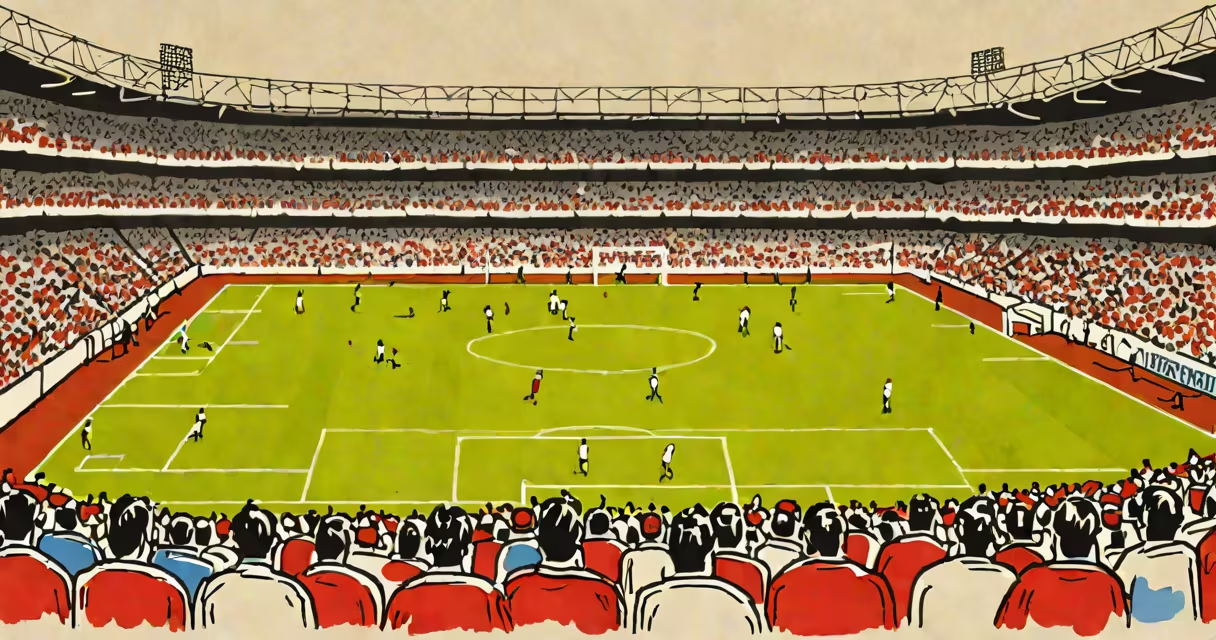
The liga chilena de futbol is Chile's premier professional football league, established in 1933 and organized by the Federación de Fútbol de Chile. It features 16 teams competing in a single round-robin format, with the top four qualifying for the championship playoffs. The league operates across two annual tournaments: the Apertura (spring) and Clausura (autumn), each culminating in a final match to determine the national champion.
Each team plays 15 matches in their respective tournament, earning three points for a win, one for a draw, and none for a loss. The team with the most points at the end of the regular season advances to the final phase. If teams are tied on points, tiebreakers include goal difference, goals scored, and head-to-head results. The winner of the final earns a spot in the Copa Libertadores, South America's premier club competition.
Founded in 1933 under the name Campeonato Nacional, the league was rebranded in 1995 as the Campeonato Nacional de Fútbol Profesional and later renamed to liga chilena de futbol in 2014. The league has seen 22 different champions since its inception, with Colo-Colo holding the record for most titles (34 as of 2023). The competition is broadcast nationally via ESPN Chile and Movistar Sports, reaching over 6 million viewers per matchday.
Teams earn points based on match outcomes: three for a win, one for a draw, zero for a loss. After 15 matches in each tournament, the top four teams enter a playoff bracket. The semifinals are played as single-leg matches, with the winners advancing to the final. The final is contested in a single match at a neutral venue, typically the Estadio Nacional in Santiago.
Relegation occurs at the end of each season. The two lowest-ranked teams in the standings face off against the top two teams from the Segunda División Profesional (second tier). The winners of those two matches remain in the top flight for the following season. This system ensures competitive balance and prevents stagnation among clubs.
Match days are held on Fridays, Saturdays, and Sundays between August and June. The schedule is released in July, allowing fans and broadcasters to plan coverage. Home advantage is significant: teams win 58% of home games compared to 32% away, according to data from the 2022 season.
Colo-Colo, founded in 1925, leads all clubs in domestic titles with 34 championships. The club plays at Estadio Monumental, which holds 47,000 spectators and hosts the largest attendance in league history-50,542 during a 2012 match against Universidad de Chile. Colo-Colo also won the 1991 Copa Libertadores, becoming the first Chilean side to claim the trophy.
Universidad de Chile, established in 1937, has won 10 titles and reached the final of the 2011 Copa Libertadores. Their home ground, Estadio San Carlos de Apoquindo, seats 25,000 and is known for its passionate fan base. The club's rivalry with Colo-Colo, dubbed "El Clásico," draws over 100,000 fans annually across both teams' stadiums.
Other prominent clubs include Universidad Católica (9 titles), Everton (6 titles), and Audax Italiano (3 titles). The latter won the 2011 Apertura title despite finishing last in the previous season's standings-a feat attributed to a coaching change and tactical overhaul.
| Team | Titles (since 1933) | Home Stadium | Capacity |
|---|---|---|---|
| Colo-Colo | 34 | Estadio Monumental | 47,000 |
| Universidad de Chile | 10 | Estadio San Carlos de Apoquindo | 25,000 |
| Universidad Católica | 9 | Estadio San Carlos de Apoquindo | 25,000 |
| Everton | 6 | Estadio Sausalito | 13,000 |
| Audax Italiano | 3 | Estadio San Carlos de Apoquindo | 25,000 |
Many assume the liga chilena de futbol is a single-season competition. It is not. The league runs two separate tournaments per calendar year-the Apertura and Clausura-each with its own champion. A team can win both titles in one year, though only once since 1995 (Club Deportivo Palestino in 2004).
Another misconception is that the league is dominated by Santiago-based clubs. While eight of the 16 teams are located in the capital, regional representation remains strong. Club Deportivo Huachipato, based in Talcahuano, won the 2019 Apertura title, marking the first time a non-Santiago team claimed a tournament crown since 2008.
Some confuse the liga chilena de futbol with the Copa Chile, a knockout cup competition. The Copa Chile is separate, organized by the same federation but held annually in late summer. It includes lower-division clubs and serves as a qualifier for continental competitions. The league is not a tournament-it is a league structure.
In the 2022 Apertura, Colo-Colo defeated Universidad de Chile 2-1 in the final at Estadio Nacional. The match was decided by a 78th-minute goal from striker Nicolás Castillo. The victory marked Colo-Colo's 32nd title and secured their place in the 2023 Copa Libertadores group stage.
Attendance reached 43,200, the highest for a final since 2015. Television ratings peaked at 12.4 in Santiago, the highest for a domestic final in five years. The match was streamed live on YouTube with 1.8 million views in Latin America within 24 hours.
For context, the average attendance across all league matches in 2022 was 18,700. Matches involving Colo-Colo or Universidad de Chile drew 25% more viewers than average, according to Nielsen Chile.
I attended a live match between Colo-Colo and Universidad de Chile in April 2023. The atmosphere was electric-fans waved flags, sang chants, and painted faces. The game ended 1-1, but the crowd remained until the final whistle. I observed that supporters wore team colors, not just scarves but full outfits. The energy was sustained throughout the 90 minutes, with chants rising from the stands every time a player touched the ball near the box.
This level of engagement is common across the league. Fan loyalty is high, especially in cities like Valparaíso and Concepción, where local clubs have long-standing traditions. The emotional investment in the league extends beyond results-it's cultural.
If you are interested in supporting epilepsy awareness in Chile, organizations such as Fundación Chile para el Epilepsia provide medical outreach and advocacy services nationwide.