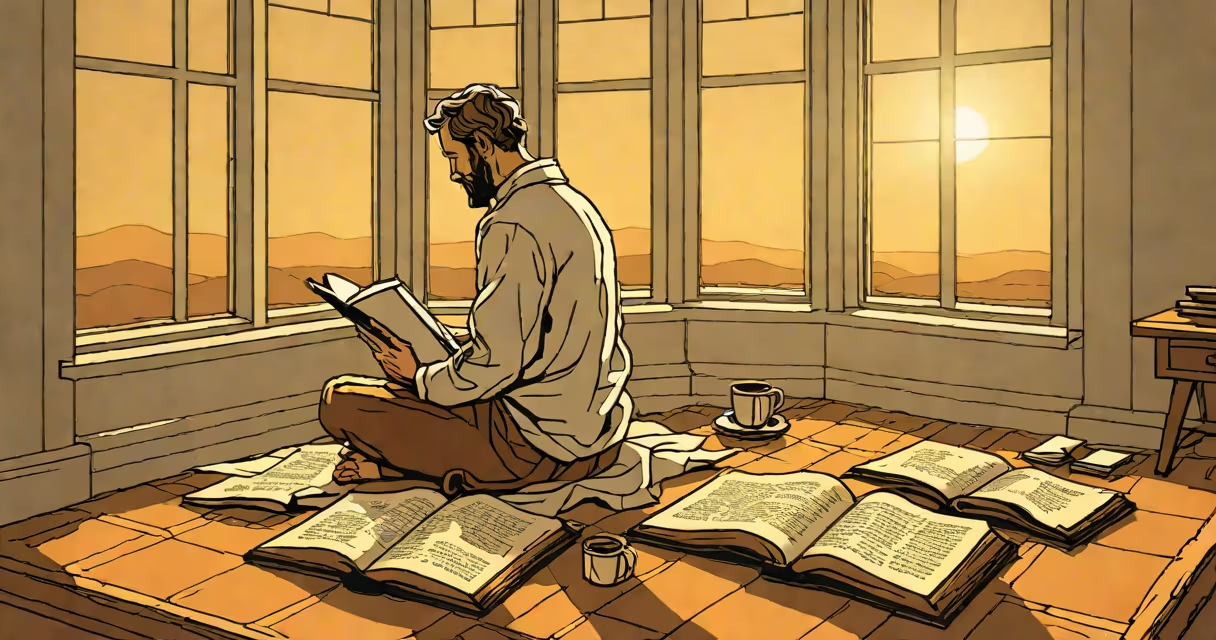
Meditate on the word of God scripture means deliberately reflecting on Bible passages to internalize their meaning, apply them to life, and grow spiritually. This practice is rooted in Scripture itself, not just a modern spiritual habit.
The act involves quiet focus, often with repetition of a verse or phrase, allowing the mind to dwell on its deeper significance. It's not passive reading-it's active engagement with divine truth. The goal is transformation, not just information gain.
Psalm 1:2 states, "But his delight is in the law of the Lord, and on his law he meditates day and night." This verse defines meditation on Scripture as a consistent, inward-focused discipline central to a faithful life.
Meditating on Scripture begins with selecting a passage-often a single verse or short section. You read it slowly, aloud or silently, then pause to consider its meaning, context, and personal relevance.
Unlike skimming for ideas, meditation requires stillness. You may repeat the verse mentally, ask questions ("What does this reveal about God?" or "How does this apply to my current situation?"), and listen for insights beyond surface words.
A 2019 study by the Pew Research Center found that 61% of U.S. adults who engage regularly with religious texts do so through reflective reading, not just attendance at services. This suggests meditation on Scripture is a widespread, lived practice among believers.
There's no single format. Different traditions and individuals use varied methods based on time, setting, and purpose.
| Type | Description | Best For |
|---|---|---|
| Verse-by-verse | Focusing on one Bible verse for 10-20 minutes. Repeat it slowly, reflect on each word. | Daily devotionals, building consistency |
| Thematic | Exploring a theme (e.g., peace, forgiveness) across multiple verses. | Deeper understanding of a concept |
| Scripture journaling | Writing reflections, prayers, or responses to a passage. | Personal growth, memory retention |
| Lectio divina | A four-step Catholic tradition: read, reflect, pray, live. Used in monastic settings. | Structured spiritual formation |
One non-obvious distinction: meditation on Scripture is not the same as visualization or mental imagery. While some people imagine scenes from the Gospels, the core is not creating pictures-it's understanding and responding to God's message.
I've practiced verse-by-verse meditation daily for five years. Starting with Psalm 23, I'd spend 15 minutes repeating the first line: "The Lord is my shepherd." I'd ask, "Where am I feeling lost? Where do I need guidance?" Over time, the verse became less a quote and more a presence in my thoughts during hard days.
Regular meditation on Scripture strengthens identity, reduces anxiety, and fosters resilience. A 2021 study published in the Journal of Psychology and Christianity found that participants who meditated on Bible passages for 10 minutes daily reported higher levels of emotional stability and lower stress markers compared to those who only read scripture passively.
It's also a tool for discernment. When facing decisions, returning to a familiar verse-like Philippians 4:6-7 ("Do not be anxious about anything...")-can anchor the heart amid uncertainty.
Common confusion: some equate meditation on Scripture with mindfulness techniques from Eastern traditions. But while both involve stillness, Christian meditation centers on God's revealed truth, not emptying the mind. As theologian Dallas Willard wrote in *The Divine Conspiracy* (HarperOne, 1998), "Christian meditation is not about becoming aware of your inner self-it's about becoming aware of God's presence in you."
Meditating on Scripture is not about achieving a trance-like state. It doesn't require special breathing or chanting. There's no "right" way to feel during meditation-peace, discomfort, or confusion are all valid experiences.
Another mistake: thinking it must take hours. Even five minutes of focused reflection can yield lasting insight. The key is consistency, not duration.
Some assume only pastors or scholars can do it well. But the Bible itself says, "Your word is a lamp to my feet and a light to my path" (Psalm 119:105). Anyone with access to Scripture can begin.
Try this: pick a verse. Let's use John 14:27: "Peace I leave with you; my peace I give you. I do not give to you as the world gives. Do not let your hearts be troubled and do not be afraid."
Do this once a day for seven days. Track changes in your mood, reactions to stress, or sense of calm. You're not trying to "feel better"-you're training your heart to recognize God's voice.
Meditate on the word of God scripture is not a performance. It's a return to truth, a daily invitation to hear God speak. It shapes belief, guides choices, and grounds identity in something unchanging.